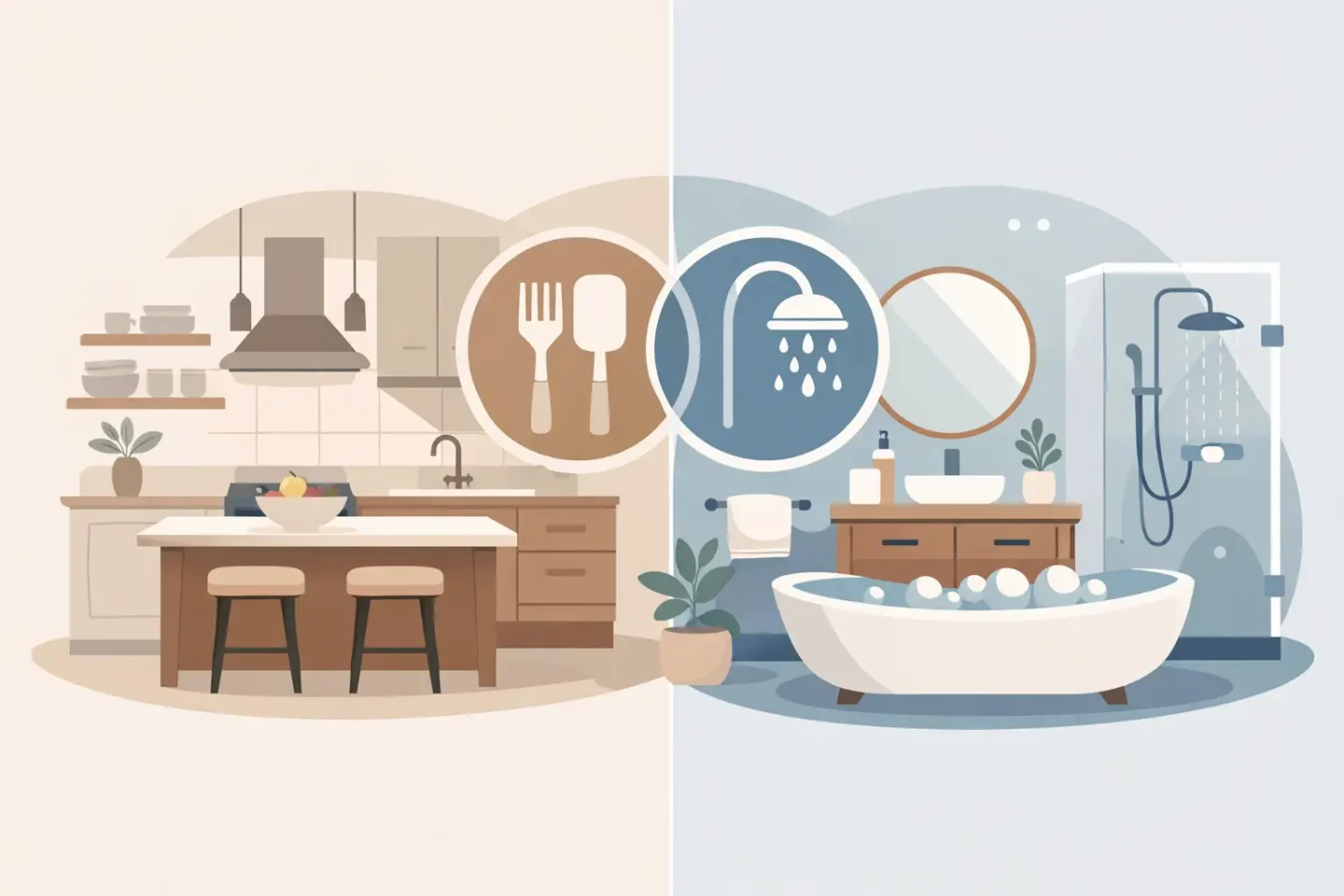
If you have ever looked at a beautiful kitchen or bathroom and thought, “That just works,” you were noticing more than finishes. What is kitchen and bath design, really? It is the planning of two of the most technically demanding spaces in a home so they function well, feel cohesive, and can actually be built without costly surprises.
In New York City, that distinction matters. A kitchen or bathroom remodel is not only about selecting tile, cabinetry, or fixtures. It involves plumbing locations, electrical loads, ventilation, storage, code requirements, building rules, and the practical realities of demolition and installation in an occupied property. Good design brings all of those parts into alignment before construction begins.
What is kitchen and bath design in practical terms?
Kitchen and bath design is the specialized process of shaping kitchens and bathrooms around the way people live, cook, clean, store, entertain, and move through a space. It combines aesthetics with technical planning. The design has to look refined, but it also has to account for dimensions, clearances, appliance specifications, waterproofing, lighting, and the coordination of multiple trades.
That is what separates it from simple decorating. Decorating changes the surface appearance of a room. Kitchen and bath design addresses the structure of the space itself – where plumbing runs, how cabinets are sized, whether a shower slope is correct, how task lighting supports daily use, and whether the finished room will feel intuitive instead of cramped.
A well-designed kitchen can make a compact Manhattan apartment feel efficient and calm. A well-designed bathroom can create a sense of comfort in a footprint that has very little room to waste. In both cases, the design must serve daily routines just as much as visual goals.
Why these rooms require specialized design
Kitchens and bathrooms are the hardest-working rooms in most properties. They combine water, electricity, ventilation, storage, finish materials, and heavy daily use in a relatively tight area. That means small mistakes carry larger consequences.
For example, a kitchen may look balanced on paper but fail in real life if appliance doors clash, prep space is too limited, or lighting leaves the counters in shadow. A bathroom may appear elegant in renderings but become frustrating if vanity storage is inadequate, the shower feels undersized, or the plumbing layout creates unnecessary construction costs.
Specialized design reduces those problems by addressing them early. It helps clients understand where to invest, where to simplify, and when a desired feature may require structural or mechanical changes. In high-value properties, that clarity protects both the result and the budget.
The core elements of kitchen and bath design
At its foundation, kitchen and bath design balances five factors: layout, function, materials, technical systems, and visual cohesion.
Layout comes first
Layout determines how the room works. In a kitchen, that includes the relationship between the sink, refrigerator, cooking zone, and surrounding work surfaces. In a bathroom, it includes fixture placement, privacy, circulation, and how comfortably the room can be used by one or more people.
This is often where design decisions become strategic. Moving a sink, drain, or gas line may improve the room dramatically, but it can also increase construction scope. Sometimes the best design keeps major systems in place and improves the room through better cabinetry, smarter storage, and stronger detailing. Other times, a full reconfiguration is worth the investment because the existing plan simply does not support modern use.
Function shapes the details
A kitchen for a serious home cook needs different priorities than one designed mainly for entertaining. A primary bathroom used every morning by two adults needs different storage and lighting than a compact guest bath. Good design asks the right questions early.
How much concealed storage is needed? Do clients want integrated appliances or statement pieces? Is a double vanity truly useful, or would a larger shower create more value? The best answers are rarely generic. They depend on the property, the users, and the level of finish expected.
Materials must do more than look good
Material selection affects maintenance, durability, and installation complexity. Natural stone offers depth and character, but it may require more care than quartz. Large-format tile can create a clean, upscale look, but it also demands precise substrate preparation and experienced installation. Custom millwork can maximize storage and fit awkward city layouts, but it requires detailed planning and disciplined execution.
This is where design and construction should stay closely connected. A finish may be visually appealing yet impractical for the room’s use, moisture exposure, or budget. A strong design process evaluates beauty and performance together.
Technical systems drive the buildability
Every kitchen and bathroom depends on infrastructure. Plumbing rough-ins, electrical circuits, venting, HVAC considerations, waterproofing assemblies, and fixture specifications all affect what can be built and how efficiently it can be installed.
In many renovations, the technical side is what separates a smooth project from a difficult one. A design that ignores existing conditions can create delays during demolition or inspection. A design that coordinates technical systems from the start is easier to price, schedule, permit, and execute.
Visual cohesion creates the finished experience
Once the fundamentals are right, the room needs a clear design language. That includes proportion, color palette, hardware, lighting, trim details, and the relationship between surfaces. Luxury does not come from expensive materials alone. It comes from consistency, restraint, and precision.
A compact bathroom with excellent stone selection, balanced lighting, and disciplined detailing can feel more elevated than a larger room with disconnected choices. The same is true in kitchens, where cabinet reveals, countertop edges, panel alignment, and fixture finishes all shape the final impression.
What the design process usually includes
When clients ask what kitchen and bath design involves, they are often really asking how decisions move from concept to construction. The process typically begins with understanding the existing space, the client’s priorities, and any building or code limitations.
From there, design development translates goals into measured plans. That can include layout options, cabinetry planning, fixture selection, finish direction, lighting concepts, and appliance coordination. At this stage, trade-offs become clear. A larger island may reduce circulation. A curbless shower may require floor framing adjustments. A custom vanity may improve storage but extend lead times.
The next phase is refinement. Dimensions are tightened, products are confirmed, and installation requirements are reviewed. This is also where permit-related items, board approvals, and inspection considerations may come into play, especially in New York properties. A polished concept is not enough. The design must be documented in a way that supports pricing, procurement, and field coordination.
Why design and construction should not be disconnected
One of the most common renovation problems is a gap between what is designed and what can realistically be built. This happens when selections are made without accounting for site conditions, delivery logistics, code implications, or trade sequencing.
That gap is expensive. It can lead to change orders, schedule extensions, mismatched expectations, and quality issues at installation. In kitchens and bathrooms, where every inch matters, there is little room for loosely coordinated decisions.
That is why many property owners prefer a renovation partner that can manage both the design intent and the execution. When the same team is thinking about craftsmanship, permits, inspections, trade coordination, and finish quality together, the process is more controlled. For clients in Manhattan and Brooklyn, where building access, approvals, and scheduling constraints are part of the job, that control matters.
At AGNY Services, that integrated mindset is central to how complex renovations are delivered. The goal is not simply to create attractive rooms. It is to carry a design vision through real construction conditions with precision and accountability.
When kitchen and bath design adds the most value
The value of kitchen and bath design is not limited to large luxury remodels. It is especially useful when the existing layout is inefficient, storage is poor, systems are outdated, or multiple trades need to be coordinated carefully.
It also adds value when clients want higher-end finishes and expect them to be installed correctly. Premium materials expose weak planning very quickly. If the layout is unresolved or field dimensions are inconsistent, custom work suffers. Strong design prevents those issues before they reach the job site.
For resale properties, thoughtful kitchen and bath design can improve market appeal. For long-term homeowners, it improves daily life in ways that are felt immediately. Better light, better storage, better circulation, and better detailing have a practical effect every single day.
So, what is kitchen and bath design really about?
At its best, kitchen and bath design is the disciplined translation of lifestyle, architecture, and construction into rooms that perform beautifully. It is equal parts vision and control. It asks not only what the space should look like, but how it should work, how it should be built, and how it should hold up over time.
That is why the strongest results come from planning that respects both design ambition and construction reality. In kitchens and bathrooms, the difference is visible in every line, every finish transition, and every detail that feels considered instead of improvised.
If you are planning a renovation, the right design is not an extra layer. It is the framework that turns investment into a finished space that feels as good in daily use as it does on reveal day.