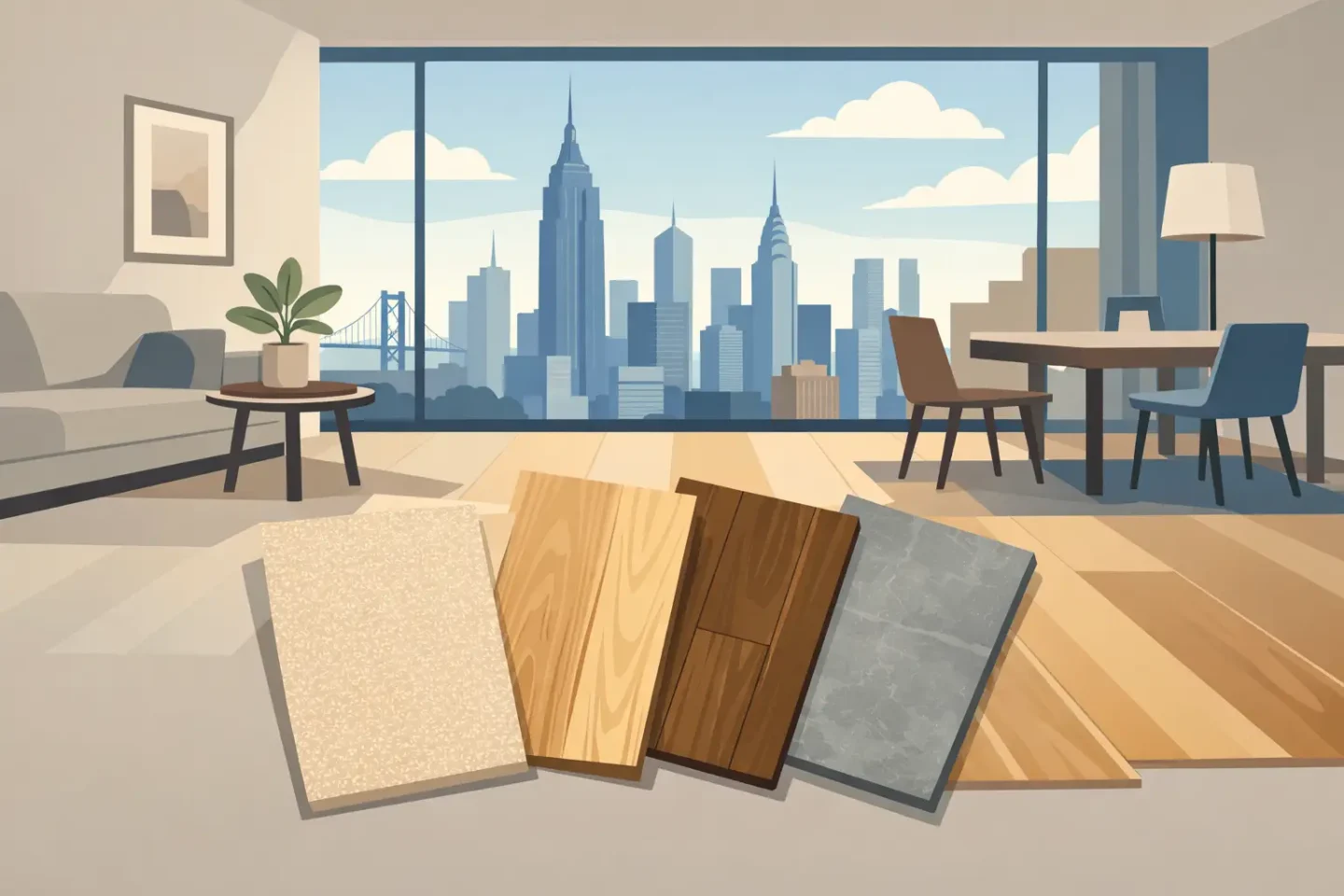
A beautiful floor can change an apartment faster than almost any other finish, but the wrong choice becomes obvious just as quickly. When clients ask about the best flooring for apartments, the real answer is rarely about appearance alone. In New York City, flooring decisions have to work harder. They need to satisfy design goals, daily wear, acoustic requirements, maintenance expectations, and, in many buildings, strict co-op or condo rules.
That is why flooring selection should be treated as part design decision, part construction decision. The right material has to look appropriate in the space, but it also needs to perform under the realities of apartment living – foot traffic, neighbors below, limited subfloor conditions, elevator delivery schedules, and renovation approvals that can affect what is even allowed.
What makes the best flooring for apartments?
In a single-family home, you may have more freedom to prioritize aesthetics or budget. In an apartment, performance criteria tend to narrow the field. Sound control matters more. Moisture exposure can be less predictable in kitchens, entry areas, and bathrooms. Existing slabs or wood subfloors may not be perfectly level. And if the property is a rental or investment unit, long-term durability and turnover costs often outweigh trend-driven choices.
The best flooring for apartments usually comes down to five factors: noise reduction, durability, maintenance, visual consistency, and compliance with the building’s requirements. Those priorities do not always point to the same product, which is why a blanket recommendation rarely holds up from one project to the next.
For example, a prewar co-op in Manhattan may require a specific acoustic underlayment and a minimum percentage of floor coverage. A modern condo may allow more flexibility but still demand careful coordination during delivery and installation. A rental upgrade in Brooklyn may benefit more from a highly durable engineered product than from a more delicate natural wood floor that requires greater upkeep.
Hardwood is still the benchmark – but not always the answer
Many owners begin with hardwood because it remains the standard for warmth, resale appeal, and architectural character. In the right apartment, it is hard to match the depth and authenticity of real wood. It works especially well in living rooms, bedrooms, and formal open-plan spaces where continuity matters.
Solid hardwood, however, is not always ideal for apartment conditions. It can be more sensitive to seasonal movement, and installation may be limited by subfloor type, height transitions, or building rules. It also transmits sound more readily if the assembly below it is not properly designed. In a city apartment, a beautiful finish alone does not compensate for poor acoustic performance.
Engineered hardwood is often the more practical choice. It provides the visual quality clients want while offering better dimensional stability. That matters in apartments where concrete slabs, radiant conditions, or uneven humidity can affect how a floor performs over time. With the right wear layer and installation method, engineered wood can deliver a refined finish without some of the limitations associated with solid planks.
If your priority is value retention and a premium look, engineered hardwood is often the strongest all-around contender.
Luxury vinyl flooring has improved – and that matters
Luxury vinyl plank and luxury vinyl tile have earned a place in apartment renovations because they solve practical problems well. Quality products are durable, more forgiving around moisture, easier to maintain, and often quieter underfoot when paired with the right underlayment. For busy households, pied-a-terres, and investment properties, that combination is compelling.
This category has also improved significantly in appearance. Better embossing, wider plank formats, and more realistic surface variation have narrowed the visual gap between vinyl and wood in many settings. While it may not deliver the same prestige as genuine hardwood, it can be an excellent solution where reliability and low maintenance are the priority.
That said, not all luxury vinyl products belong in a high-end apartment. Lower-grade materials can look flat, feel synthetic, and wear poorly at edges and transitions. Installation quality also matters. A premium product installed over an unprepared subfloor will still show imperfections and may fail earlier than expected.
For rentals, secondary residences, and family apartments where spills and wear are part of daily life, luxury vinyl can be a smart and cost-effective choice.
Laminate can work, but only in the right project
Laminate flooring often enters the conversation because it offers a wood-look finish at a lower price point. In some apartment updates, especially budget-conscious improvements, it can serve a purpose. Modern laminate is generally more scratch-resistant than many people expect, and some lines offer respectable design quality.
Its limitations become clearer in more demanding spaces. Moisture resistance varies, edge swelling can still be a concern, and the overall feel is usually less substantial than engineered wood. In higher-end apartment renovations, laminate can struggle to meet the finish standard clients expect.
This is one of those categories where the short-term savings should be weighed carefully against long-term perception. If the apartment is meant to project quality and permanence, laminate is often not the strongest fit.
Tile is ideal in some rooms and a mistake in others
Porcelain and ceramic tile remain the best option for bathrooms, many kitchens, and some entry sequences. They are durable, moisture-resistant, and available in a wide range of looks, from natural stone styles to modern large-format surfaces. In apartments where cleanability and water resistance matter, tile performs exceptionally well.
Across the entire apartment, though, tile is rarely the preferred choice. It can feel hard and cold, and it does little to soften sound unless the floor assembly is built carefully. In a dense residential building, that matters. Tile also places greater demands on substrate preparation, and unevenness beneath the surface becomes a structural issue, not just a cosmetic one.
Used selectively, tile is excellent. Used indiscriminately, it can make an apartment feel less comfortable and less acoustically controlled.
Carpet is less common, but acoustics keep it relevant
In luxury urban renovations, wall-to-wall carpet is no longer the default. Most owners prefer harder surfaces for their appearance, cleanliness, and resale appeal. Still, carpet remains relevant in one area where it clearly outperforms many alternatives: sound absorption.
For bedrooms, children’s rooms, or units with strict acoustic requirements, carpet can be the easiest way to create a quieter environment. It also adds softness and warmth in spaces intended to feel more private and restful. The trade-off is maintenance. Carpet holds dust, stains more easily, and generally has a shorter aesthetic lifespan than wood or tile.
For many apartment owners, the better balance is a hard floor paired with area rugs where allowed and appropriate. That approach preserves a cleaner architectural look while still helping with comfort and noise.
Best flooring for apartments depends on the room
The most successful apartment flooring plans are rarely one-size-fits-all. Living areas and bedrooms typically benefit from engineered hardwood or a premium luxury vinyl product, depending on the level of finish and durability required. Kitchens often work well with either engineered wood, if continuity is a priority, or porcelain tile, if water resistance is the deciding factor. Bathrooms almost always call for tile.
This room-by-room approach creates better performance without forcing a single material to solve every condition. It also allows more control over transitions, maintenance, and overall project cost.
The building’s rules matter as much as the material
This is where many apartment renovations go off course. A flooring product may look perfect in a showroom and still be wrong for the building. Co-ops and condos often impose acoustic standards, work-hour limitations, approved installation methods, and documentation requirements that affect both product choice and project sequencing.
Noise transmission is the most common issue. Many buildings require specific underlayment assemblies or sound ratings, and some boards will review flooring specifications before work begins. If these details are not addressed upfront, approvals can be delayed or installations may need to be revised at added cost.
Subfloor preparation is equally important. Apartments often conceal uneven substrates, old adhesive residue, previous patching, or height differences between rooms. These conditions affect everything from finished appearance to door clearances and appliance fit. Flooring is only as good as the surface beneath it.
This is one reason many owners prefer a full-scope renovation partner rather than treating flooring as a standalone trade. In New York, successful execution depends on coordinating finish goals with real construction conditions, building management requirements, and the sequencing of other trades.
How to choose with confidence
If your apartment is a primary residence and long-term value matters, engineered hardwood is often the strongest recommendation. It offers design credibility, broad appeal, and reliable performance when installed correctly. If your priority is durability, lower maintenance, and budget discipline, premium luxury vinyl may be the better choice. If moisture exposure is the main concern, tile belongs in the rooms that need it.
The key is to avoid choosing flooring in isolation. The best result comes from evaluating the space as a whole – how the apartment is used, what the building allows, what the subfloor can support, and what level of finish aligns with the property. At AGNY Services, that kind of decision-making is part of the renovation process, because a floor should not just look refined on day one. It should still feel like the right choice years later.
A well-selected floor does more than complete a room. It makes the apartment quieter, more durable, easier to maintain, and better aligned with the way you actually live.