If you are trying to plan a renovation around a lease end, a move-in date, or a co-op board approval window, an apartment renovation timeline example is more than a rough estimate. In New York City, the timeline determines financing, temporary living arrangements, material purchasing, building coordination, and how much disruption you should realistically expect.
The challenge is that apartment renovations rarely move in a straight line. A kitchen and bath refresh in a Brooklyn condo may move quickly if finishes are in stock and the building is easy to work with. A full Manhattan gut renovation can take much longer once permits, board reviews, custom millwork, inspections, and limited work hours enter the picture. That is why owners benefit from seeing a realistic model rather than a best-case schedule.
A realistic apartment renovation timeline example
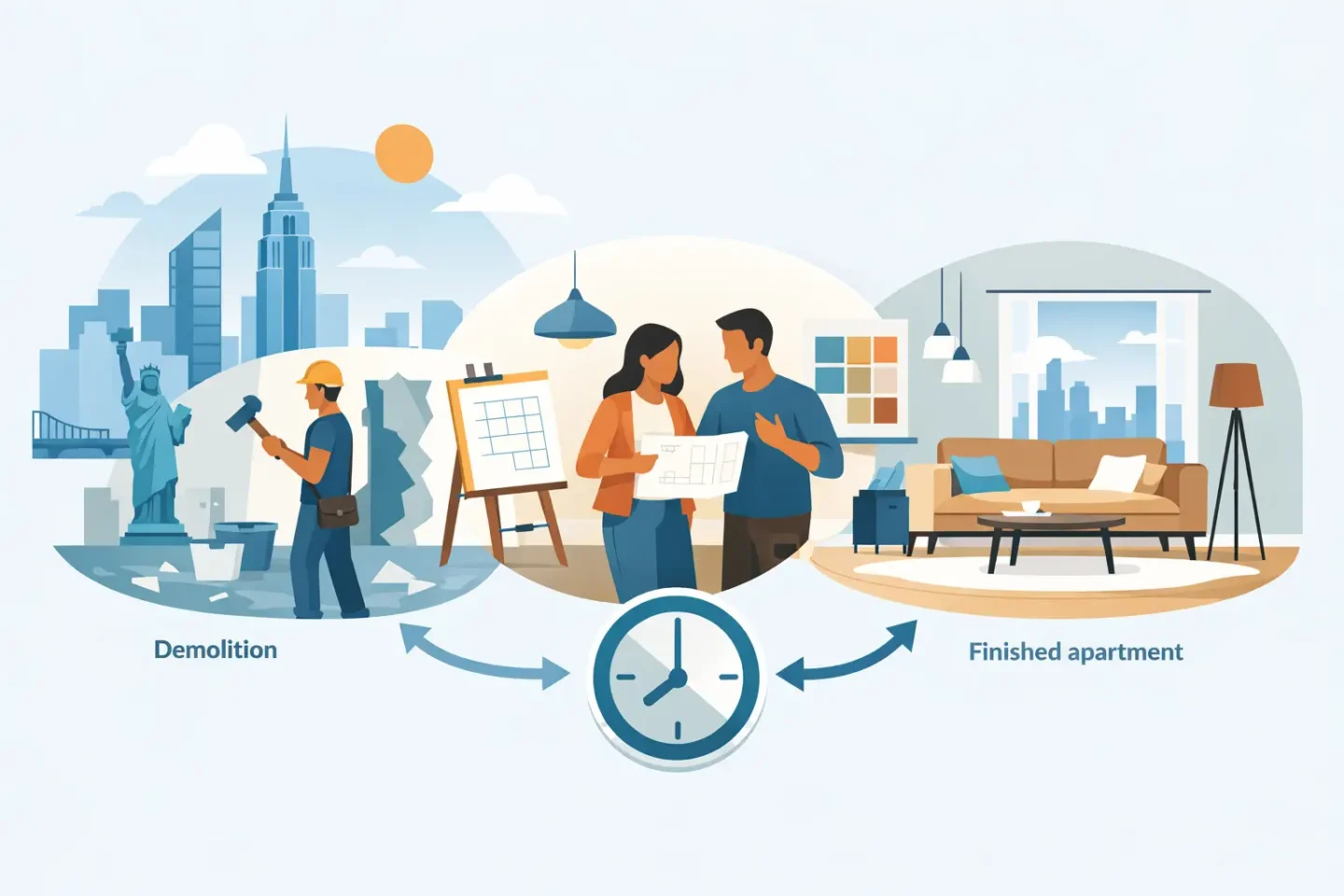
For a full apartment renovation in NYC, a practical working range is often 4 to 8 months from initial planning to final closeout. Construction itself may take 8 to 16 weeks, but that number alone can be misleading because it excludes design development, approvals, procurement, and inspection scheduling.
Here is a realistic example for a mid-range to high-end apartment renovation involving a kitchen, two bathrooms, flooring, painting, lighting, some layout changes, and a mix of stock and custom materials.
Weeks 1-3: Discovery, scope, and budget alignment
This stage is where the project becomes real. The apartment is assessed, measurements are confirmed, priorities are discussed, and the scope is refined around budget, timeline, and building rules. If the owner wants premium finishes, layout improvements, upgraded mechanicals, or custom carpentry, those decisions need to begin here because they influence every later phase.
This is also the right time to identify hidden complexity. Older NYC apartments often carry surprises behind walls and under floors, from outdated plumbing and electrical conditions to uneven substrates and unpermitted prior work. A well-managed project does not assume those issues away. It plans for them.
Weeks 3-6: Design development and selections
Once the scope is established, drawings, finish selections, and technical coordination move forward. For straightforward cosmetic work, this phase can be relatively quick. For projects with custom kitchens, built-ins, tile layouts, plumbing fixture changes, or structural review, it may take longer.
The biggest timeline mistake many owners make is treating selections as a side task. Cabinet lead times, tile availability, appliance dimensions, plumbing rough-in requirements, and millwork details can affect both schedule and sequencing. When decisions lag, construction crews end up waiting or reworking completed areas.
Weeks 4-8: Building approvals and permit preparation
In co-ops and condos, building approvals often run parallel with final design work. Some buildings move efficiently. Others require extensive application packages, insurance documentation, alteration agreements, deposits, and architect review. If Department of Buildings permits are required, filing and approval timelines must be factored in as well.
This phase is one reason NYC renovation schedules vary so widely. Two apartments with similar scope can have very different start dates depending on the board, the management company, and the nature of the work. If plumbing lines are moving, electrical service is being upgraded, or walls are being reconfigured, the administrative path is rarely instant.
Weeks 6-10: Procurement and pre-construction coordination
As approvals are underway, long-lead materials should be ordered. Appliances, windows, stone slabs, specialty plumbing fixtures, custom doors, and millwork can all dictate the pace of the job. The goal is not to have every item on site before demolition begins, but to make sure critical path materials are tracked early.
At the same time, the contractor coordinates labor, delivery restrictions, site protection, waste removal, and trade sequencing. In New York buildings, elevator reservations, loading dock rules, work hour limits, and neighbor protection measures are not minor details. They shape how efficiently the project can actually run.
What construction looks like on the calendar
Once approvals are in place and essential materials are in motion, physical work begins. For this apartment renovation timeline example, assume construction spans roughly 12 weeks.
Weeks 1-2 of construction: Site protection and demolition
Before anything comes out, common areas and in-unit surfaces need protection. Then demolition begins. In a full renovation, that can include cabinets, fixtures, flooring, wall finishes, and selective removal of non-structural partitions.
Demolition moves fast, but it often reveals the first true conditions of the apartment. This is where hidden water damage, aging pipes, uneven framing, or outdated wiring may appear. A disciplined contractor builds in contingency planning because discovery during demolition is common, not exceptional.
Weeks 3-5 of construction: Framing, plumbing, electrical, and HVAC rough-ins
This is the infrastructure phase. Layout changes are framed, new plumbing and electrical lines are installed, HVAC adjustments are made where needed, and backing for cabinetry, accessories, or wall-mounted fixtures is prepared.
This phase depends heavily on coordination. Electricians, plumbers, HVAC technicians, and carpenters cannot work in isolation if the goal is a clean, efficient build. In apartment renovations, especially in older buildings, precision matters because there is limited room to correct mistakes once walls are closed.
Weeks 5-6 of construction: Inspections and wall closure
If permits apply, rough inspections typically occur before insulation or wall closure. Scheduling can vary, and failed inspections can add time if corrections are required. Once approvals are secured, walls are closed, patched, and prepared for finish work.
This part of the schedule is often underestimated. Drying time for compounds, access for inspectors, and building logistics can compress or delay progress by several days at a time.
Weeks 7-9 of construction: Tile, flooring, millwork, and prime finishes
As the rough work disappears behind finished surfaces, the apartment starts to take shape. Bathrooms are waterproofed and tiled, flooring is installed or refinished, kitchen cabinetry arrives, and custom millwork begins to define the final look.
This is where craftsmanship becomes visible, but it is also where sequencing matters most. Stone templating depends on installed cabinets. Fixture trim depends on finished walls. Paint quality depends on proper substrate preparation and protection of completed surfaces. A rushed finish phase tends to create punch list problems later.
Weeks 10-11 of construction: Fixture installation, paint, and final trade work
Lighting, plumbing trim, appliances, hardware, mirrors, shower doors, and finish electrical components are installed. Final coats of paint are completed. Any remaining carpentry adjustments or specialty items are wrapped up.
At this point, the project may look nearly done, but the final stretch still requires control. Small alignment issues, missing parts, damaged finishes, and manufacturer backorders often appear here. Experienced project management keeps these from turning into open-ended delays.
Week 12 of construction: Punch list, final inspections, and closeout
The last phase includes contractor review, owner walkthrough, punch list completion, final inspections where required, and turnover. This is also when warranty information, care guidance, and closeout documentation should be organized.
The best projects do not just finish beautifully. They close out cleanly, with accountability and clarity.
Why one apartment renovation timeline example does not fit every project
A cosmetic renovation may finish much faster than the example above, especially if the layout stays intact and materials are readily available. On the other hand, a high-design renovation with custom fabrication, major plumbing revisions, landmark considerations, or extensive board review can run well beyond six months.
The main variables are scope, building restrictions, permit requirements, material lead times, and decision speed. Client responsiveness matters more than many owners expect. When finish selections, change orders, or access approvals stall, the schedule usually follows.
There is also a trade-off between speed and customization. If you want imported tile, integrated appliances, custom white oak millwork, and book-matched stone, the timeline should reflect that level of detail. Premium results require coordination and patience.
How to use this timeline when planning your own project
A useful apartment renovation timeline example is not meant to promise an exact completion date. It is meant to help you ask better questions early. When will approvals be submitted? Which materials have the longest lead times? What conditions could change the scope? How are inspections handled? What building constraints affect labor scheduling?
For NYC owners, the right contractor should be able to translate these questions into a credible roadmap, not just a rough guess. That includes identifying critical decisions upfront, coordinating trades under one plan, and building enough structure into the schedule to protect both quality and momentum. Firms such as AGNY Services bring value here because execution in New York is not only about craftsmanship. It is also about managing complexity without losing control of the finish.
If you are planning an apartment renovation, treat the timeline as a project tool, not a sales number. The right schedule should feel realistic, informed, and specific to your building, your scope, and the standard of finish you expect. That is usually the first sign the project is being handled properly.