TL;DR:
- Bathroom fixtures include faucets, sinks, toilets, showers, bathtubs, and lighting that influence both style and daily function. Choosing durable materials like solid brass or stainless steel and finishes such as chrome or matte black ensures longevity, while budget and layout considerations guide selection. Mixing complementary finishes creates a curated look, and investing in quality fixtures improves home resale value.
Bathroom fixture options are the permanent components — faucets, sinks, toilets, showers, bathtubs, and lighting — that define how your bathroom looks and functions every day. Choosing the right fixtures is the single most consequential decision in any remodel. Brands like Moen, Delta, and Kohler dominate the market for good reason: they offer reliable cartridges, widely available replacement parts, and finishes that hold up in humid conditions. Prices range from $75 for basic models to several thousand dollars for premium fixtures, so knowing what to prioritize before you shop saves both money and regret.
1. What are the main types of bathroom fixtures?
Bathroom fixtures fall into six core categories. Each one carries distinct functional requirements and style implications that affect every other choice in the room.
Sinks come in four main styles. Vessel sinks sit on top of the vanity and make a strong visual statement, but they require taller faucets and collect more grime around the base. Undermount sinks attach below the countertop for easy cleaning. Pedestal sinks save floor space in small bathrooms but offer zero storage. Integrated sinks are molded directly into the countertop, which eliminates seams and simplifies cleaning.
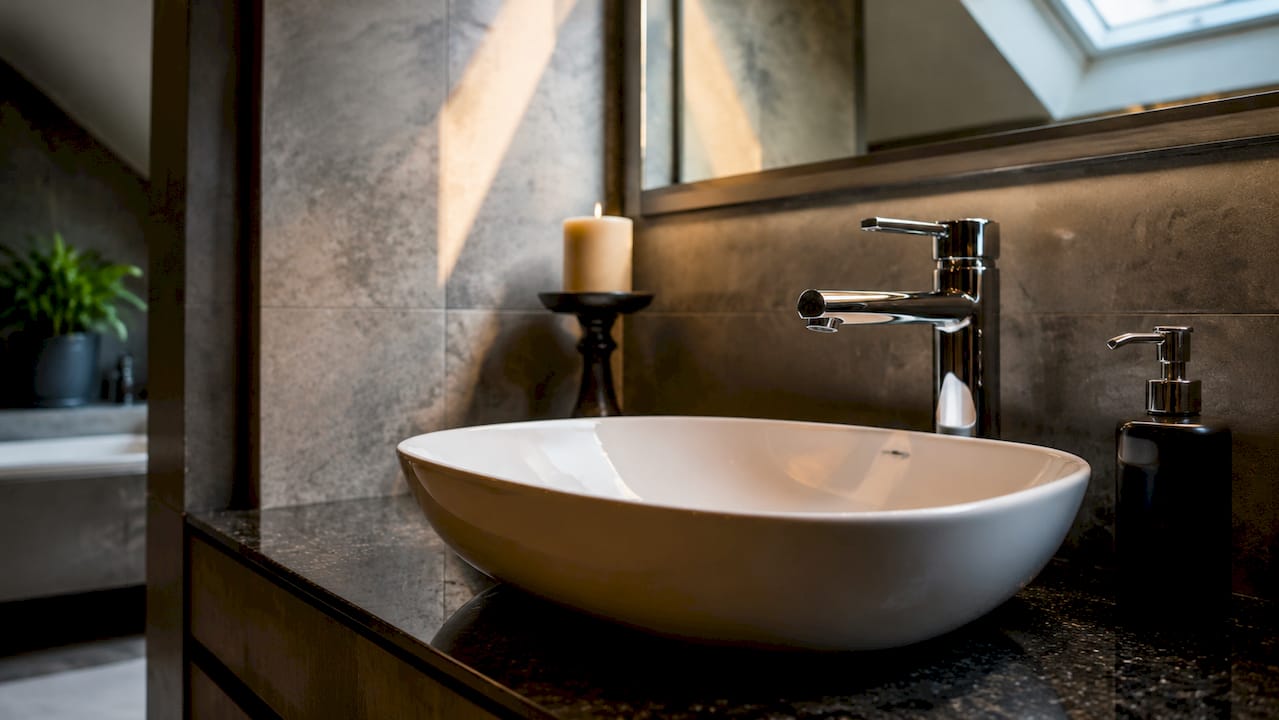
Faucets divide into four installation types. Centerset faucets combine the spout and handles on a single base, fitting a standard 4-inch spread. Widespread faucets use three separate pieces and fit an 8-inch spread, giving a more custom look. Single-handle faucets control both temperature and flow with one lever. Wall-mounted faucets free up counter space but require in-wall plumbing work.
Shower fixtures range from basic single-head setups to full systems. Rainfall showerheads mount overhead and deliver a wide, gentle flow. Handheld showerheads attach to a flexible hose for targeted rinsing. Body sprayers install at torso height along the shower wall for a spa-like experience. Each adds cost and requires adequate water pressure to perform well.
Toilets come in two-piece, one-piece, and wall-mounted configurations. Two-piece models are the most affordable and easiest to repair. One-piece toilets have no seam between tank and bowl, which reduces cleaning effort. Wall-mounted toilets conceal the tank inside the wall, creating a minimal look but requiring structural reinforcement.
Bathtubs include alcove, freestanding, soaking, and corner styles. Alcove tubs fit into a three-wall enclosure and work best in smaller bathrooms. Freestanding tubs serve as a focal point but demand more floor space. Soaking tubs are deeper than standard models, designed for full-body immersion.
Bathroom lighting options include vanity bars, wall sconces, and recessed fixtures. All bathroom lighting must carry a damp or wet location rating. Vanity bars mounted at eye level on both sides of the mirror eliminate shadows on the face, which matters for grooming tasks.
Pro Tip: Choose lighting fixtures rated for wet locations even in areas that seem dry. Steam travels farther than you expect, and moisture damage to electrical fixtures is expensive to fix.
2. How do materials and finishes affect durability and style?
The material inside a fixture matters more than the finish outside. Solid brass and stainless steel fixtures outlast budget zinc or plastic internal parts by a significant margin. Zinc corrodes faster in humid conditions. Plastic components wear down under daily use and are harder to repair. When you pick up a faucet and it feels heavy, that weight usually signals metal internals, which is a reliable durability indicator.
Finish choices have expanded well beyond chrome. Chrome remains the most popular finish because it resists tarnish and cleans easily. Brushed nickel offers a warmer, softer look with better fingerprint resistance than polished chrome. Matte black has grown popular in modern and industrial designs, though it shows water spots more readily. Champagne bronze and unlacquered brass deliver a warm, aged tone that suits transitional and traditional styles.
Maintenance requirements vary by finish. Lacquered finishes protect the metal underneath but can chip or peel over time. Unlacquered brass develops a natural patina, which some homeowners love and others find difficult to manage. PVD (physical vapor deposition) coatings, used by brands like Kohler and Delta on premium lines, bond the finish at the molecular level and resist scratching far better than standard plating.
Water efficiency certifications confirm that a fixture maintains strong pressure while using less water. Modern WaterSense-certified faucets and showerheads deliver full performance without the weak flow that plagued early low-flow designs.
Pro Tip: Match your finish to your luxury bathroom materials first, then choose fixtures. A matte black faucet against warm wood tones creates intentional contrast. A chrome faucet against white subway tile reads as classic and clean.
3. What are the best bathroom fixture brands by budget?
Moen, Kohler, and Delta are the three brands plumbers recommend most often. All three offer replacement cartridges that are easy to source, which matters when a faucet starts dripping five years after installation. Availability of parts is what separates a repairable fixture from a throwaway one.
High-performing faucets are available under $175, with installation averaging 10–15 minutes for experienced users. That price range covers most of Moen’s Adler and Chateau lines, Delta’s Foundations series, and Kohler’s Coralais collection. These are not entry-level products. They carry solid warranties and perform reliably in daily use.
| Brand | Price Range | Avg. Lifespan | Highlights |
|---|---|---|---|
| Moen | $75–$500+ | 10–15 years | Lifetime warranty, wide part availability |
| Delta | $75–$600+ | 10–15 years | Touch2O technology, easy DIY repair |
| Kohler | $100–$2,000+ | 15–20+ years | Premium finishes, full fixture ecosystem |
| American Standard | $80–$400 | 15–20 years | Strong toilet lineup, ADA-compliant options |
Toilets and bathtubs last 15–20+ years, which means spending more on those categories pays off over time. A $1,200 Kohler one-piece toilet amortized over 20 years costs less per year than a $300 builder-grade model that needs replacement in 10. Faucets and shower systems typically last 10–15 years, so mid-range investment makes sense there.
Pro Tip: Buy your toilet and bathtub at the top of your budget. Buy your faucets in the mid-range. Spend your savings on finishes and hardware that tie the room together visually.
4. How to choose bathroom fixture options for your specific space
Layout comes before aesthetics. A freestanding soaking tub looks stunning in a magazine but becomes a liability in a 60-square-foot bathroom. Measure your rough-in dimensions before selecting any fixture. The rough-in distance for a toilet, typically 12 inches from the wall to the drain center, must match the toilet you purchase.
Scale and proportion affect how a room feels. Oversized vessel sinks in a narrow powder room crowd the space. Undersized showerheads in a large walk-in shower look out of place and underperform. Treat each fixture as part of a proportional system, not a standalone purchase.
Prioritize daily usability over exact finish matching. A bathroom used by three people every morning needs a faucet with fast hot-water response and a toilet with a powerful flush. Finish coordination matters, but it ranks below function in a working bathroom. Mixing brushed nickel hardware with matte black faucets, for example, creates a curated look that designers use intentionally.
High-traffic bathrooms need fixtures rated for commercial-grade use. Sensor faucets and thermostatic shower controls, common in commercial settings, now appear in residential remodels. They reduce water waste and eliminate temperature shock, but they add installation complexity.
Smart toilets and wall-mounted fixtures increase installation costs by 50% or more compared to standard models. They require niche rough-in plumbing and, in the case of wall-mounted toilets, sub-floor reinforcement. Budget for that work before committing to the fixture.
Visiting a showroom before buying solves the proportion problem that online shopping creates. A showerhead that looks large in a product photo may feel small in person. Touching the handle of a faucet tells you more about its weight and quality than any spec sheet. Agny recommends this step to every homeowner before finalizing a fixture list. You can also explore bathroom accessibility tips to make sure your selections work for everyone in the household.
- Measure rough-in dimensions before selecting toilets or bathtubs.
- Test faucet handles in person to assess weight and smoothness.
- Confirm water pressure in your home before choosing rainfall or body-spray shower systems.
- Check that all lighting fixtures carry a damp or wet location rating.
- Verify that smart or wall-mounted fixtures fit your plumbing and structural setup before purchasing.
Key takeaways
The best bathroom fixture options balance material durability, proportional fit, and budget allocation across sinks, faucets, toilets, showers, bathtubs, and lighting.
| Point | Details |
|---|---|
| Material quality drives longevity | Choose solid brass or stainless steel internals over zinc or plastic for fixtures that last. |
| Budget by category | Spend more on toilets and tubs; mid-range faucets from Moen, Delta, or Kohler perform reliably. |
| Layout before aesthetics | Measure rough-in dimensions and confirm water pressure before selecting any fixture. |
| Finish mixing is intentional | Complementary finishes create a curated look; exact matching is not required. |
| Smart fixtures cost more to install | Wall-mounted and smart toilet installations can raise costs by 50% or more. |
What I’ve learned after years of bathroom renovations
The biggest mistake I see homeowners make is choosing fixtures by photo. A brushed nickel faucet looks the same in every product image, but the difference between a $90 model and a $250 model is obvious the moment you turn the handle. The $90 version wobbles. The $250 version moves with resistance and precision. That tactile difference is what you live with every day.
Local water conditions matter more than most renovation guides admit. Hard water, common across much of the American Northeast and Southwest, accelerates valve wear in lower-quality cartridges. If your water is hard, fixtures built for durability with ceramic disc valves and brass bodies will outlast budget alternatives by years, not months.
I also push back on the idea that finish matching is mandatory. The most interesting bathrooms I have worked on mix two or three complementary finishes deliberately. Matte black towel bars with brushed gold faucets and chrome showerheads can work beautifully when the tones share warmth or coolness. The rule is coherence, not uniformity.
The investment in quality fixtures pays back at resale. Buyers notice fixtures immediately. A Kohler toilet and a Delta shower system signal care and quality in a way that builder-grade fixtures never do. Spend where it shows, and spend where it lasts.
— Grzegorz
Ready to upgrade your bathroom in NYC?
Agny specializes in bathroom renovations in NYC that treat fixture selection as part of a complete design and construction process, not an afterthought. Every project includes material guidance, sourcing support, and installation by experienced tradespeople who understand New York’s specific plumbing requirements.
Renovation costs should not stop you from getting the bathroom you want. Agny offers renovation financing options that make high-quality remodels accessible without forcing you to compromise on fixtures or materials. Contact Agny to discuss your project and get a clear plan before you spend a dollar on fixtures.
FAQ
What fixtures should I replace first in a bathroom remodel?
Replace the toilet and faucets first. They affect daily function the most and deliver the clearest improvement in comfort and water efficiency.
Which faucet brands do plumbers recommend most?
Plumbers consistently recommend Moen, Kohler, and Delta for their reliable cartridges and widely available replacement parts.
How long do bathroom fixtures typically last?
Toilets and bathtubs last 15–20+ years. Faucets and shower systems typically last 10–15 years with proper maintenance.
Are smart toilets worth the extra cost?
Smart toilets add comfort features like heated seats and bidet functions, but installation costs rise by 50% or more due to required plumbing modifications. They make sense in a full renovation, less so as a standalone upgrade.
Do I need to match all my bathroom fixture finishes?
No. Mixing complementary finishes creates a more intentional, designed look than forcing exact matches. Focus on tonal coherence rather than identical finishes.