TL;DR:
- Green renovation strategies focus on upgrading a home to reduce energy use and environmental impact without sacrificing comfort. Starting with an energy audit followed by envelope improvements ensures cost-effective efficiency gains before adding renewables. Preserving existing materials and sequencing upgrades properly lowers embodied carbon and maximizes savings.
Green renovation strategies are purposeful upgrades designed to reduce a home’s energy use, lower greenhouse gas emissions, and minimize environmental impact without sacrificing comfort or livability. The industry term for this practice is “deep energy retrofit” when applied to the full building system. Standards from the National Association of Home Builders (NAHB), the National Green Building Standard (NGBS), and the U.S. Department of Energy (DOE) now define the benchmarks homeowners and property managers should target. The most effective approach follows a clear sequence: audit first, fix the building envelope, right-size mechanical systems, then add renewables. Skipping that order wastes money and leaves performance on the table.
1. What are the best energy audit techniques to start a green renovation?
A professional energy audit is the single most important first step in any environmentally friendly remodeling project. Diagnostic audits reveal 15%–30% energy savings potential by pinpointing exactly where air leaks and insulation gaps exist. That range means a typical home could cut its energy bills by nearly a third before a single wall is opened.
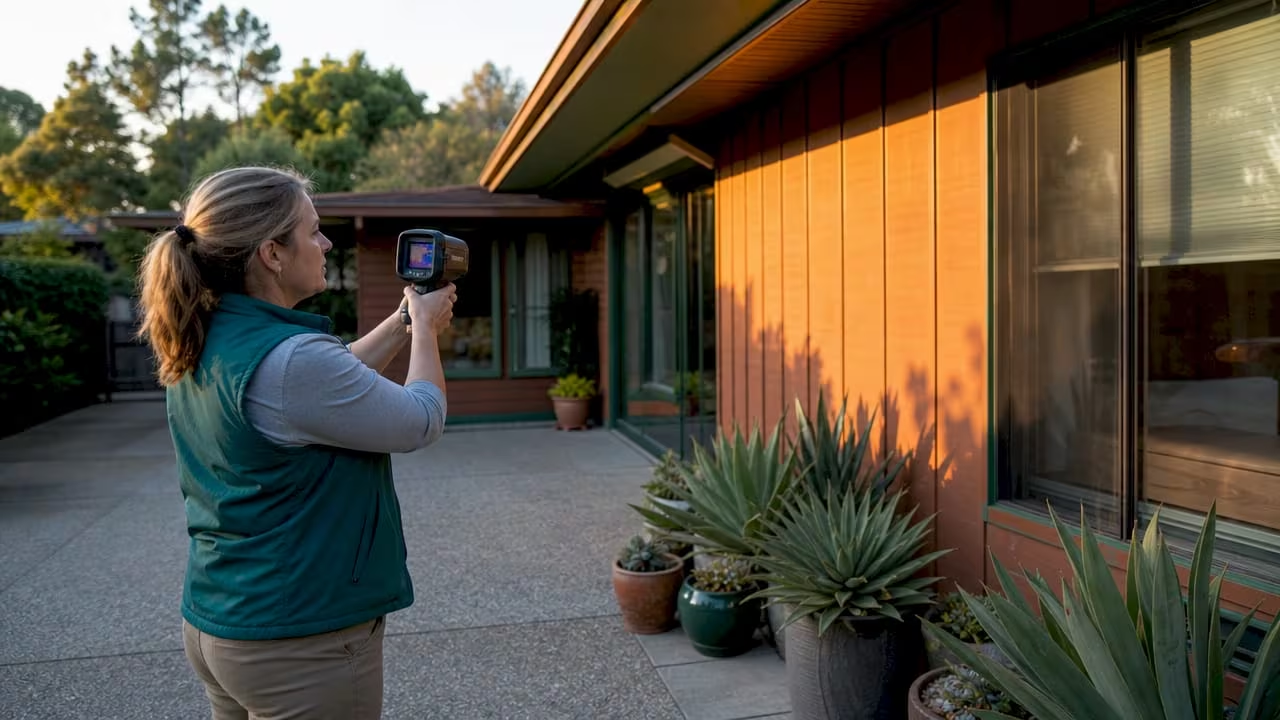
Two tools define a quality audit: the blower-door test and thermal imaging. A blower-door test depressurizes the house to measure total air leakage. Thermal imaging then shows exactly where that air moves through walls, ceilings, and rim joists. Together, they give you a ranked list of fixes sorted by impact.
A vulnerability assessment is also recommended as part of the initial planning phase. It identifies climate and natural hazard risks specific to your property, which feeds directly into resilience planning and green certification eligibility under NGBS.
- Blower-door test: measures total air changes per hour at 50 pascals (ACH50)
- Thermal imaging: locates hidden air leaks and missing insulation
- Combustion safety testing: checks for carbon monoxide risks from gas appliances
- Utility bill analysis: establishes a baseline for measuring post-renovation savings
Audit costs typically range from $300 to $700 for a full diagnostic. The ROI is immediate because the report tells you exactly which upgrades deliver the highest return.
Pro Tip: Ask your auditor for a prioritized improvement list ranked by cost per unit of energy saved. That single document becomes your renovation roadmap and can support rebate applications with your utility company.
2. How to optimize the building envelope for maximum efficiency
The building envelope is every surface separating conditioned interior space from the outdoors: walls, roof, foundation, windows, and doors. Fixing it before anything else is the foundation of sustainable home improvements.
Deep energy retrofits that include continuous exterior insulation and airtightness at or below 3 ACH50 can reduce greenhouse gas emissions by up to 70%. That number is not a theoretical ceiling. It reflects what well-executed envelope work actually delivers in the field.
Air sealing
Air sealing targets the gaps that blower-door tests expose. Common locations include top plates, electrical penetrations, plumbing chases, and rim joists. Materials include spray foam for large gaps, caulk for small cracks, and rigid foam board for rim joists. Air sealing and insulation typically cost $1,500–$8,000 with a payback period of 3–7 years. That payback shortens significantly when combined with utility rebates.
Insulation upgrades
Attic insulation delivers the fastest payback of any envelope measure because heat rises. Walls benefit most from continuous exterior insulation, which eliminates thermal bridging through studs. Rim joists are often overlooked but account for a disproportionate share of total air leakage in older homes.
Windows and doors
High-performance windows with low-emissivity (low-E) coatings and argon gas fill reduce heat transfer significantly. If full window replacement is not in the budget, interior or exterior storm windows deliver roughly 50% of the performance benefit at a fraction of the cost.
Pro Tip: After completing air sealing work, schedule a second blower-door test before closing up walls. Confirming airtightness at this stage prevents hidden thermal bridging issues that only show up after the project is finished.
| Envelope measure | Typical cost | Payback period |
|---|---|---|
| Air sealing | $500–$2,500 | 2–4 years |
| Attic insulation | $1,000–$3,500 | 3–5 years |
| Wall insulation | $2,000–$6,000 | 5–10 years |
| High-performance windows | $400–$1,000 per window | 10–20 years |
| Storm windows | $150–$400 per window | 4–7 years |
3. What HVAC and mechanical system upgrades support green renovations?
HVAC upgrades deliver their full value only after the building envelope is tightened. A leaky house forces any heating or cooling system to work harder, which means oversizing and wasted investment. Fix the envelope first, then right-size the mechanical systems.
Heat pumps are the centerpiece of modern green building techniques for space conditioning. They move heat rather than generate it, which makes them two to four times more efficient than resistance heating. Heat pump upgrades cost $6,000–$18,000 and deliver 20%–45% HVAC energy savings compared to conventional systems. That savings range is wide because it depends heavily on climate zone and how well the envelope was sealed first.
- Heat pump space conditioning: replaces gas furnaces or electric resistance systems with air-source or ground-source units
- Heat pump water heaters (HPWH): 2–4 times more efficient than traditional electric resistance models, with paybacks of 3–8 years
- Energy recovery ventilators (ERV) or heat recovery ventilators (HRV): maintain indoor air quality in tightly sealed homes by exchanging stale indoor air with fresh outdoor air while recovering 70%–80% of the energy in the exhaust stream
- Smart thermostats: reduce HVAC runtime by learning occupancy patterns and integrating with utility demand-response programs
- Home energy management systems: monitor whole-house consumption in real time and flag anomalies before they become costly
ERV and HRV systems are non-negotiable in homes that hit the 3 ACH50 airtightness target. A tight house without mechanical ventilation creates indoor air quality problems. The ventilation system is not optional; it is part of the envelope upgrade package.
4. Which sustainable materials and practices reduce embodied carbon?
Embodied carbon is the carbon emitted during the manufacturing, transport, and installation of building materials. It accounts for a significant share of a renovation’s total environmental impact, yet most homeowners focus only on operational energy.
The most sustainable home is often the existing one. Renovations that preserve the existing structure and materials carry far lower embodied carbon than projects that tear down and rebuild. That principle should guide every material decision from day one.
- Preserve the existing structure. Retaining walls, floors, and framing reduces embodied carbon more than any other single decision. Replacement generates waste and triggers new manufacturing emissions.
- Choose deconstruction over demolition. Demolition is the most carbon-intensive phase of any renovation. Salvaging materials for reuse or resale cuts waste and avoids the emissions tied to manufacturing replacements.
- Specify FSC-certified or reclaimed wood. Forest Stewardship Council (FSC) certification confirms responsible sourcing. Reclaimed wood carries near-zero embodied carbon because it already exists.
- Select low-VOC paints and finishes. Volatile organic compounds (VOCs) off-gas into indoor air for months after application. Low-VOC and zero-VOC products protect occupant health without sacrificing durability.
- Source materials regionally. Transport emissions add up quickly. Materials sourced within 500 miles of the project site carry a meaningfully smaller carbon footprint than those shipped across the country.
- Document material choices. Green certifications like NGBS and LEED require documentation of material sourcing and recycled content. Keeping records from the start avoids scrambling at the end of the project.
5. How to incorporate renewable energy and water-saving technologies
Renewables and water efficiency belong at the end of the renovation sequence, not the beginning. Adding solar panels to a leaky, inefficient house is like filling a bucket with a hole in it. Fix the envelope and mechanical systems first, then size renewables to meet the reduced load.
- Rooftop solar PV: size the system after envelope and HVAC upgrades to avoid over-building. Solar PV payback ranges from 7–15 years depending on local utility rates and available incentives.
- Battery storage: adds resilience during outages and enables time-of-use rate arbitrage. Batteries increase upfront cost but improve the overall value of the solar investment.
- Low-flow fixtures: WaterSense-labeled faucets, showerheads, and toilets reduce water consumption by 20%–30% with no performance trade-off.
- Graywater recycling: captures water from sinks and showers for toilet flushing or irrigation. Legality varies by state, so check local codes before specifying a system.
- LED lighting: replaces incandescent and fluorescent fixtures at a fraction of the operating cost. LEDs use 75% less energy than incandescent bulbs and last 25 times longer.
- ENERGY STAR appliances: dishwashers, washing machines, and refrigerators certified by ENERGY STAR use significantly less water and electricity than standard models.
Green roofing systems are another option worth evaluating during a full envelope renovation. They add insulation value, manage stormwater, and extend roof membrane life, which reduces long-term replacement costs.
| Technology | Typical cost | Key benefit |
|---|---|---|
| Solar PV (6 kW system) | $15,000–$25,000 | Offsets grid electricity use |
| Battery storage | $8,000–$15,000 | Resilience and rate arbitrage |
| Low-flow fixtures | $50–$300 per fixture | 20%–30% water reduction |
| Heat pump water heater | $1,000–$2,000 | 2–4x efficiency vs. resistance |
| LED retrofit | $5–$20 per bulb | 75% less energy than incandescent |
Key takeaways
The most effective green renovation strategy follows a fixed sequence: audit, envelope, mechanical systems, then renewables, because each step reduces the load on the next.
| Point | Details |
|---|---|
| Audit before anything else | Diagnostic audits reveal 15%–30% savings potential and set your renovation priority list. |
| Envelope work pays fastest | Air sealing and insulation cost $1,500–$8,000 and pay back in 3–7 years. |
| Sequence HVAC after envelope | Right-sizing heat pumps after sealing avoids oversized systems and wasted investment. |
| Preserve materials to cut carbon | Retaining existing structure reduces embodied carbon more than any material substitution. |
| Add renewables last | Size solar PV to the reduced load after efficiency upgrades for the best financial return. |
Why I always start with the envelope, not the solar panels
The most common mistake I see in sustainable renovations is the wrong sequence. Homeowners get excited about solar panels or a new heat pump, write a large check, and then wonder why their energy bills barely moved. The answer is almost always the same: the building envelope was never fixed.
Upgrading HVAC before the envelope leads to oversized systems that short-cycle, wear out faster, and never deliver their rated efficiency. I have seen $15,000 heat pump installations underperform because the house still leaked air at 8 ACH50. The fix cost $3,000 in air sealing work that should have come first.
The second overlooked opportunity is material preservation. Demolition feels productive. Ripping out old cabinets and flooring looks like progress. But salvaging materials cuts the carbon footprint of a renovation more than almost any product substitution. Refinish before you replace. Reuse before you recycle.
My practical advice: get the energy audit, read the report carefully, and follow the sequence it recommends. Document every upgrade for rebate applications and certification purposes. The paperwork feels tedious, but it recovers real money and supports property value when you sell. Homeowners who check the renovation value of each upgrade before committing make better decisions and spend less overall.
— Grzegorz
Agny’s renovation financing for your green upgrade
Sustainable renovations deliver long-term savings, but the upfront costs are real. Agny works with homeowners and property managers in New York to plan and execute green upgrades from envelope improvements to full kitchen and bathroom renovations with materials and methods that meet current NGBS and DOE standards.

Agny’s team handles the sequencing, contractor coordination, and documentation that green projects require. Financing options are available to spread the cost of high-impact upgrades across the project timeline. Review renovation financing options to find a structure that fits your budget and timeline. A consultation with Agny connects your energy audit findings directly to a renovation plan that delivers measurable results.
FAQ
What does a green renovation actually cost?
Costs vary widely by scope. Air sealing and insulation run $1,500–$8,000, while full heat pump upgrades cost $6,000–$18,000. Utility rebates and federal tax credits reduce net costs significantly.
Do I need an energy audit before starting?
An audit is the most cost-effective first step because it identifies where your money will have the greatest impact. Skipping it risks spending on upgrades that deliver minimal savings.
What is the fastest-payback green renovation?
Air sealing combined with attic insulation typically pays back in 3–5 years and forms the foundation for every other efficiency upgrade that follows.
How does preserving existing materials help the environment?
Retaining walls, floors, and structural elements avoids the manufacturing and transport emissions tied to new materials. Demolition is the most carbon-intensive phase of any renovation project.
What green certifications should I target?
NGBS (National Green Building Standard) and LEED for Homes are the two most recognized residential certifications. Both require documentation of energy performance, material sourcing, and water efficiency measures.