TL;DR:
- Effective space planning involves using data-driven metrics like occupancy and utilization to optimize real estate assets and reduce costs. Most organizations underuse their space, with average utilization rates below the ideal 60–70%, leading to significant waste. Regular measurement over a full quarter and integrating financial analysis improve decision-making and support adaptable, employee-focused workplaces.
Space planning is defined as the strategic allocation and organization of physical areas within a building to support specific business functions and employee workflows. Poor space planning costs businesses real money. Office occupancy has stabilized at 51–60% of pre-pandemic levels, yet actual space utilization remains under 40%, meaning most organizations pay for space that sits idle. Firms like CBRE, InnerSpace, and Gable have built entire practices around solving this problem. The importance of space planning goes beyond floor plans. It connects directly to operating costs, employee productivity, and the ability to adapt as your business grows.
What are the key metrics that define effective space utilization?
Space planning without data is guesswork. Two metrics define the field: occupancy and utilization. Occupancy measures how many people are present at a given moment. Utilization measures how effectively a space is actually being used over time. Conflating the two leads to misguided allocation decisions and real operational waste.
The numbers tell a clear story. 79% of organizations target utilization rates of 65% or higher, but the global average sits at only 54%. The optimal performance range is 60–70%. That gap between target and reality represents significant wasted real estate budget.
Most managers rely on badge swipe data or calendar bookings to gauge space use. That approach fails. High-fidelity intelligence accurate within 4 feet is necessary to understand not just that a room is occupied, but how and for what purpose. A conference room booked for 10 people but used by 2 looks fine on a calendar. It looks like waste in a utilization report.
Key metrics worth tracking include:
- Peak vs. average utilization: Peak shows capacity stress; average reveals chronic underuse.
- Space type breakdown: Compare meeting rooms, focus areas, and open desks separately.
- Occupancy rate by floor or zone: Identifies which areas consistently underperform.
- Cost per occupied seat: Ties space performance directly to financial output.
Pro Tip: Measure utilization over a full quarter before making any reconfiguration decisions. Measuring over a quarter filters out seasonal noise and prevents costly mistakes based on short-term anomalies like summer slowdowns or one-off company events.
How does effective space planning benefit business operations?

Well-executed space planning delivers benefits across three areas: cost, productivity, and flexibility. Space utilization data enables cost savings, operational efficiency, and better employee experiences through balanced allocation between quiet focus areas and collaborative zones. Each benefit compounds the others.
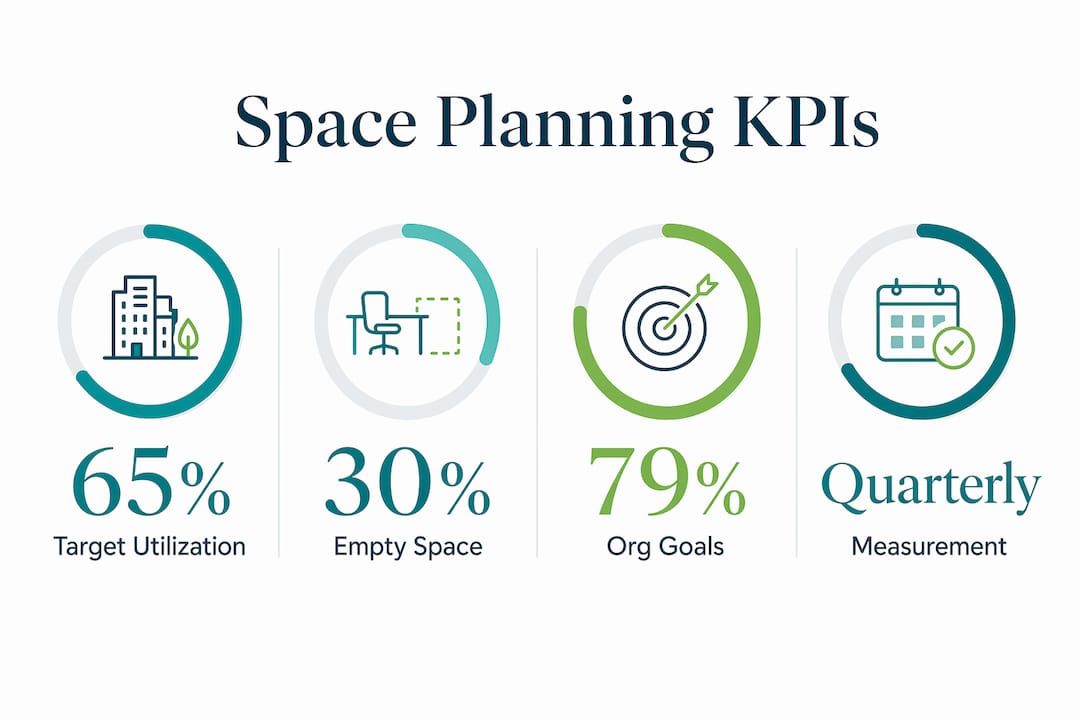
The cost case is direct. When you identify that 30% of your floor plan sits empty most of the week, you have a defensible argument to downsize your lease, sublease unused floors, or redirect that budget. Right-sizing office space based on real usage data is one of the fastest ways to reduce overhead without cutting headcount.
Employee experience improves when space types match actual work styles. Open plans that force deep-focus work into noisy environments hurt output. Offices with no collaboration space push teams into hallways. Successful organizations align workplace strategy with real team behaviors, particularly as hybrid work patterns become the norm rather than the exception.
The benefits of space planning also include future-proofing your layout. Businesses that plan space around real usage patterns can adapt faster when team sizes shift or work models change. Specific gains include:
- Reduced real estate cost through right-sizing
- Higher employee satisfaction from space types matched to work styles
- Fewer friction points in daily workflows
- Faster adaptation to hybrid and remote work patterns
- Repurposed underused areas that meet actual demand
Pro Tip: Track employee satisfaction scores and space utilization rates together after any reconfiguration. Space optimization is continuous, and pairing both metrics gives you a complete picture of whether changes are working.
What practical strategies can businesses use for space planning?
The most effective space planning strategies combine data collection, layout design, and financial framing. Start with a utilization analytics platform. InnerSpace provides precise occupancy intelligence that goes beyond badge swipes and calendar data. Gable offers space utilization metrics that help managers benchmark performance against industry standards. These tools turn anecdotal impressions into defensible decisions.
Follow a structured approach:
- Establish a baseline. Run utilization tracking for at least one full quarter before drawing conclusions. Identify which space types are overbooked, which are chronically empty, and where friction occurs daily.
- Map space types to actual behaviors. Utilization patterns inform reconfiguration, such as converting underused private offices into collaboration areas. Match the physical environment to how your team actually works, not how you assumed they would.
- Integrate financial metrics. Space planning tied to operating cost and employee friction elevates the conversation from floor plans to business decisions. Calculate cost per occupied seat and square feet per occupant to build a case leadership will approve.
- Plan changes during renovation or buildout. Renovation projects are the best time to apply space planning insights. Structural changes, partition walls, and electrical layouts are far cheaper to address during a commercial buildout than after occupancy.
- Iterate continuously. Reconfiguration is not a one-time event. Track utilization after every change and adjust based on new data.
Facilities teams must frame space planning as a business decision linked to cost, risk, and employee experience. That framing is what gets budget approved and changes implemented. For managers working through a full workspace improvement process, integrating utilization data from the start produces far better outcomes than retrofitting insights after construction is complete.
Pro Tip: After each reconfiguration, run a 30-day utilization check before declaring success. Early data often reveals unintended consequences, like a new collaboration zone that employees avoid because of poor acoustics or lighting.
How do occupancy and utilization data guide different decisions?
Occupancy data and utilization data answer different questions. Mixing them up leads to expensive errors. Understanding which metric applies to which decision is one of the most underrated space planning techniques available to managers.
Occupancy data supports long-term lease and capacity planning, while utilization data guides daily operational choices like booking policy and layout adjustments. The table below clarifies when to use each.
| Metric | Best used for | Decision type | Time horizon |
|---|---|---|---|
| Occupancy | Headcount at a moment in time | Lease negotiations, capacity planning | Long-term (months to years) |
| Utilization | How effectively space is used | Booking policy, layout redesign, zone allocation | Short-term (days to weeks) |
A practical example: a manager sees that headcount on Tuesdays and Wednesdays fills 80% of desks. That is an occupancy reading. It says nothing about whether the meeting rooms are used efficiently or whether the focus pods sit empty all day. Utilization data fills that gap. It tells you that the six-person conference room averages 1.8 occupants per booking, which is a layout problem, not a headcount problem.
Conflating occupancy with utilization leads to decisions like expanding office space when the real fix is redistributing existing square footage. That mistake is common and costly.
Pro Tip: Build two separate dashboards: one for occupancy trends to share with finance and real estate teams, and one for utilization patterns to share with facilities and HR. Each audience needs different data to make good decisions.
What common pitfalls should managers avoid in space planning?
Most space planning failures trace back to a small set of repeatable mistakes. Recognizing them early saves significant time and budget.
- Relying on headcount snapshots alone. A full office on one Tuesday does not represent typical usage. Without utilization data tracked over weeks, you are making decisions based on outliers.
- Ignoring seasonal and team-specific fluctuations. Sales teams peak in Q4. Engineering teams may work remotely in summer. Space needs shift by team and by quarter. A single annual survey misses all of it.
- Underestimating collaboration space needs. Many managers cut meeting rooms to add desks. Then teams book every available room weeks in advance and hold impromptu meetings in stairwells. Real usage data prevents this.
- Failing to measure after reconfiguration. The most common mistake is treating a redesign as a finished project. Space use evolves. Tracking changes post-reconfiguration is the only way to confirm that changes delivered the intended results.
- Overlooking the cost of unused space. Empty square footage is not neutral. It carries lease cost, utilities, and maintenance overhead. Every unused desk represents a real dollar figure on the P&L.
Pro Tip: Involve cross-functional teams, including HR, IT, and department heads, in the space planning process from the start. They surface usage patterns and friction points that facilities managers rarely see from utilization data alone.
Key takeaways
Effective space planning requires combining occupancy data, utilization metrics, and financial framing to make decisions that reduce cost and improve how employees work.
| Point | Details |
|---|---|
| Distinguish occupancy from utilization | Occupancy counts people; utilization measures how well space is actually used. |
| Target the 60–70% utilization range | The global average is 54%; closing that gap reduces wasted real estate spend. |
| Measure over a full quarter | Short-term snapshots miss seasonal patterns and produce misleading conclusions. |
| Tie space changes to financial metrics | Cost per occupied seat and square feet per occupant make the business case for reconfiguration. |
| Iterate after every change | Post-reconfiguration tracking confirms whether changes worked and reveals new friction points. |
What I’ve learned about space planning that most guides skip
Most articles on the importance of interior layout focus on square footage and furniture arrangements. After working on commercial renovation projects across New York, I have found that the real problem is almost never the floor plan. It is the gap between how managers think space is being used and how it actually gets used.
I have seen businesses invest in open-plan redesigns because leadership assumed collaboration was suffering. The utilization data told a different story: employees had plenty of informal interaction but nowhere to do focused, heads-down work. The redesign made the problem worse. The fix required adding acoustic focus pods, not removing walls.
The lesson I keep coming back to is this: space planning decisions made without utilization data are really just interior design preferences dressed up as strategy. The businesses that get this right treat space like any other operational asset. They measure it, set performance targets, and adjust when the numbers drift. That discipline is what separates a well-run office from an expensive one.
— Grzegorz
How Agny approaches space planning in renovation projects
Agny works with business owners and managers across New York who are renovating commercial spaces and need layouts that actually perform. Space planning is built into every project from the initial design phase, not added as an afterthought once walls are up.

Whether you are reconfiguring an office floor, redesigning a kitchen for a commercial operation, or building out a new workspace from scratch, Agny’s team integrates layout efficiency into the construction process. The goal is a finished space that matches how your team works, not just how it looks on a rendering. Agny’s kitchen renovations and commercial buildouts are designed to maximize usable area and reduce the friction that comes from layouts built around assumptions rather than data. Contact Agny to discuss how space planning can be part of your next renovation project.
FAQ
What is the importance of space planning for businesses?
Space planning directly affects operating costs, employee productivity, and the ability to adapt to changing work patterns. Organizations that plan space around real utilization data avoid paying for idle square footage and build environments where employees can work effectively.
What is the difference between occupancy and utilization?
Occupancy measures how many people are present at a specific moment. Utilization measures how effectively a space is used over time. Mixing up the two leads to costly allocation errors.
What is a good space utilization rate for an office?
The optimal utilization rate is 60–70%. The global average is currently 54%, which means most organizations have room to improve efficiency without expanding their footprint.
When should space planning happen in a renovation project?
Space planning should begin before any construction starts. Structural decisions, partition layouts, and electrical placements are far cheaper to adjust during design than after a buildout is complete.
How often should businesses review their space utilization data?
Review utilization data at least quarterly. Measuring over a full quarter filters out seasonal anomalies and gives a reliable baseline for making reconfiguration or lease decisions.