A commercial space can look promising on a walkthrough and still become a costly problem once walls open, permits start, and building rules come into play. That is why a commercial buildout planning guide matters most before construction begins, not after delays, change orders, or inspection issues start affecting your schedule.
In New York City, buildouts rarely move in a straight line. Landlord requirements, DOB filings, MEP coordination, elevator access, after-hours work rules, and lead times on custom materials all shape the final outcome. For retail owners, office tenants, hospitality operators, and investors, good planning is what protects both design intent and business timelines.
What a commercial buildout planning guide should actually cover
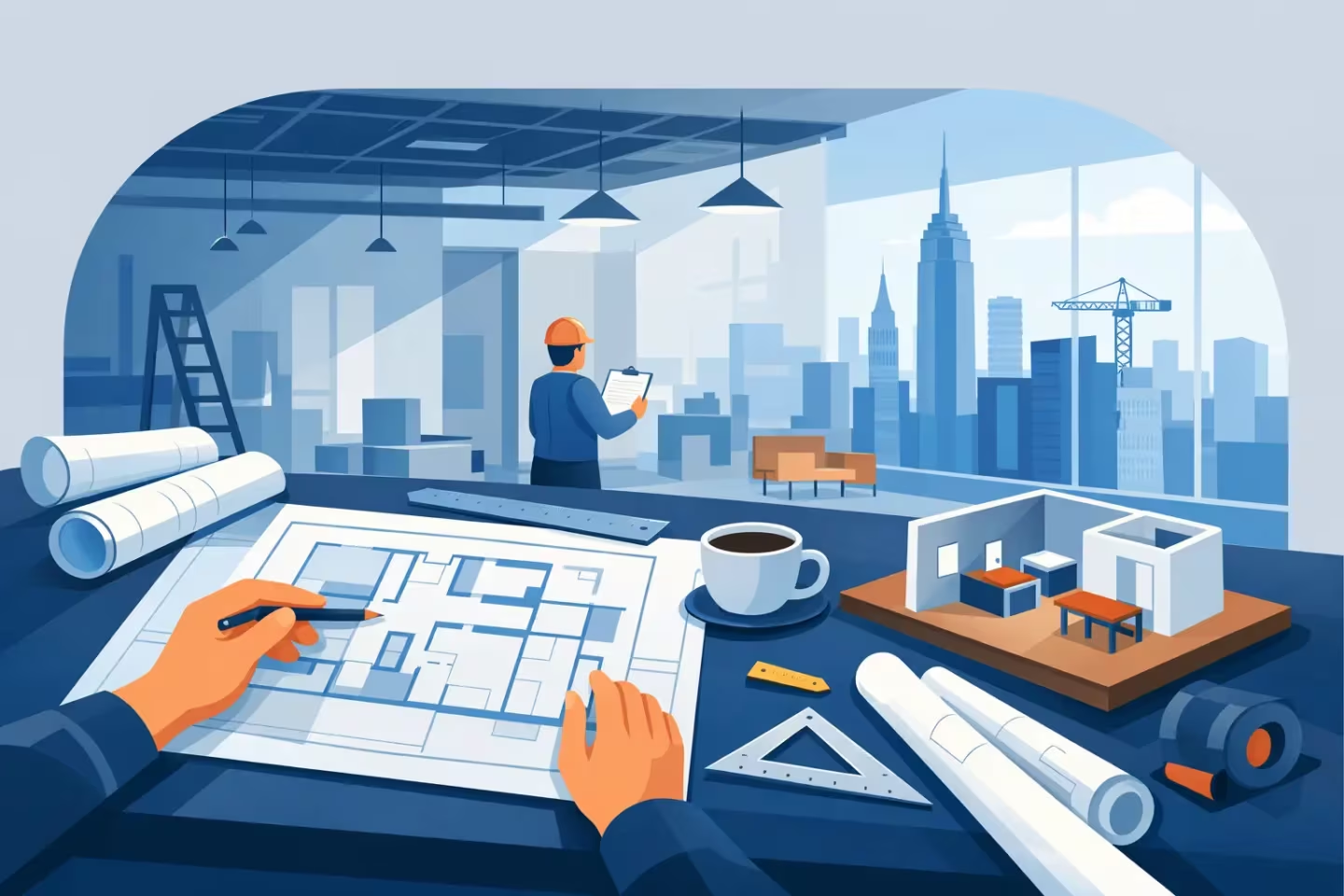
A buildout plan is not just a floor plan and a finish schedule. It is the framework that connects vision, code compliance, construction sequencing, procurement, and occupancy goals. If one part is treated casually, the entire project can absorb the impact.
At a minimum, planning should define the intended use of the space, the physical scope of work, the building systems affected, the permit path, the budget structure, and the timeline assumptions. It should also clarify who is making decisions, how approvals will be handled, and what conditions would trigger scope changes.
This is where many projects go off course. A tenant may be focused on opening date and branding, while the building management team is focused on house rules and insurance compliance. The architect may finalize layouts before a contractor has reviewed field conditions. Ownership may approve a budget based on concept pricing, then face real numbers once electrical upgrades, sprinkler revisions, or structural work are priced accurately. Early alignment is what keeps those gaps from becoming expensive.
Start with the business use, not just the layout
The most effective commercial buildout planning guide begins with operational needs. The question is not simply how the space should look. The question is how the space needs to function every day.
A medical office, a boutique retail store, a restaurant, and a professional services suite all carry different infrastructure demands. Power loads, ventilation, plumbing fixtures, ADA considerations, life safety requirements, acoustics, storage needs, and customer circulation can all shift the design and budget. Even two office buildouts can vary widely if one needs executive millwork and conference room technology while the other prioritizes dense workstation planning and quick occupancy.
That early operational review helps determine whether the existing space is a light retrofit or a more invasive renovation. It also brings discipline to the design process. Premium finishes have value, but they should be selected in support of brand use, durability, maintenance expectations, and installation realities.
Existing conditions will shape the real project
No commercial buildout should be budgeted or scheduled as if the existing conditions are irrelevant. In older New York buildings, they rarely are.
Mechanical capacity may be insufficient for the new use. Existing plumbing lines may not be where the new layout needs them. Electrical panels may require upgrades. Floors and walls may be uneven enough to affect finish installation or custom millwork tolerances. There may also be hidden conditions uncovered during demolition, especially in spaces with a long renovation history.
This is one of the clearest examples of where planning saves money even when it adds effort upfront. A careful site review, document review, and contractor input before final pricing can identify likely pressure points. It does not eliminate every surprise, but it dramatically improves decision quality.
Permits, approvals, and building requirements are part of the schedule
In New York City, permit and approval strategy is not an administrative side task. It is part of construction planning itself.
Depending on the project, your buildout may require DOB filings, permit signoffs, inspections, landlord approvals, building management submissions, and trade-specific coordination. If the property is in a condo, co-op, mixed-use building, landmark district, or heavily managed commercial property, administrative requirements can become even more layered.
The trade-off here is simple. Fast-tracking a project before approvals are properly understood may create momentum on paper, but it often creates stoppages later. A more disciplined preconstruction phase can feel slower at first, yet it typically produces a more reliable schedule.
A strong planning process should identify submission requirements early, account for review durations, and coordinate the permit path with procurement and field sequencing. That is especially important when long-lead items such as storefront systems, custom doors, specialty lighting, HVAC equipment, or millwork are involved.
Budgeting for a buildout means more than pricing finishes
Clients often start with visible scope because it is easier to imagine. Flooring, paint, partitions, lighting, and branded details are tangible. The harder budget work happens behind the walls and inside the schedule.
A realistic buildout budget should separate construction cost from soft costs, contingency, permit-related fees, specialty consultant fees if applicable, and owner-supplied items. It should also reflect building logistics. Limited work hours, material delivery restrictions, floor protection requirements, and debris handling protocols can all affect labor cost in city buildings.
Contingency deserves particular attention. It is not a sign that planning failed. It is recognition that existing conditions, client-driven changes, and jurisdictional comments can affect final cost even in well-managed projects. The right contingency amount depends on the complexity of the scope, the age of the building, and how complete the design is at the time of pricing.
Value engineering can help, but only when handled thoughtfully. Cutting cost without understanding long-term durability, maintenance, code impact, or installation implications often shifts problems rather than solving them. Smart value decisions preserve function and appearance while reducing unnecessary complexity.
A commercial buildout planning guide for schedule control
Commercial clients usually care about one date above all others – the date the space can start generating value. That could mean opening to customers, moving a team into the office, or delivering a tenant-ready asset to market.
Schedule control starts by accepting that not all tasks move in sequence. Design, permitting, procurement, demolition, rough-in work, inspections, finish installation, punch list work, and final approvals overlap in ways that need active management. If one trade falls behind or one approval takes longer than expected, the impact can ripple through every downstream milestone.
This is why experienced project oversight matters. Scheduling is not just producing a timeline. It is coordinating the order of work so trades have access when needed, materials arrive when the site is ready, and inspection timing does not stall closeout.
The best schedules also distinguish between target dates and critical dates. A target date is aspirational. A critical date has financial or operational consequences. When that distinction is clear, decision-making improves. Clients can choose where to accelerate, where to hold quality standards, and where flexibility exists.
Trade coordination is where quality and efficiency meet
Commercial buildouts are won or lost in coordination. Even elegant design documents need disciplined execution in the field.
Electrical layouts affect millwork. HVAC routing affects ceiling design. Plumbing locations affect floor penetrations and fixture placement. Flooring transitions affect door clearances. Paint and finish quality depend on substrate prep and sequencing. None of these are isolated decisions.
A single point of oversight reduces friction because it keeps responsibility from fragmenting across separate vendors. That is particularly valuable in dense urban projects where timing, access, and compliance can create operational pressure. Teams that coordinate closely tend to protect finish quality better because installation issues are addressed before they become visible defects.
For clients investing in premium interiors, this matters. High-end results do not come from materials alone. They come from precision, supervision, and a refusal to let small misalignments pass as acceptable.
Where owners should stay flexible
Even the best plan needs room for adjustment. The key is knowing where flexibility is productive and where it becomes disruptive.
It is usually wise to lock in layout, core MEP scope, and permit-impacting decisions early. Changes to those areas late in the process can affect approvals, pricing, and multiple trades at once. Finish selections may allow more flexibility, but only until procurement deadlines make substitutions costly or impractical.
Owners should also be realistic about speed. An aggressive timeline may be possible, but it often depends on earlier design decisions, faster approvals, premium procurement choices, and more intensive project management. If the schedule is compressed, the process has to become more disciplined, not less.
For New York City projects, a contractor with both craftsmanship standards and operational control can make that balance easier to manage. Firms such as AGNY Services are often valued not only for the finished work, but for their ability to coordinate permits, trades, inspections, and client priorities under one roof.
The right planning process protects the investment
A commercial buildout is more than a construction project. It is a business decision expressed through space. The planning stage determines whether that decision is executed with clarity or compromised by preventable issues.
When the scope is defined carefully, existing conditions are taken seriously, approvals are mapped early, budgets are structured honestly, and trade coordination is handled with precision, the result is not just a better renovation. It is a more controlled path to occupancy, stronger finish quality, and a space that performs as well as it presents.
If you are preparing for a commercial buildout, the smartest move is to treat planning as part of the build itself. That is where confidence starts, and where costly uncertainty begins to disappear.