TL;DR:
- Open kitchens share a floor plan with living spaces, reducing storage and increasing noise and odors. Closed kitchens offer better containment, more cabinetry, and privacy, but can feel cramped. Hybrid designs combine features of both for flexibility based on household needs.
An open kitchen is defined as a cooking space that shares a floor plan with the living or dining area, with no separating walls or doors. A closed kitchen is the opposite: a fully enclosed room with walls and at least one door. Explaining open vs closed kitchens comes down to four core differences: layout, storage capacity, acoustic performance, and social connectivity. Open kitchen-diner configurations can add 5–10% to asking prices in family homes due to perceived increased floor area. Closed kitchens, meanwhile, are seeing a strong comeback in 2026 as work-from-home lifestyles push homeowners to reclaim quiet, defined zones in their homes.
What are the key differences between open and closed kitchens?
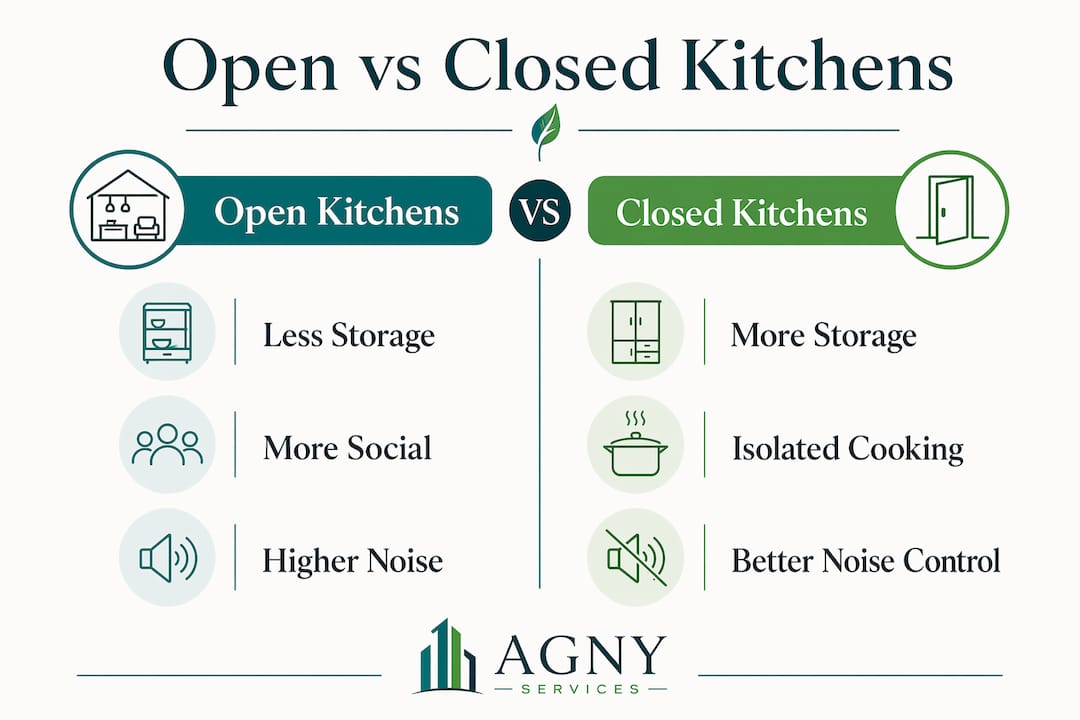
Open kitchens remove the wall between cooking and living spaces. The result is a single, connected room where cooking, dining, and socializing happen simultaneously. Closed kitchens keep cooking behind a door, typically with a Masonite or solid-core door that contains noise and odors. The choice between these two layouts shapes everything from your cabinetry options to how much you spend on acoustic treatment.
The practical gap between the two is wider than most homeowners expect. Open layouts lose physical wall space, which directly reduces upper cabinetry. Closed layouts gain privacy and noise control but can feel smaller without careful lighting design. Neither layout is universally better. The right choice depends on how your household actually uses the kitchen every day.
What are the pros and cons of open kitchens?
Open kitchens deliver real, measurable benefits for families who entertain or have young children to supervise. The layout promotes natural light flow and creates a casual social atmosphere that closed rooms simply cannot replicate. A parent cooking dinner can watch kids in the living room. A host can talk to guests without shouting through a wall.
Open kitchen benefits at a glance:
- Natural light travels freely across the combined space, making both areas feel larger
- Social interaction during cooking is effortless, with no physical barrier between cook and guests
- The layout suits casual, open-plan living preferred by many modern families
- Perceived spaciousness can increase resale appeal and add property value
- Supervision of children or pets is easier from the cooking area
The downsides are real and often underestimated. Cooking smells spread to sofas and curtains with no wall to stop them. Noise from the kitchen, including exhaust fans, dishwashers, and clattering pots, fills the entire living space. Open kitchens also lose 30–40% of upper cabinetry compared to closed kitchens because the walls that hold those cabinets no longer exist. That storage loss forces homeowners to get creative with base drawers, pull-outs, or a butler’s pantry.
Pro Tip: Install a high-performance range hood vented directly outside, not a recirculating model, before committing to an open layout. Recirculating hoods filter grease but do not remove cooking odors from the shared living space.
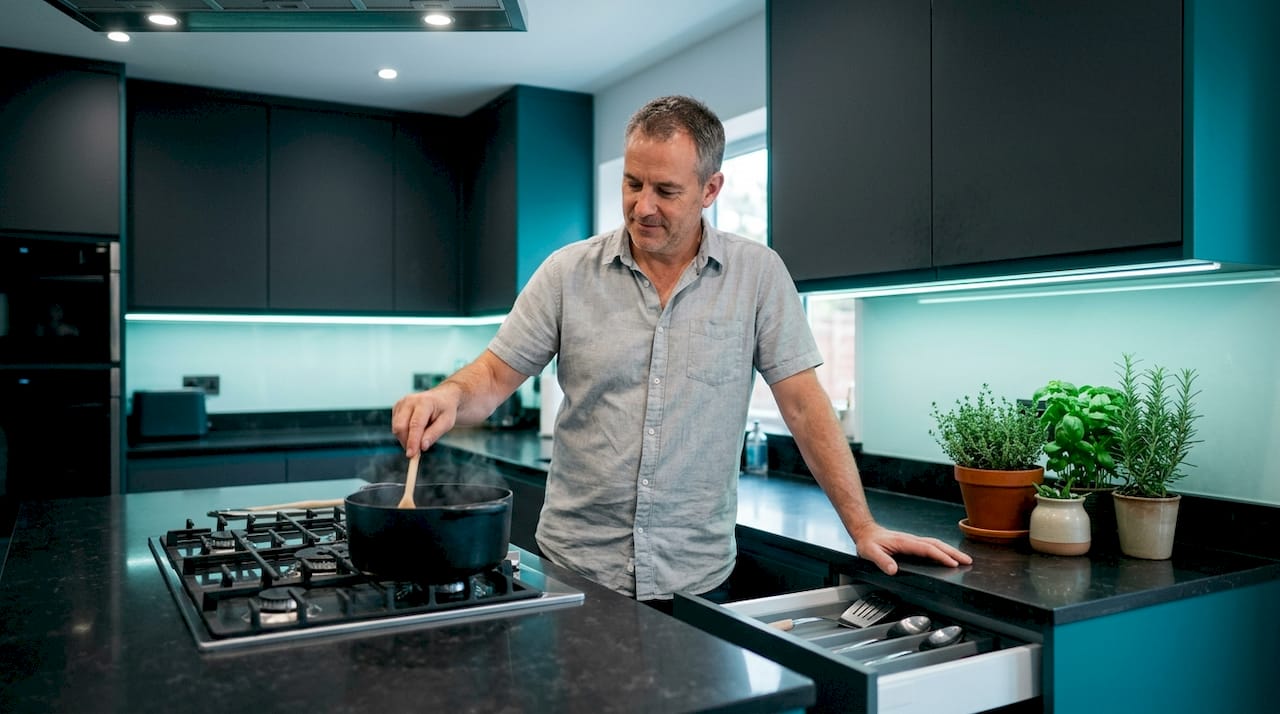
Acoustic performance is the most overlooked challenge in open kitchen planning. Open-plan kitchens reach RT60 values of 1.0–1.5 seconds, well above the domestic comfort target of under 0.7 seconds. That means sound bounces around the room for up to 1.5 seconds after it is produced, creating a noisy, fatiguing environment. Acoustic consultants recommend budgeting for panels and soft furnishings specifically to address this problem.
What are the pros and cons of closed kitchens?
Closed kitchens contain everything: noise, smells, mess, and heat. That containment is the core of their appeal. Walls and doors physically block cooking odors and noise from reaching the rest of the home. For serious cooks who spend hours at the stove, that separation is not a luxury. It is a functional requirement.
Closed kitchen advantages worth knowing:
- Noise from appliances, exhaust fans, and cooking stays inside the kitchen
- Cooking odors do not permeate upholstered furniture or living areas
- More wall space means more upper cabinetry and storage options
- The enclosed space supports multi-course meal staging and focused culinary workflow
- Closed layouts suit formal entertaining where the kitchen is kept out of sight
The closed kitchen’s biggest weakness is isolation. A cook working alone in a closed kitchen is cut off from conversation and activity in the rest of the home. The space can also feel cramped if it is small and poorly lit. These problems are solvable, but they require deliberate design choices.
Pro Tip: In a closed kitchen, install recessed ceiling lights over the countertops and under-cabinet LED strips at the task areas. A single overhead fixture in the center of the room creates shadows exactly where you need to see clearly.
Closed kitchens are growing in popularity in 2026 because remote work has changed how people use their homes. When a living room doubles as a home office, the last thing a working adult needs is dishwasher noise bleeding into a video call. Closed kitchens provide the quiet, defined zones that work-from-home households now actively seek. This trend is not nostalgia. It is a direct response to how daily life has changed.
How do storage and acoustics compare between the two layouts?
Storage and acoustic performance are the two most technical differences between open and closed kitchens, and both have direct cost implications for your renovation budget.
Storage capacity
Open kitchens lose wall space when dividing walls are removed. That wall space is where upper cabinets live. The result is a 30–40% reduction in upper cabinetry compared to a closed kitchen of similar square footage. For a household with significant cookware, pantry goods, or appliances, that loss is substantial. The standard solution is to add deep base drawers, full-height pull-out pantry units, or a separate butler’s pantry. Each of these adds cost to the project. Closed kitchens face no such constraint. All four walls are available for cabinetry, and the kitchen remodeling cost does not include acoustic remediation.
Acoustic performance
The numbers here are stark. Open kitchens produce RT60 reverberation times of 1.0–1.5 seconds. Closed kitchens stay in the 0.4–0.6 second range. The domestic comfort target is under 0.7 seconds. Reaching that target in an open kitchen requires 8–12 m² of acoustic paneling with an NRC rating of 0.8 or higher, plus soft furnishings like rugs and upholstered seating to absorb reflected sound.
| Factor | Open kitchen | Closed kitchen |
|---|---|---|
| Upper cabinetry | 30–40% less than closed | Full wall availability |
| RT60 reverberation time | 1.0–1.5 seconds | 0.4–0.6 seconds |
| Acoustic treatment needed | 8–12 m² NRC ≥ 0.8 paneling | Minimal to none |
| Odor containment | Poor without ventilation upgrades | Excellent with standard door |
| Storage solutions required | Butler’s pantry, pull-outs, base drawers | Standard upper and base cabinetry |
| Resale value impact | 5–10% asking price uplift possible | Neutral to positive depending on market |
The table makes the trade-off clear. Open kitchens offer social and resale benefits but require investment in acoustic treatment and storage alternatives. Closed kitchens are lower-maintenance from a technical standpoint but limit the social flow of the home.
What kitchen layouts blend open and closed design?
The binary choice between fully open and fully closed is a false one. A growing category of hybrid or broken-plan designs gives homeowners the benefits of both without the full drawbacks of either.
A broken-plan kitchen uses partial walls, kitchen islands, or half-height partitions to define the cooking zone without fully enclosing it. A semi-enclosed kitchen adds a sliding glass door or wide pass-through that can be opened for entertaining and closed during heavy cooking. These designs address the core complaints about both layouts simultaneously.
Hybrid layout options worth considering:
- Sliding glass doors: Provide visual openness when open and full odor and noise containment when closed. Pocket doors save floor space in tighter homes.
- Wide pass-throughs: A large opening between kitchen and dining room allows conversation and light flow without fully merging the spaces.
- Wet and dry kitchen zones: A second prep kitchen handles heavy cooking and odors while the main kitchen stays open and presentable.
- Partial walls with upper shelving: Define the kitchen boundary without blocking light or sightlines.
- Kitchen islands as dividers: A large island creates a natural separation between cooking and living zones without any wall construction.
Flexible layouts using sliding doors or pass-throughs optimize both openness and functionality. They are particularly well suited to homeowners transitioning from a closed kitchen who want more connection to the living area but are not ready to sacrifice noise control entirely. For practical layout ideas across different home sizes, kitchen layout examples can help you visualize what works before committing to a structural change.
Key takeaways
The right kitchen layout is determined by your household’s daily habits, not by design trends alone.
| Point | Details |
|---|---|
| Open kitchens lose storage | Expect 30–40% less upper cabinetry; plan for pull-outs or a butler’s pantry. |
| Acoustics require investment | Open kitchens need 8–12 m² of acoustic paneling to reach comfortable sound levels. |
| Closed kitchens are trending again | Work-from-home lifestyles in 2026 are driving demand for quiet, enclosed cooking spaces. |
| Hybrid layouts solve both problems | Sliding doors and broken-plan designs deliver openness and containment on demand. |
| Resale value favors open plans | Open kitchen-diner configurations can add 5–10% to asking prices in family homes. |
What I’ve learned after years of kitchen renovations
The homeowners who regret their kitchen layout almost always made the same mistake: they chose based on how the kitchen looks in a showroom, not how they actually cook at home. An open kitchen photographed beautifully in a design magazine is a very different experience when you are frying fish on a Tuesday night with guests in the living room.
My honest view is that the open vs closed debate is the wrong frame entirely. The real question is: what does your household do in and around the kitchen between 5 p.m. and 9 p.m. on a weekday? If that window involves kids doing homework, a partner on a work call, and someone cooking a full meal, a fully open kitchen will create friction, not harmony. If that same window involves casual entertaining and a simple meal, an open layout earns its keep every single day.
The detail most homeowners overlook is ventilation. I have seen beautifully designed open kitchens become unusable because the range hood was undersized or recirculating. No amount of acoustic paneling fixes a living room that smells like last night’s dinner. Get the ventilation right first, then make the layout decision.
Hybrid designs are where I see the most satisfaction among homeowners after the fact. A sliding door costs far less than a full structural wall, and it gives you the flexibility to change how the space functions as your household changes. A family with young children today may want that door open constantly. The same family in ten years, with teenagers and a home office, may want it closed most of the time. Build for the life you have and the life you are likely to have.
— Grzegorz
Agny can help you plan the right kitchen layout
Choosing between an open, closed, or hybrid kitchen is a structural and functional decision that shapes how your home feels every day.
Agny specializes in New York kitchen renovations that account for the full picture: cabinetry capacity, acoustic performance, ventilation, and how your layout fits your actual lifestyle. Whether you are removing a wall to open up a closed kitchen, adding a sliding partition to a fully open space, or starting a full gut renovation, Agny’s team handles the design, millwork, and construction from start to finish. Contact Agny to schedule a consultation and get a layout recommendation grounded in your home’s specific dimensions and your household’s real needs.
FAQ
What is the main difference between open and closed kitchens?
An open kitchen shares floor space with the living or dining area, while a closed kitchen is a fully enclosed room with walls and a door. The core differences are storage capacity, acoustic performance, and how cooking odors and noise are managed.
Which kitchen layout adds more home value?
Open kitchen-diner configurations can add 5–10% to asking prices in family homes due to perceived spaciousness. Closed kitchens offer neutral to positive value depending on the local market and buyer profile.
How do I fix the noise problem in an open kitchen?
Open kitchens need 8–12 m² of acoustic paneling with an NRC rating of 0.8 or higher to reach a comfortable RT60 below 0.7 seconds. Rugs, upholstered seating, and soft window treatments also reduce sound bounce significantly.
Is a closed kitchen better for serious cooking?
Yes. Closed kitchens contain noise, odors, and heat, and they support multi-course meal staging with a focused workflow. They are the preferred layout for serious home cooks and formal entertaining hosts.
What is a broken-plan kitchen?
A broken-plan kitchen uses partial walls, islands, or sliding doors to define the cooking zone without fully enclosing it. It delivers the social benefits of an open layout and the noise and odor control of a closed one.