TL;DR:
- Bathroom ventilation removes humid air and prevents moisture damage, mold, and structural issues. Proper fan sizing, installation, and continuous operation are essential for maintaining ideal humidity levels and indoor air quality. Upgrading to effective ventilation systems, especially with humidity sensors, offers long-term protection and compliance with building codes.
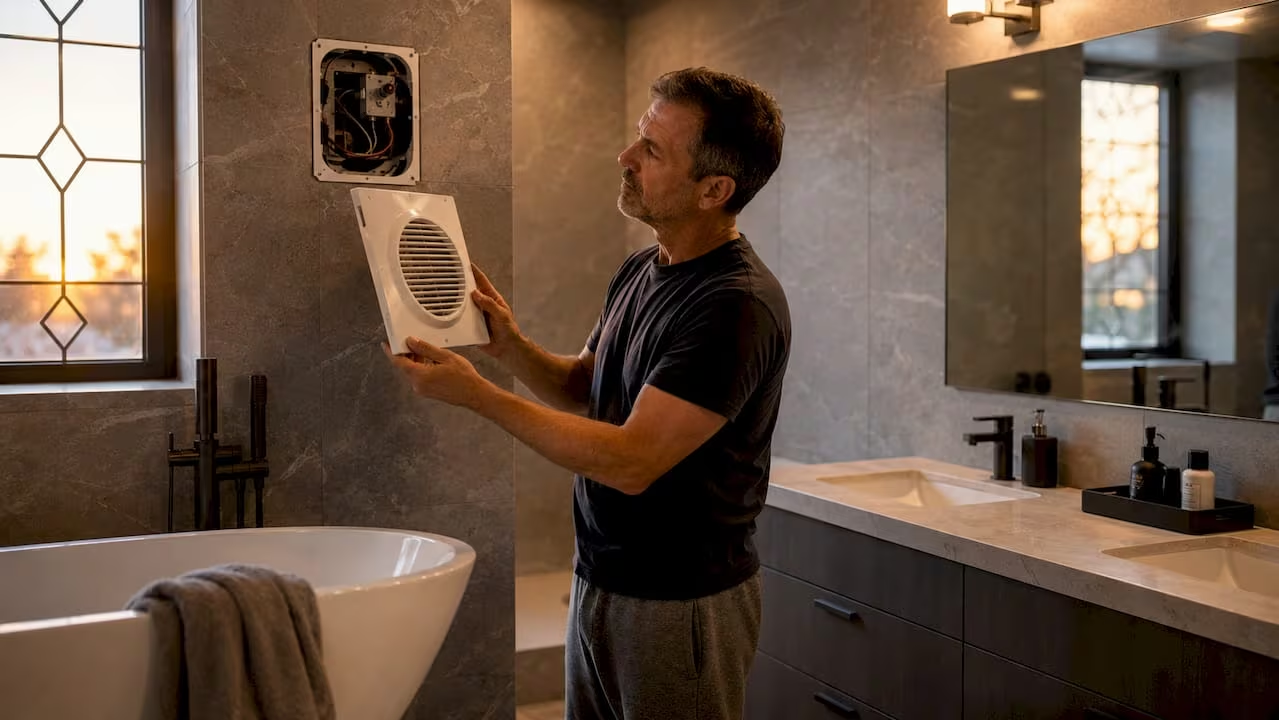
Bathroom ventilation is the mechanical process of removing humid, stale air from a bathroom and replacing it with fresh outdoor air to control moisture, odors, and indoor air quality. Without it, moisture damage accelerates rapidly, leading to mold growth, peeling paint, warped cabinetry, and compromised structural materials. Every homeowner and property manager needs a working exhaust system, not just an open window. The standard tool is a mechanical exhaust fan rated in CFM (cubic feet per minute), sized to the room and installed to vent directly outdoors.
What is explaining bathroom ventilation, and why does it matter?
Bathroom ventilation is the controlled exchange of indoor bathroom air with outdoor air, driven by an exhaust fan. The fan pulls humid air out through a duct and discharges it outside, while replacement air enters through gaps around doors or dedicated makeup air paths. This process is the primary defense against mold, mildew, and the slow rot that moisture causes inside walls and ceilings.
Good bathroom ventilation is not just a comfort feature. It is a protective system that prevents rapid mold development and structural damage. A bathroom without working ventilation is one of the fastest places in a home for air quality to degrade. Relative humidity spikes above 50% after every shower, and without mechanical exhaust, that moisture has nowhere to go except into your walls.
The industry term for this system is “mechanical exhaust ventilation.” The phrase “bathroom ventilation” is the everyday shorthand most homeowners use, and both terms describe the same thing. Understanding the mechanics behind it is the first step toward making sure your bathroom is protected year-round.
How to size and choose the right bathroom exhaust fan
Fan sizing is the most common mistake homeowners make. The standard rule is 1 CFM per square foot of bathroom floor area, with an absolute minimum of 50 CFM regardless of how small the room is. A 60-square-foot bathroom needs at least a 60 CFM fan. A 40-square-foot bathroom still needs 50 CFM minimum.
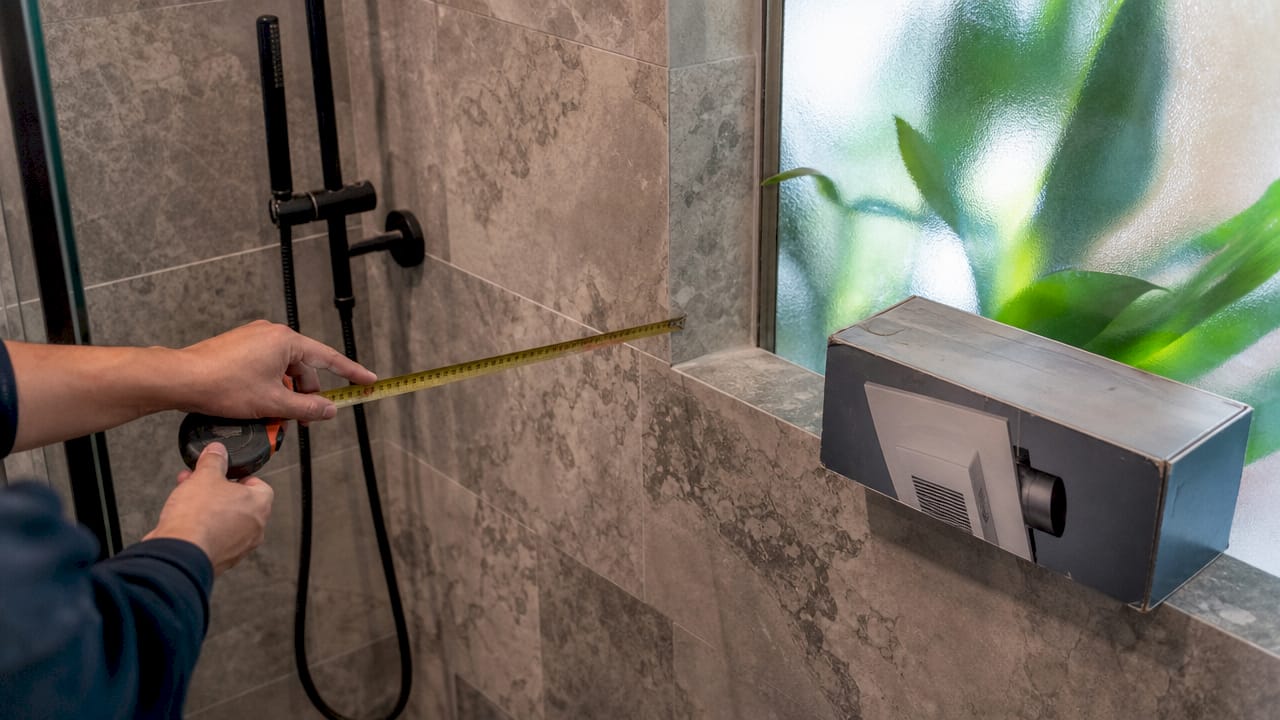
The IRC 2024 building code draws a clear line between two fan types. Intermittent fans require 50 CFM minimum and run on demand. Continuous fans can operate at a lower 20 CFM sustained rate because they run all the time. Continuous fans are gaining ground in modern airtight homes, where a steady low-volume draw controls moisture more effectively than a powerful fan that runs for 20 minutes and then stops.
Noise is the other factor that determines whether a fan actually gets used. Fan noise is measured in sones. Fans rated 0.5–1.2 sones are exceptionally quiet. A rating of 1.5–2.0 sones is considered very good. Anything above 3.0 sones is loud enough that many homeowners turn the fan off early to avoid the noise, which defeats the purpose entirely.
| Fan type | Typical CFM range | Noise (sones) | Best use case |
|---|---|---|---|
| Standard ceiling fan | 50–110 CFM | 1.5–3.5 | Most residential bathrooms |
| Quiet ceiling fan | 50–110 CFM | 0.3–1.2 | Master baths, shared walls |
| Inline fan | 100–300 CFM | 0.5–1.5 | Long duct runs, multiple rooms |
| Continuous ventilation fan | 20–50 CFM | 0.3–0.8 | Airtight or energy-efficient homes |
Always look for the HVI (Home Ventilating Institute) listing on any fan you buy. HVI certification means the fan’s CFM and sone ratings were independently tested, not just self-reported by the manufacturer.
Pro Tip: Size up by 10–20 CFM when your bathroom has a separate toilet compartment or a large walk-in shower. Those enclosed spaces trap moisture and need extra airflow.
When and how to run your bathroom fan
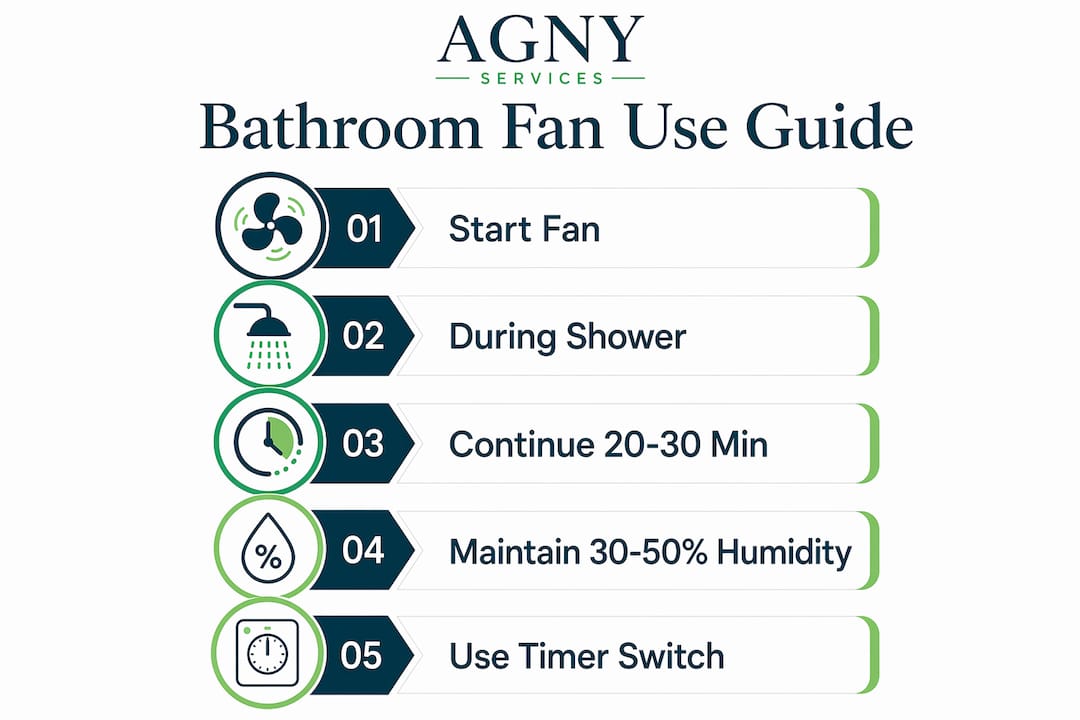
Running the fan correctly matters as much as buying the right one. Run the fan during every shower and for 20–30 minutes afterward to fully remove moisture from surfaces and air. Stopping the fan the moment you step out leaves residual humidity in the room, which is enough to feed mold over time.
The target for bathroom relative humidity is 30%–50%. Above 50%, mold and mildew begin to proliferate on grout, caulk, and drywall. A $15 hygrometer mounted on the wall tells you exactly when the fan has done its job.
Opening windows is not a reliable substitute for mechanical exhaust. In cold months, open windows cause condensation on glass and framing. In humid summer weather, you may be pulling in outdoor air that is already at 70%–80% relative humidity. A fan works year-round regardless of outdoor conditions.
Key habits that protect your bathroom:
- Turn the fan on before you start the shower, not after.
- Use a timer switch set to 30 minutes so the fan runs after you leave.
- Clean the fan grille every three months to maintain airflow.
- Check that the exterior vent cap opens freely and closes when the fan is off.
Pro Tip: Install a countdown timer switch instead of a standard on/off switch. It costs under $20 and guarantees the fan runs the full post-shower cycle without you having to remember.
How ventilation system components and installation affect performance
A correctly sized fan installed with poor ductwork will underperform a smaller fan with clean, straight ducts. Static pressure losses from long or convoluted duct runs reduce the actual CFM delivered at the fan outlet. Every 90-degree elbow in a duct run adds resistance equivalent to several feet of straight pipe.
Follow these installation steps for maximum performance:
- Place the fan near the moisture source. Proper fan placement near showers and tubs removes humid air at the source before it migrates to walls and ceilings.
- Use rigid metal duct whenever possible. Flexible duct must be fully extended. A sagging flex duct traps condensation and chokes airflow, reducing the fan’s effective output.
- Keep duct runs short and straight. Aim for the shortest path to the exterior. Each additional elbow reduces airflow.
- Terminate at a dedicated exterior cap. Bathroom exhaust must discharge outdoors through a wall cap or roof cap with a backdraft damper. Terminating into an attic, soffit, or crawl space is prohibited by code and causes moisture damage in those spaces.
- Seal all duct joints. Use foil tape, not standard duct tape, which degrades over time. Proper ductwork sealing prevents conditioned air loss and keeps the exhaust path airtight.
The backdraft damper at the exterior cap is a small but critical detail. Without it, cold outdoor air flows back through the duct when the fan is off, causing condensation inside the duct and reducing the fan’s effective lifespan.
What ventilation options work best for different bathrooms?
The right ventilation type depends on bathroom size, layout, and how the home is built. Ceiling-mounted fans are the most common choice and work well in most standard bathrooms. Wall-mounted fans suit rooms where ceiling duct routing is impractical, such as ground-floor bathrooms with no attic access above.
Inline fans mount remotely in the attic or ceiling cavity, away from the bathroom itself. They handle longer duct runs and can serve multiple bathrooms from a single unit. Because the motor is remote, inline fans are among the quietest options available at the grille level.
Humidity-sensing fans are the most reliable option for homeowners who want consistent moisture control without relying on habit. Humidity sensors activate the fan automatically when moisture rises above a preset level and shut off when humidity normalizes. Motion-detecting fans turn on when someone enters the room and run for a set period after the room is vacated.
| Ventilation type | Key benefit | Limitation | Best for |
|---|---|---|---|
| Ceiling-mounted fan | Easy installation | Requires ceiling duct access | Most bathrooms |
| Wall-mounted fan | No ceiling duct needed | Limited CFM options | Ground-floor rooms |
| Inline fan | Very quiet, high CFM | Higher install cost | Long duct runs, multi-bath |
| Humidity-sensing fan | Automatic operation | Higher unit cost | Forgetful users, rentals |
| Continuous ventilation | Steady moisture control | Always running | Airtight modern homes |
For small bathrooms under 50 square feet, a standard 50 CFM ceiling fan with a humidity sensor covers both sizing and automation needs in one unit. For ventilation in small bathrooms, the sensor model eliminates the guesswork entirely.
Key Takeaways
Bathroom ventilation is the single most effective tool for preventing mold, protecting building materials, and maintaining healthy indoor air quality in any home.
| Point | Details |
|---|---|
| Size fans correctly | Use 1 CFM per square foot with a 50 CFM minimum for any bathroom. |
| Run the fan long enough | Operate the fan during showers and for 20–30 minutes after to clear residual moisture. |
| Duct to the outside | Exhaust must terminate at an exterior cap. Attic or soffit termination is a code violation. |
| Choose the right type | Humidity-sensing fans automate moisture control and are ideal for rentals and busy households. |
| Seal and maintain ducts | Foil-taped, fully extended rigid ducts deliver the CFM the fan is rated for. |
What I’ve learned after years of bathroom renovations
The most consistent mistake I see in bathrooms is not a broken fan. It is a fan that was never used correctly. Homeowners install a decent unit, flip it on for two minutes after a shower, and then wonder why grout is turning black six months later. The fan is not the problem. The habit is.
The second pattern I see constantly is flexible duct that was never fully extended. An installer coils the last two feet of flex duct in the ceiling cavity because it is easier than cutting it to length. That coil traps condensation, grows mold inside the duct, and reduces airflow enough to make a 110 CFM fan perform like a 60 CFM fan. It is a five-minute fix that gets skipped on hundreds of jobs.
I also hear homeowners say they leave the window open instead of running the fan. That works in mild weather with a good cross-breeze. It does not work in january in New York, and it does not work in august when outdoor humidity is already high. A mechanical fan is the only year-round solution.
My honest recommendation: if your bathroom fan is more than ten years old, replace it. Fan motors degrade, grilles clog, and older units rarely meet current CFM standards. A new quiet fan with a humidity sensor costs under $150 and pays for itself in avoided mold remediation. If you are doing any bathroom renovation, treat the ventilation system as a non-negotiable part of the scope, not an afterthought.
— Grzegorz
Agny’s bathroom renovation services include ventilation upgrades
Agny specializes in bathroom renovations that address ventilation as a core part of the project, not a last-minute add-on. Every renovation Agny completes includes proper fan sizing, rigid duct routing, and code-compliant exterior termination.

If your bathroom has signs of poor ventilation, including peeling paint, persistent mold, or a fan that sounds like a jet engine, a full renovation is often the most cost-effective path. Agny works with homeowners and property managers across New York to plan and execute bathroom upgrades that protect the home long-term. Renovation financing options are available to help manage project costs without delaying necessary work. Reach out to Agny to schedule a consultation and get a clear picture of what your bathroom needs.
FAQ
What is the minimum CFM for a bathroom exhaust fan?
The minimum is 50 CFM for any bathroom, regardless of size. For larger rooms, use 1 CFM per square foot as the sizing rule.
How long should a bathroom fan run after a shower?
Run the fan for at least 20–30 minutes after showering to fully remove moisture from surfaces and return humidity to normal levels.
Can I vent a bathroom fan into the attic?
No. Building code requires bathroom exhaust to terminate at a dedicated exterior cap on the roof or wall. Venting into an attic, soffit, or crawl space is prohibited and causes moisture damage.
What humidity level should a bathroom stay at?
Bathroom relative humidity should stay between 30% and 50%. Above 50%, mold and mildew growth accelerates on grout, caulk, and drywall.
Are humidity-sensing fans worth the extra cost?
Yes. Humidity-sensing fans activate automatically when moisture rises and shut off when levels normalize, removing the reliance on user habit and providing consistent moisture control.