TL;DR:
- Fixtures are permanently attached items that transfer with a home at sale, while finishes are surface treatments that influence appearance and maintenance. Building a detailed Fixture and Finishes Schedule before shopping prevents costly coordination errors and supports a smooth renovation process.
Fixtures and finishes are the two foundational categories that define every surface, installation, and material choice in a home renovation. Fixtures are permanently attached items that add functional value and stay with the property at sale, while finishes are the decorative surface treatments applied to walls, floors, ceilings, and other elements to shape a space’s look and durability. Getting this distinction right matters before you sign a purchase contract, pull a permit, or place a single order with a supplier. Misunderstanding which items are fixtures versus removable fittings has cost homeowners real money in property disputes and renovation budget overruns.
What are fixtures and finishes, and why does the difference matter?

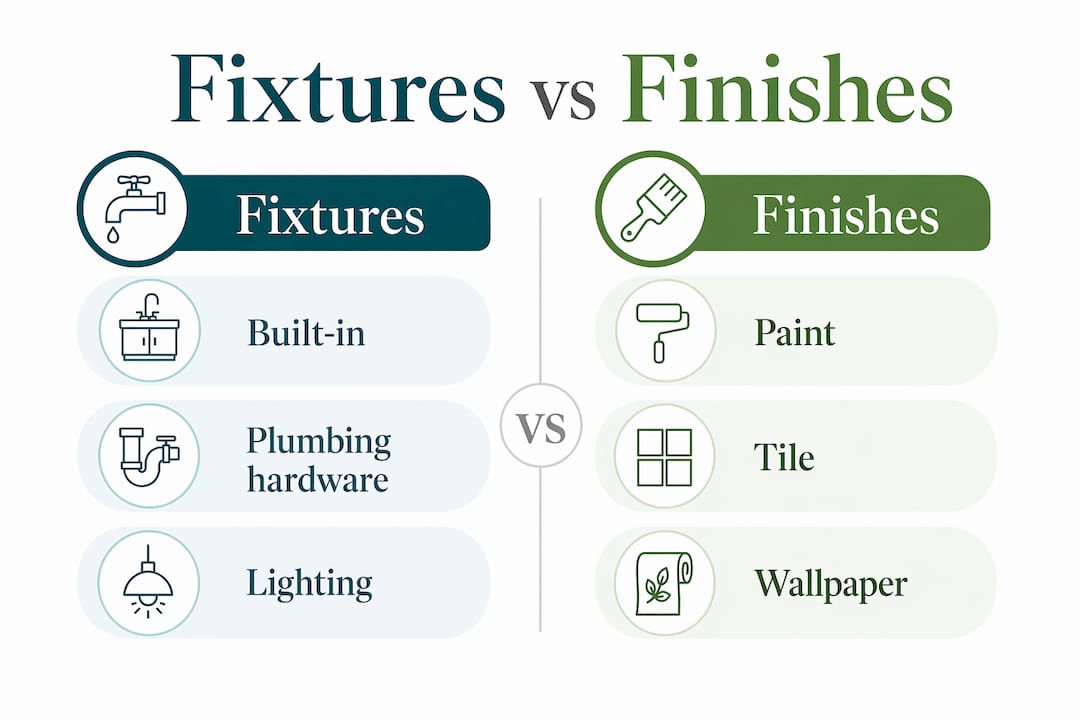
Fixtures are operational hardware. Built-in cabinetry, plumbing hardware, and lighting installations all qualify because they require professional installation and become part of the property’s structure. Finishes, by contrast, act as the skin of a space. Paint, tile, hardwood flooring, and wallpaper are all finishes. They provide aesthetic character and protection but do not carry the same legal weight as fixtures in a property transaction.
The practical difference shows up most clearly when a home sells. Fixtures are generally included in the sale price by default. Finishes influence how buyers perceive value, but they do not transfer ownership the way a built-in oven or a recessed lighting system does. A buyer who assumes the kitchen island stays, only to find it was freestanding, has learned this lesson the hard way.
Finishes also carry a maintenance dimension that fixtures do not. A matte paint finish in a high-traffic hallway will scuff and require repainting far sooner than a satin or semi-gloss finish. Choosing the right paint finish for bathrooms or kitchens directly affects how much upkeep you face over the next decade.
How do you tell a fixture from a fitting?
The legal test used in property law is called the degree of annexation. It asks two questions: how firmly is the item attached, and can it be removed without damaging the property? The degree of annexation test classifies items based on permanence of attachment and removability, and it is the standard used in real estate contracts across the United States and the United Kingdom.
Here is how common items typically classify:
- Fixtures: Built-in ovens, recessed lighting, wall-mounted bathroom vanities, fitted wardrobes, hardwired ceiling fans, plumbing rough-ins, and tile work
- Fittings: Freestanding refrigerators, plug-in lamps, curtains and rods, freestanding bathtubs (in some jurisdictions), and furniture
The borderline cases are where disputes arise. A freestanding range connected only by a gas line may be treated as a fitting in one contract and a fixture in another. A bathroom mirror bolted to the wall is usually a fixture. The same mirror resting on a ledge is a fitting.
Pro Tip: List every borderline item explicitly in your sale contract or renovation specification. A single line item in a contract prevents weeks of back-and-forth between buyers, sellers, and attorneys.
The distinction between fixtures and fittings hinges on attachment method rather than object type. Contracts should clarify which items remain and which the seller takes, especially for high-value pieces like custom cabinetry or integrated appliances.
Common types of fixtures and finishes in homes
Understanding the categories gives you a working vocabulary for renovation conversations with contractors, designers, and suppliers.
Fixture categories
Fixtures commonly include cabinetry, lighting, plumbing hardware, and permanent installations that define both function and form in a home. Each category breaks down further:
- Cabinetry: Kitchen cabinets, bathroom vanities, built-in shelving, and pantry units
- Lighting: Recessed downlights, hardwired pendants, under-cabinet lighting, and ceiling fixtures
- Plumbing hardware: Faucets, shower systems, toilets, and sinks
- Structural installations: Staircases, fireplaces, built-in window seats, and tile work
For a detailed breakdown of bathroom fixture options, the choices in 2026 range from wall-mounted faucets to integrated smart shower systems.
Finish categories and materials
Popular finish materials include paint, wallpaper, tile, and wood, each with distinct style and durability characteristics suited to different rooms. The table below summarizes common finish types and their best applications.
| Finish type | Best application | Durability level |
|---|---|---|
| Satin or semi-gloss paint | Bathrooms, kitchens, trim | High |
| Matte paint | Bedrooms, living rooms | Moderate |
| Ceramic or porcelain tile | Floors, wet areas, backsplashes | Very high |
| Hardwood or engineered wood | Living areas, bedrooms | High with maintenance |
| Wallpaper | Accent walls, dining rooms | Moderate |
| Natural stone (marble, granite) | Countertops, feature walls | Very high |
Finish selection shapes the entire mood of a room. A polished marble tile reads formal and cool. A matte limewash paint reads warm and textured. Neither is wrong, but each demands a different maintenance commitment and a different budget.
How to choose and manage fixtures and finishes for your renovation
Selection without a system leads to expensive mistakes. Ordering the wrong tile size, specifying a faucet finish that clashes with cabinet hardware, or missing a lead time by three weeks can delay an entire project. A structured approach prevents all three.
Define the room’s function first. A bathroom used daily by children needs scratch-resistant, easy-clean finishes. A guest bathroom used occasionally can support more delicate materials. Room use dictates finish durability and reflectivity, and skipping this step leads to higher upkeep costs.
Build a Fixture and Finishes Schedule (FFS) early. A Fixture and Finishes Schedule lists every item by room, including product codes, supplier contacts, costs, and installation notes. It replaces scattered email threads and verbal agreements with a single reliable reference for your builder and all trades.
Coordinate finish families across rooms. Hardware finishes, such as brushed nickel, matte black, or polished chrome, should read consistently across a floor or zone. Mixing three different metal tones in one bathroom creates visual noise that no amount of good tile work can fix.
Confirm lead times before finalizing your schedule. Custom cabinetry, imported tile, and specialty lighting can carry lead times of 8–16 weeks. Order these items before demolition begins, not after.
Assign one person as the schedule owner. On projects with multiple trades, centralized documentation prevents ordering mistakes, budget creep, and miscommunication. That person can be your general contractor, your designer, or you.
Pro Tip: Create your FFS in a shared spreadsheet so your contractor, designer, and supplier can all view the same version in real time. Version confusion is the single most common cause of wrong-item deliveries on renovation sites.
For projects involving millwork quality control, the same documentation discipline applies. Every custom piece needs a spec sheet tied to a room location and an installation sequence.
How fixtures and finishes affect home value and resale
Fixtures add permanent value because they stay with the property. Fixtures typically remain with the home and are factored into appraisals and buyer expectations. A kitchen with custom built-in cabinetry commands a higher price than the same layout with freestanding furniture, even if the aesthetic is similar.
Finishes influence buyer perception more than any other single factor during a showing. Fresh, neutral finishes signal that a home has been maintained. Dated or damaged finishes signal deferred maintenance, which buyers translate directly into price reductions. Trendy finish choices can affect longevity and buyer appeal if not carefully selected. A bold wallpaper that felt current in 2021 may read as a renovation cost to a buyer in 2026.
The most resilient finish choices share three traits:
- Neutral base tones that work with multiple furniture styles and color palettes
- High durability ratings appropriate to the room’s traffic and moisture levels
- Classic material profiles such as subway tile, hardwood, or honed stone that have held appeal across multiple design cycles
Clear documentation also protects resale value. A property settlement inspection that identifies which items are fixtures versus fittings prevents last-minute disputes that can delay or kill a sale. Buyers and their agents increasingly request this documentation upfront.
Bathroom renovations that add real value consistently rely on durable, well-documented fixture and finish selections. The same principle applies to kitchens, where kitchen renovations that add real value depend on fixture permanence and finish quality working together.
Key Takeaways
Fixtures are permanently attached items that transfer with a property at sale, while finishes are surface treatments that shape aesthetics, durability, and maintenance demands.
| Point | Details |
|---|---|
| Fixtures stay with the property | Built-in cabinetry, plumbing, and lighting are fixtures included in property sales by default. |
| Finishes shape perception and upkeep | Paint, tile, and wood finishes affect maintenance costs and buyer appeal over time. |
| Degree of annexation determines classification | How firmly an item is attached decides whether it is a fixture or a removable fitting. |
| A Fixture and Finishes Schedule prevents errors | An FFS listing items by room, supplier, and cost keeps all trades aligned throughout a project. |
| Neutral, durable finishes protect resale value | Classic materials with high durability ratings hold buyer appeal across multiple design cycles. |
Why I always start with the schedule, not the showroom
Most homeowners walk into a tile showroom before they have a room-by-room fixture list. I understand the appeal. Finishes are the fun part. But after working through dozens of renovation projects, I have seen the same pattern repeat: a homeowner falls in love with a specific marble tile, orders it, and then discovers it conflicts with the vanity finish they chose three weeks later.
The fix is simple but counterintuitive. Build your Fixture and Finishes Schedule before you visit a single showroom. Lock in your fixture categories first, confirm your hardware finish family, and then select surface finishes that support those anchors. This sequence eliminates the most common and most expensive coordination errors.
I also push back on the idea that timeless means boring. Subway tile, brushed brass hardware, and honed limestone have appeared in well-designed homes for decades. They are not safe choices. They are proven choices. Trendy finishes have a place, but I recommend limiting them to easily replaceable elements like paint color or cabinet pulls, not tile work that costs $40 per square foot to remove.
The homeowners who get the best results treat their FFS as a living document. They update it when a product goes out of stock, when a lead time shifts, and when a trade suggests a substitution. That discipline is what separates a smooth renovation from a stressful one.
— Grzegorz
Agny helps you get fixtures and finishes right from the start
Choosing fixtures and finishes is straightforward when you have the right team behind the decisions. Agny specializes in kitchen and bathroom renovations across New York, with deep experience in millwork, fixture selection, and finish coordination for projects of every scale.
Whether you are planning a full bathroom overhaul or a kitchen refresh, Agny’s team helps you build a complete Fixture and Finishes Schedule, coordinate suppliers, and avoid the ordering mistakes that derail timelines. If budget is a concern, Agny also offers renovation financing options to help you plan fixture and finish investments without compromising on quality. Reach out to Agny to discuss your project and get a clear plan before the first tile is ordered.
FAQ
What are fixtures and finishes in a home?
Fixtures are permanently attached items like cabinetry, lighting, and plumbing hardware that stay with the property at sale. Finishes are surface treatments such as paint, tile, and wood that define a space’s appearance and require ongoing maintenance.
What is the difference between fixtures and fittings?
The difference is attachment. Fixtures are firmly fixed to the structure and cannot be removed without damage, while fittings are easily removable items like freestanding appliances or curtain rods.
What are the best finishes for bathrooms?
Satin and semi-gloss paint finishes perform best in bathrooms because they resist moisture and are easy to clean. Porcelain tile and natural stone are the top choices for floors and wet areas due to their durability.
Do fixtures increase home value?
Fixtures add permanent value because they are included in property appraisals and buyer expectations. High-quality built-in cabinetry, plumbing systems, and lighting installations consistently support higher sale prices.
What should a Fixture and Finishes Schedule include?
A Fixture and Finishes Schedule should list every item by room with product codes, supplier contacts, costs, lead times, and installation notes. This single document keeps builders, designers, and trades aligned throughout the renovation.