TL;DR:
- Sustainable millwork uses responsibly sourced materials, low-emission finishes, and third-party certifications like FSC, SFI, and PEFC. Certification tracking and emission standards ensure responsible sourcing and indoor air quality, while choosing durable, repairable materials extends product life and environmental benefits. Proper specification and verification support green building credits and reduce environmental impacts through local sourcing and lifecycle planning.
Sustainable millwork is defined as the production and installation of wood-based architectural elements using responsibly sourced materials, low-emission finishes, and verified third-party certifications such as FSC, SFI, and PEFC. The term covers everything from custom cabinetry and trim to doors, paneling, and built-ins. Green building rating systems like LEED v4.1 directly reward projects that specify certified wood products, making eco-conscious millwork a practical requirement for many commercial and residential builds. Understanding what sustainable millwork means, and how to verify it, protects both your indoor environment and the forests behind your finishes.
What certifications and standards define sustainable millwork?
Certifications are the backbone of any credible sustainability claim in millwork. Without them, “eco-friendly” is just a marketing phrase. Three primary certification bodies set the standard: the Forest Stewardship Council (FSC), the Sustainable Forestry Initiative (SFI), and the Programme for the Endorsement of Forest Certification (PEFC).
LEED v4.1 awards points for responsible wood sourcing, requiring 25–50% of wood products to meet verified sourcing standards. FSC-certified wood earns the highest-tier credit, while SFI and PEFC qualify through Alternative Compliance Paths. That distinction matters when you are writing specifications for a LEED-targeted project.
Chain of custody (CoC) certification is equally critical. It tracks certified wood from the forest through every stage of manufacturing and distribution to the finished product. Chain of custody methods include physical separation of certified and non-certified material, or percentage and credit systems that allow blending with full accounting. Without a valid CoC certificate from your supplier, any FSC label on the finished piece is unverifiable.
Emission standards form the second layer of compliance:
- CARB Phase 2 and TSCA Title VI set the regulatory baseline for formaldehyde emissions from composite wood panels in the United States.
- GREENGUARD Gold certification verifies that finished products meet strict chemical emission limits for sensitive environments like schools and healthcare facilities.
- No-added formaldehyde (NAF) resin systems go beyond the regulatory baseline and are the preferred choice for cabinetry cores and casework.
Pro Tip: Always request both the chain-of-custody certificate number and the emission test report from your millwork supplier before signing off on a specification. A certificate number you can verify online takes less than two minutes to check and eliminates the most common greenwashing risk.
What eco-friendly materials are used in sustainable millwork?
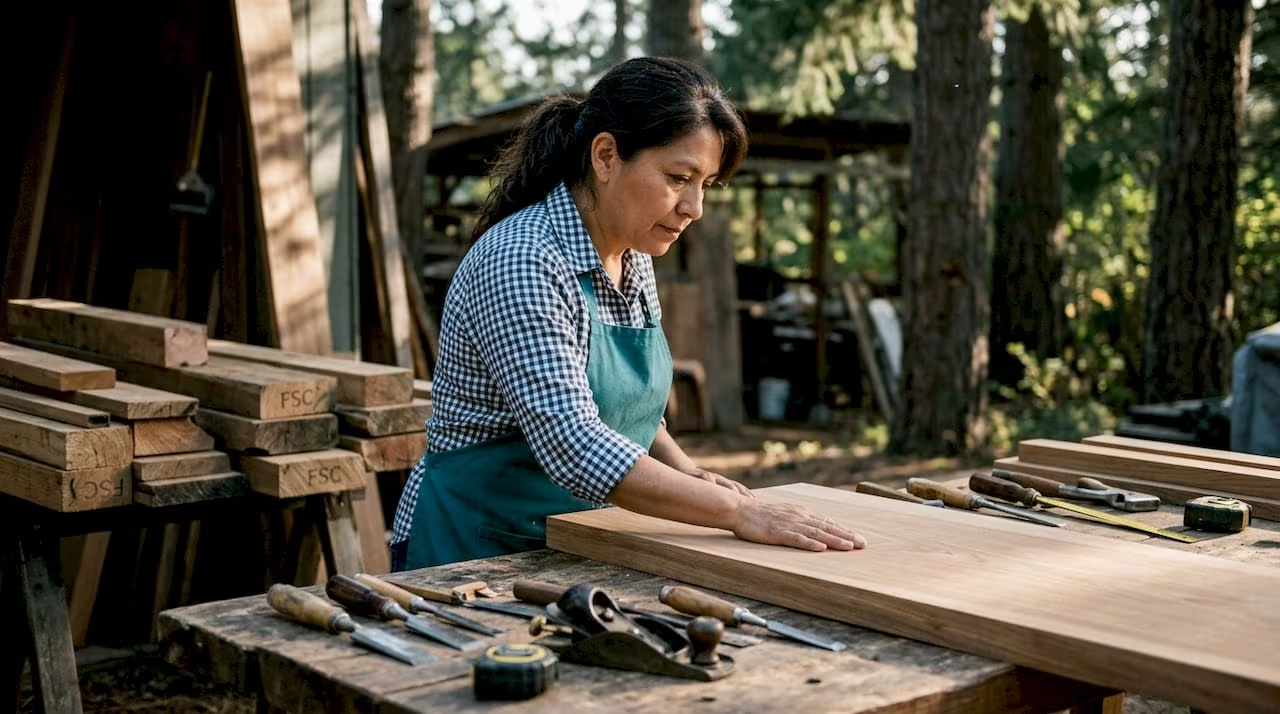
The material choice is where sustainable woodworking practices become visible in the finished product. Three categories dominate responsible millwork: reclaimed wood, rapidly renewable alternatives, and engineered wood with low-emission cores.
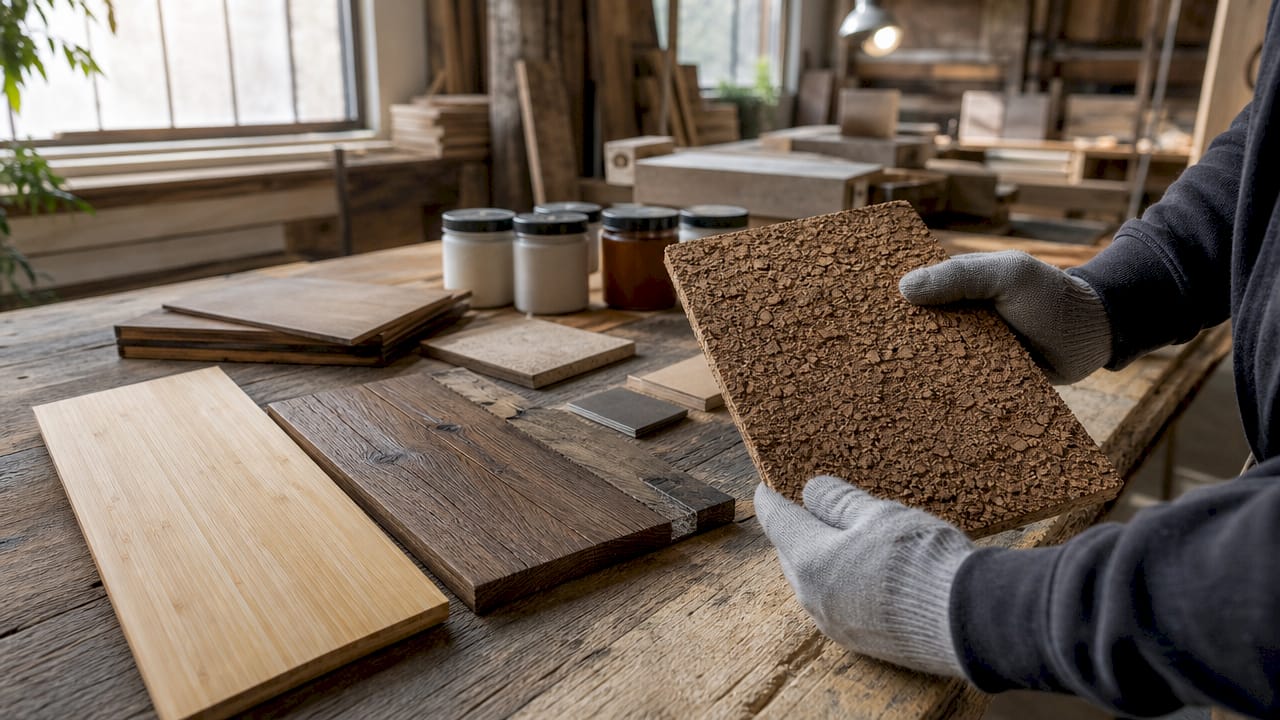
Reclaimed lumber and FSC-certified hardwoods deliver two distinct benefits. Reclaimed wood diverts material from landfills and carries embodied carbon that has already been accounted for. FSC-certified hardwoods verify that new timber comes from forests managed for biodiversity, worker rights, and long-term yield.
Rapidly renewable resources like bamboo and cork grow to harvest maturity in under ten years, compared to decades for most hardwoods. Bamboo performs well in flooring and paneling applications. Cork works for wall panels and underlayment. Both offer good dimensional stability and a lower sourcing footprint than slow-growth species.
No-added formaldehyde engineered cores in cabinetry and casework balance structural performance with indoor air quality. Standard particleboard off-gasses formaldehyde for years after installation. NAF-certified medium-density fiberboard (MDF) and plywood eliminate that risk without sacrificing the flat, stable surface that painted cabinetry requires.
| Material | Renewability | Emissions risk | Durability |
|---|---|---|---|
| FSC-certified hardwood | Moderate | Low (solid wood) | High |
| Reclaimed lumber | Highest (reuse) | Very low | High |
| Bamboo | Very high | Low to moderate | Moderate to high |
| NAF MDF or plywood | Low | Very low | Moderate |
| Standard particleboard | Low | High | Low to moderate |
Finishes complete the picture. Low-VOC and zero-VOC finishes, water-based stains, and plant-based oils reduce chemical off-gassing during and after installation. Products carrying GREENGUARD Gold or SCS emissions certifications meet the most demanding indoor air quality thresholds. Solvent-based lacquers, by contrast, release volatile organic compounds for weeks after application.
Pro Tip: Specify the finish by certification number, not just by brand claim. “Low-VOC” has no universal legal definition in the United States. GREENGUARD Gold or SCS Indoor Advantage Gold are the two certifications that carry independent verification.
What are the benefits of sustainable millwork?
The benefits of sustainable millwork extend well beyond the forest. They show up in your building’s air quality, your maintenance budget, and your project’s carbon footprint.
Durable, well-maintained millwork extends its lifecycle and reduces the demand for replacement materials. Refinishing a solid wood door or cabinet face preserves the embodied carbon already invested in that piece. Replacing it with a new unit consumes fresh resources and generates construction waste. Longevity is the most underrated sustainability metric in millwork.
Indoor air quality is a direct, measurable benefit. Buildings with low-emission millwork show lower concentrations of formaldehyde and total VOCs in air quality tests. That matters most in spaces where people spend long hours, including kitchens, home offices, and children’s rooms. GREENGUARD Gold certified products are specifically tested for these environments.
Local manufacturing and shorter supply chains reduce transportation emissions and strengthen accountability. A millwork shop operating within 500 miles of your project site produces a fraction of the shipping emissions of an overseas manufacturer. Proximity also makes it easier to audit sustainability claims and resolve quality issues quickly.
Sustainable millwork also supports corporate ESG commitments and green building credits. ESG-driven demand for certified wood has grown across commercial real estate, hospitality, and healthcare sectors. LEED, WELL, and Living Building Challenge projects all reward responsible material sourcing. Specifying certified millwork contributes directly to those credits.
Key lifecycle benefits at a glance:
- Reduced construction waste through durability and repairability
- Lower indoor VOC and formaldehyde concentrations
- Smaller carbon footprint from certified forestry and local sourcing
- Alignment with LEED, WELL, and ESG reporting requirements
- Long-term cost savings from fewer replacements and refinishing over replacement
How do you choose sustainable millwork for your project?
Choosing eco-friendly millwork options requires more than selecting a product labeled “green.” The specification process determines whether your sustainability goals survive contact with the supply chain.
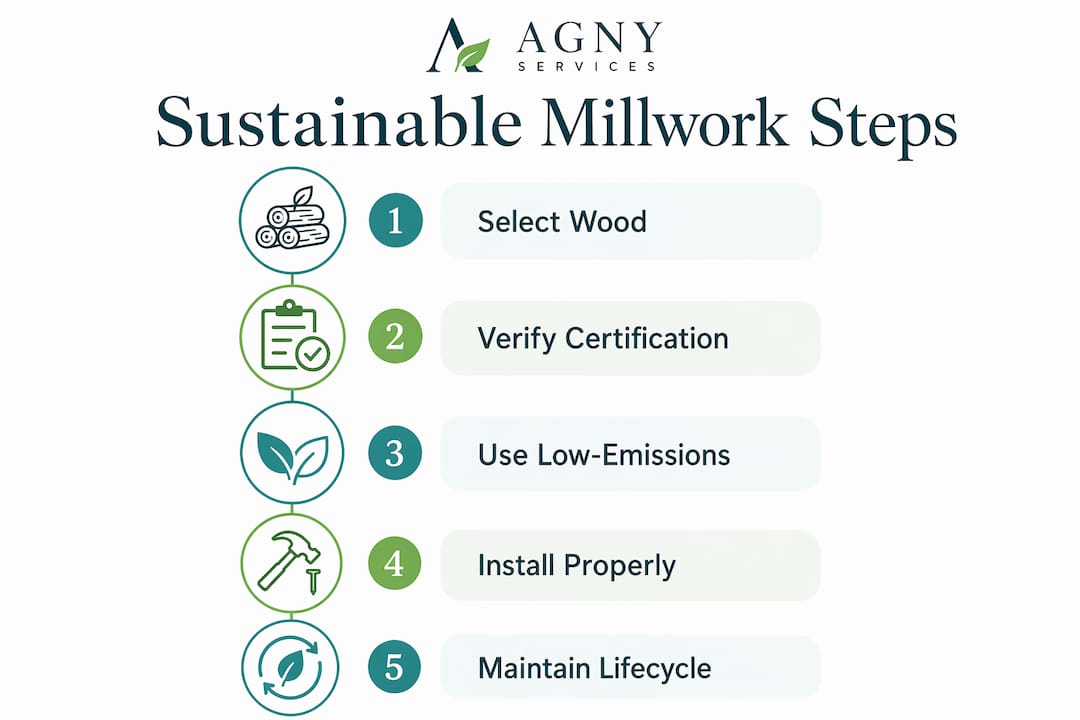
Define your certification requirements upfront. State the required certification (FSC, SFI, or PEFC) and the minimum percentage of certified content in your contract documents. Explicit contract specifications covering species, certification type, emissions limits, and finish requirements are the single most effective way to prevent substitutions that undermine your goals.
Request documentation before fabrication begins. Ask for the supplier’s chain-of-custody certificate number, the relevant emission test reports (CARB Phase 2, TSCA Title VI, or GREENGUARD Gold), and the finish product data sheet. Verify the CoC number directly on the certifying body’s public database.
Match material to end use. Solid FSC-certified hardwood performs best in high-traffic areas with moisture exposure, such as kitchen cabinetry and bathroom vanities. NAF MDF works well for painted interior trim and built-ins in dry spaces. Reclaimed wood suits feature walls and decorative millwork where structural loads are minimal.
Account for the full lifecycle. A material that lasts 30 years with periodic refinishing outperforms a “greener” material that needs replacement in 10 years. Sustainability viewed as a full lifecycle concept consistently produces better environmental outcomes than chasing isolated eco-labels.
Evaluate local supply options. Sourcing from regional millwork shops reduces transportation emissions and makes supplier audits practical. Agny works with local fabricators and applies millwork quality control standards to verify that sustainability specifications carry through from raw material to installed product.
Pro Tip: Ask your millwork supplier whether they use physical separation or a percentage/credit system for their chain-of-custody accounting. Physical separation is the most verifiable method and the least susceptible to blending errors that dilute certified content.
Common pitfalls to avoid: accepting generic “eco-friendly” claims without documentation, ignoring lifecycle impacts in favor of a single certification, and overlooking local supply options that reduce transportation emissions. Manufacturers with complex wood manufacturing expertise typically maintain more rigorous material tracking than general contractors sourcing millwork as a secondary trade.
Key Takeaways
Sustainable millwork delivers its full environmental value only when certifications, low-emission materials, and long lifecycle planning work together from specification through installation.
| Point | Details |
|---|---|
| Certifications verify claims | FSC, SFI, and PEFC with valid chain-of-custody certificates are the only reliable proof of responsible sourcing. |
| Emissions standards protect air quality | Specify CARB Phase 2, TSCA Title VI, or GREENGUARD Gold to control formaldehyde and VOC exposure indoors. |
| Durability beats trendy materials | A well-maintained solid wood piece outperforms a short-lived “green” alternative in real lifecycle impact. |
| Local sourcing reduces carbon footprint | Regional fabricators cut transportation emissions and make sustainability audits practical. |
| Specifications must be explicit | Vague green requirements produce weak outcomes; name the species, certification, and emission limit in writing. |
Why I think most buyers get sustainable millwork wrong
Most buyers treat sustainability as a checkbox. They ask whether a product is FSC-certified and stop there. That approach misses the majority of the actual environmental impact.
The biggest factor in millwork sustainability is not the certification on the raw wood. It is how long the finished piece lasts and whether it can be repaired rather than replaced. A solid white oak cabinet with a water-based finish, properly maintained, can serve a kitchen for 40 years. A trendy bamboo composite with a solvent-based topcoat might look great for five years and then delaminate. The FSC label on the bamboo does not make it the better environmental choice.
I have also seen projects where the wood was certified but the substrate was standard particleboard off-gassing formaldehyde for years. The certification covered the face veneer. Nobody checked the core. That is why emission documentation matters as much as sourcing documentation.
The buyers who get this right treat sustainability as a specification discipline, not a product category. They write down exactly what they need, verify every document before fabrication starts, and choose suppliers who can explain their chain-of-custody accounting method without hesitation. That level of rigor is available to any homeowner or project manager willing to ask the right questions.
— Grzegorz
Agny’s approach to sustainable millwork projects
Agny brings the same specification discipline to every millwork project, whether it is a kitchen renovation, a bathroom vanity, or a custom built-in. The team verifies certifications, reviews emission documentation, and works with regional fabricators to keep supply chains short and accountable.
For homeowners and businesses ready to specify custom millwork that meets real sustainability standards, Agny handles the documentation, supplier vetting, and installation oversight from start to finish. The industry standards guide on the Agny website covers the specific certifications and emission thresholds that apply to your project type. Reach out to discuss how responsible material choices fit your renovation budget and timeline.
FAQ
What does FSC certification mean for millwork?
FSC certification means the wood in your millwork comes from a forest managed for environmental, social, and economic responsibility. A valid chain-of-custody certificate from the fabricator confirms that certified material was tracked from the forest to your finished product.
Is bamboo a good sustainable alternative to hardwood in millwork?
Bamboo is rapidly renewable and performs well in paneling and flooring applications, but its sustainability depends on the adhesive and finish used. Specify low-emission binders and a GREENGUARD-certified finish to avoid trading a sourcing benefit for an air quality problem.
What is the difference between CARB Phase 2 and GREENGUARD Gold?
CARB Phase 2 is a California regulatory standard for formaldehyde emissions from composite wood panels, and it is the legal baseline across the United States under TSCA Title VI. GREENGUARD Gold is a voluntary third-party certification that sets stricter emission limits for sensitive environments like schools and healthcare spaces.
How does sustainable millwork support LEED certification?
LEED v4.1 awards credits when 25–50% of wood products in a project meet responsible sourcing standards. FSC-certified wood earns the highest-tier credit, while SFI and PEFC qualify through alternative compliance paths.
Does sustainable millwork cost more than conventional millwork?
Certified and low-emission millwork typically carries a modest premium over uncertified alternatives, but the lifecycle savings from durability and reduced replacement offset that difference over time. Local sourcing can also reduce shipping costs and partially close the price gap.