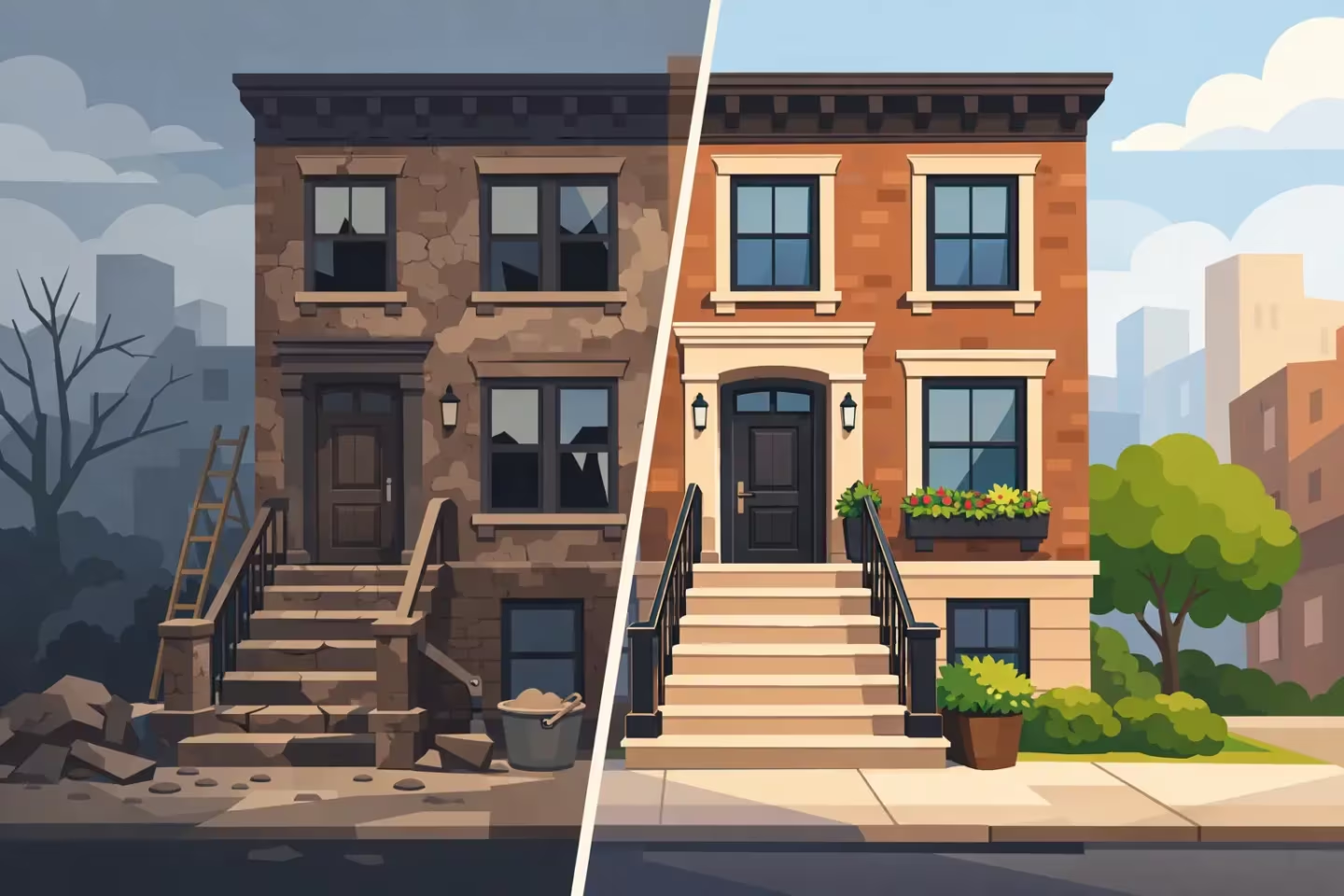
A true brownstone renovation before and after is rarely about paint, lighting, and better staging. In New York City, the real transformation happens behind the walls, under the floors, and in the decisions that bring historic character into line with how people actually live now.
That is what makes brownstone work so distinct from a standard remodel. These homes carry architectural value, structural complexity, and often decades of layered alterations. The best results do not come from treating the property like a blank box. They come from understanding what should be preserved, what must be rebuilt, and how every trade needs to move in coordination to protect both the design and the investment.
What a brownstone renovation before and after really shows
The most striking before-and-after photos usually highlight restored moldings, new kitchens, brighter parlor floors, or spa-style bathrooms. Those visual changes matter, but they are only the visible side of a much larger construction effort.
In many Brooklyn and Manhattan brownstones, the “before” condition includes more than outdated finishes. It may mean sloped floors, undersized electrical service, aging plumbing lines, poor insulation, drafty windows, patched plaster, or an awkward floor plan shaped by previous owners. Sometimes the house has strong bones and beautiful detail but lacks functional flow. Other times, the charm is there, but so are water issues, code concerns, and years of deferred maintenance.
The “after” should solve both categories of problems. A successful renovation improves comfort, performance, and daily use while respecting the home’s architectural language. If the project looks beautiful but still feels inconvenient, inefficient, or fragile, the renovation is incomplete in the ways that matter most.
Why brownstones demand a different renovation strategy
Brownstones are not forgiving buildings. Once demolition begins, hidden conditions are common. Framing may have been modified decades ago. Mechanical lines may run where drawings suggest they should not. Decorative elements may need careful removal and restoration rather than replacement. Even a relatively focused kitchen or bathroom update can trigger broader scope once walls open.
That is why planning matters more here than in many newer properties. The process should begin with a realistic assessment of structure, systems, layout, landmark or building requirements where applicable, and finish goals. Design ambition is important, but it has to be matched by project leadership that can sequence the work correctly and respond quickly when existing conditions shift the plan.
For owners, the trade-off is straightforward. Brownstones can deliver exceptional results, but they are rarely the right setting for rushed budgets or fragmented contractor coordination. The homes reward precision. They penalize shortcuts.
The biggest changes in a brownstone renovation before and after
Layout is often the first major shift. Many brownstones were designed for another era, with compartmentalized rooms, service spaces no longer suited to modern living, and circulation patterns that feel formal rather than practical. A thoughtful renovation can open key connections between kitchen, dining, and living spaces without stripping away the home’s identity. In some homes, that means selective wall removal and structural reinforcement. In others, it means keeping room separation while improving proportion, storage, and sightlines.
Kitchens usually carry some of the most dramatic before-and-after impact. The original footprint may be too closed off, poorly lit, or disconnected from the family’s actual routine. The best renovations improve not only cabinetry and appliances but also workflow, ventilation, electrical capacity, and lighting layers. In a brownstone, that often requires substantial work beyond the finishes clients notice first.
Bathrooms also reveal the difference between cosmetic updating and real renovation. In older homes, bathrooms may suffer from poor waterproofing, outdated drain lines, weak ventilation, and layouts that waste space. A proper rebuild addresses those conditions while elevating materials, fixture placement, and comfort.
Then there are the systems. This is where value is often created quietly. Replacing outdated wiring, improving HVAC distribution, modernizing plumbing, and integrating code-compliant solutions may not dominate the photo gallery, but these upgrades change how the home functions every day. They also reduce the likelihood that a beautiful renovation will be interrupted by avoidable failures later.
Preserving character without freezing the house in time
Owners are often balancing two instincts at once. They want the home to feel historic, and they want it to perform like a modern residence. Those goals are not in conflict, but they do require discipline.
Original millwork, stair details, fireplaces, ceiling medallions, pocket doors, and plaster ornament can define the emotional value of the house. Removing these elements too casually can flatten the entire project. At the same time, preserving everything exactly as found is not always sensible. Some details are too damaged, some prior alterations are not worth honoring, and some spaces need to evolve to support contemporary use.
The best before-and-after results come from selective restoration. Keep what gives the house its voice. Rebuild what has lost integrity. Introduce modern materials and detailing in a way that feels intentional rather than imitative. A brownstone does not need to pretend it is still living in 1890. It should simply avoid feeling generic in 2026.
The part clients do not see in photos: permits, logistics, and sequencing
In New York, renovation quality is tied directly to execution quality. Brownstone projects involve more than design decisions and material selections. They often require permit coordination, inspections, delivery logistics, building protections, trade scheduling, and close oversight across demolition, framing, MEP work, finish installation, and punch-list completion.
This is especially important in city conditions where access is limited, neighbors are close, and delays can cascade quickly if one phase is not properly managed. Even an elegant design can be undermined by poor sequencing. Cabinetry arrives before walls are ready. Tile is selected before substrate conditions are resolved. Mechanical work gets squeezed because framing changes were not coordinated early enough.
That is why experienced owners tend to value a contractor who can manage the entire chain of decisions, not just the labor on site. Firms such as AGNY Services are built around that model, combining craftsmanship with project oversight so the final result is not left to chance between disconnected vendors.
What adds value and what only looks expensive
Not every upgrade carries equal weight in a brownstone. Buyers and owners both respond to spaces that feel cohesive, well built, and operationally sound. A home with beautiful stone counters but unresolved floor issues or dated electrical infrastructure may photograph well and still feel incomplete.
Value typically comes from a combination of restored architectural detail, improved layout, upgraded kitchens and baths, stronger mechanical performance, quality windows and doors where appropriate, and finish selections that align with the home rather than competing with it. Material cost matters, but fit and workmanship matter more.
There is also an important judgment call around luxury. Premium finishes can absolutely elevate a brownstone, but luxury without restraint can push the project away from the home’s original character. The strongest interiors feel edited. They do not need to prove their budget in every room.
Setting realistic expectations for time and budget
A polished brownstone renovation before and after can make transformation look simple. It is not. Timelines vary widely depending on scope, permit requirements, structural work, and the number of hidden conditions discovered once construction starts.
A focused renovation on select floors may move very differently from a full gut. A landmarked property may require extra review. Custom millwork, specialty stone, and high-end fixtures can also extend lead times. Budgeting should account for contingency, especially in older buildings where surprises are normal rather than exceptional.
The most successful clients are not the ones who avoid complexity. They are the ones who enter the process with a clear priority list, realistic flexibility, and a team that communicates early when decisions affect schedule or cost.
What the best after looks like
The strongest finished brownstones do not feel newly built. They feel resolved. The rooms work better, the detailing feels intentional, and the house supports modern life without losing its stature. Light moves more clearly. Storage is better integrated. Kitchens and baths feel current. Mechanical systems are quieter and more reliable. The house becomes easier to live in and stronger to own.
That is the real measure of a before-and-after transformation. Not whether the photos are dramatic, but whether the renovation delivered lasting function, architectural respect, and confidence in the quality behind every finished surface.
If you are considering a brownstone renovation, look past the reveal image for a moment. The smartest investment is the one that makes the house better where no one sees it first, because that is what allows the beauty to hold up over time.