
You can stand in a half-open kitchen, invoice in one hand and a contractor's change-order email in the other, and still not know whether you're making a smart investment or just building a nicer room. That's the pressure point in home improvement return on investment, especially in NYC and New Jersey, where labor, permits, and building type can push the result far away from the national average.
The question isn't whether the space will feel better. It's whether the dollars you put in will come back at resale, through rent, through lower operating costs, or through a cleaner refinance position. That's the lens that keeps owners from overbuilding and helps investors avoid paying luxury prices for basic market outcomes.

A kitchen in progress also forces the same choice every owner faces, whether the property is a Brooklyn brownstone, a Jersey rental, or a small commercial space. Push the scope, or keep it tight and defensible. The smart answer usually comes from the project's likely resale behavior, not from how ambitious the design looks on paper.
For a visual reference on kitchen scope and layout expectations, this kitchen renovation example in Manhattan and Brooklyn shows the kind of planning that affects both cost and eventual market acceptance.
What Home Improvement ROI Really Means
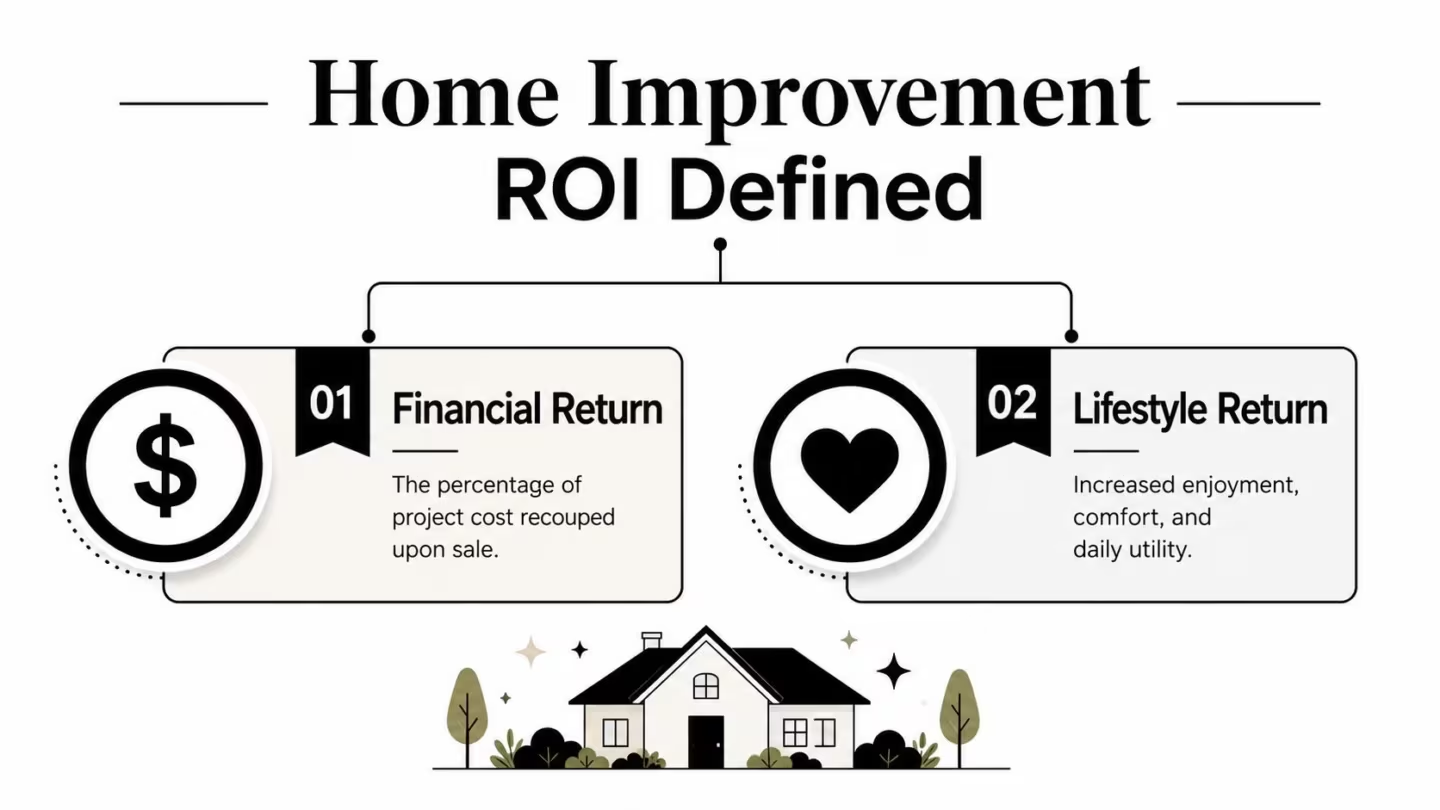
Home improvement return on investment gets used two different ways, and mixing them up leads to bad decisions. In the strict real-estate sense, it means cost recovery at resale, not profit from living in the improved space. In the practical owner sense, it also includes the years of enjoyment, the rent you can support, the maintenance you avoid, and the financing you carry to get the project done.
The standard formula is simple, (Added Resale Value minus Project Cost) ÷ Project Cost. If a kitchen costs $30,000 and adds $33,000 at sale, the project returns 10% above cost before financing and holding costs are considered. That's useful, but it still leaves out the real-life questions a borrower or landlord has to answer.
Practical rule: a project can look good on paper and still be a weak financial move if the money is borrowed at an expensive rate or the hold period is too short.
The reason this matters is that ROI is not just a finish-quality discussion. A project can feel beautiful and still appraise softly if the scope is too custom, too large, or too far above the home's price tier. It can also underperform if the owner spends aggressively on materials that buyers don't reward at resale.
Financial Return and Lifestyle Return
The cleanest way to think about the metric is to split it into financial return and lifestyle return. Financial return is what the market gives back when you sell, refinance, or appraise. Lifestyle return is the daily value of a better layout, a quieter HVAC system, more usable storage, or a space that works.
That split is important because many owners talk about ROI as if the resale percentage is the whole story. It isn't. A rental property, an owner-occupied condo, and a hospitality build-out can all justify different kinds of payback, and the right answer depends on the goal.
A strong quoting process should make those goals explicit before drawings harden. Ask what the project is really meant to do, reduce vacancy, support a sale, or improve the way the space functions. Then test the quote against that goal instead of against a generic average.
Typical ROI Ranges by Project Type
The big pattern in the U.S. data is straightforward. Small, visible, exterior-heavy projects tend to outperform large discretionary interior builds on resale, because buyers can see the improvement immediately and appraisers are less likely to discount it. That's why garage door replacement and steel front door replacement keep showing up near the top, while large additions and luxury expansions often lag.
The 2024 Cost vs. Value coverage cited by CNBC showed garage door replacement at 194% and steel front door replacement at 188%, with nine of the top 10 highest-return projects being exterior improvements. The same coverage noted that some projects were approaching nearly 200% returns for the first time, which is unusually strong by historical standards. CNBC's report on curb-appeal projects makes the ranking hard to ignore.
A minor kitchen remodel still holds a strong place in the middle of the pack, especially because the scope is intentionally limited. The 2025 Cost vs. Value report shows a minor kitchen remodel at $28,458 cost and $32,141 added at sale, or 112.9% cost recouped. The National Association of REALTORS also reports 96% ROI for a minor kitchen remodel. The 2025 Cost vs. Value report captures why restrained kitchen work often beats a full gut when resale is the goal.
The broader spread is what owners should pay attention to. The average return across remodeling categories is only about 69%, even though the top exterior projects can do far better. Today's Homeowner's ROI guide shows garage door replacement at 267.7%, steel door replacement at 216.4%, vinyl siding replacement at 96.5%, and composite deck additions at 88.5%. That spread is the whole story, project selection matters more than enthusiasm.
| Project | Typical Resale Recouped | Why It Scores That Way |
|---|---|---|
| Garage door replacement | Very high, among the top performers in national reports | It is visible, fast to complete, and buyers read it as a sign of care |
| Steel front door replacement | Very high, near the top of U.S. rankings | It improves first impression and security without changing the home's footprint |
| Minor kitchen remodel | Strong, above many larger interior projects | Spend is concentrated on cabinet fronts, counters, and hardware buyers notice |
| Vinyl siding replacement | Moderate to strong | It refreshes the exterior but costs more than a simple entry upgrade |
| Composite deck addition | Moderate | It adds lifestyle value, but resale capture is usually softer than curb-appeal work |
| Bathroom remodel | Usually moderate unless tightly scoped | Buyers notice condition, but finishes can be overchosen quickly |
| Full addition | Often weak relative to cost | Bigger footprints are harder for the market to absorb at full cost |
For a bathroom scope comparison, this bathroom renovation reference for Manhattan and Brooklyn is a good reminder that mid-tier work and oversized luxury work don't behave the same way at resale.
Bigger isn't automatically better. In resale math, the market usually pays for clarity, condition, and visible confidence, not for every extra square foot you can squeeze onto a lot.
Why NYC and NJ Numbers Bend the National Averages
National ROI tables are a starting point, not a local answer. In NYC and New Jersey, the same project can move differently because the labor model, permit path, building stock, and insurance burden all affect the final cost basis before a buyer ever sees the finished space.
A brownstone gut renovation is not the same animal as a Jersey multi-family capex job. In older buildings, access constraints, hidden conditions, and code upgrades can make the work heavier than the headline scope suggests. In multifamily and mixed-use properties, the return can come from lower downtime or stronger rent positioning, not just from the sale price of one unit.
Permitting also matters more in the Northeast than many owners expect. When approvals take longer, the carrying cost of the project rises, and that can thin the gain even when the finished space looks great. Labor choices do the same thing, because the cheapest bid on paper isn't always the cheapest path once rework, delay, and inspection issues show up.
How to read a national percentage locally
A national percentage should be treated as directional, then adjusted for the realities of the block, the building, and the tenant or buyer pool. A clean entry door replacement in a dense neighborhood may still behave like a strong value move, while a large custom interior build can lose ground if the market around it won't reward that level of finish.
For owners in Brooklyn, Manhattan, Jersey City, Hoboken, and similar markets, the best comparison isn't just “what does the report say.” It's “what will this property type support here?” That's why a project that looks average on a national chart can still be a smart local bet, or a project that ranks well nationally can still be too expensive in a specific building.
Levers That Actually Move Your Project's Return
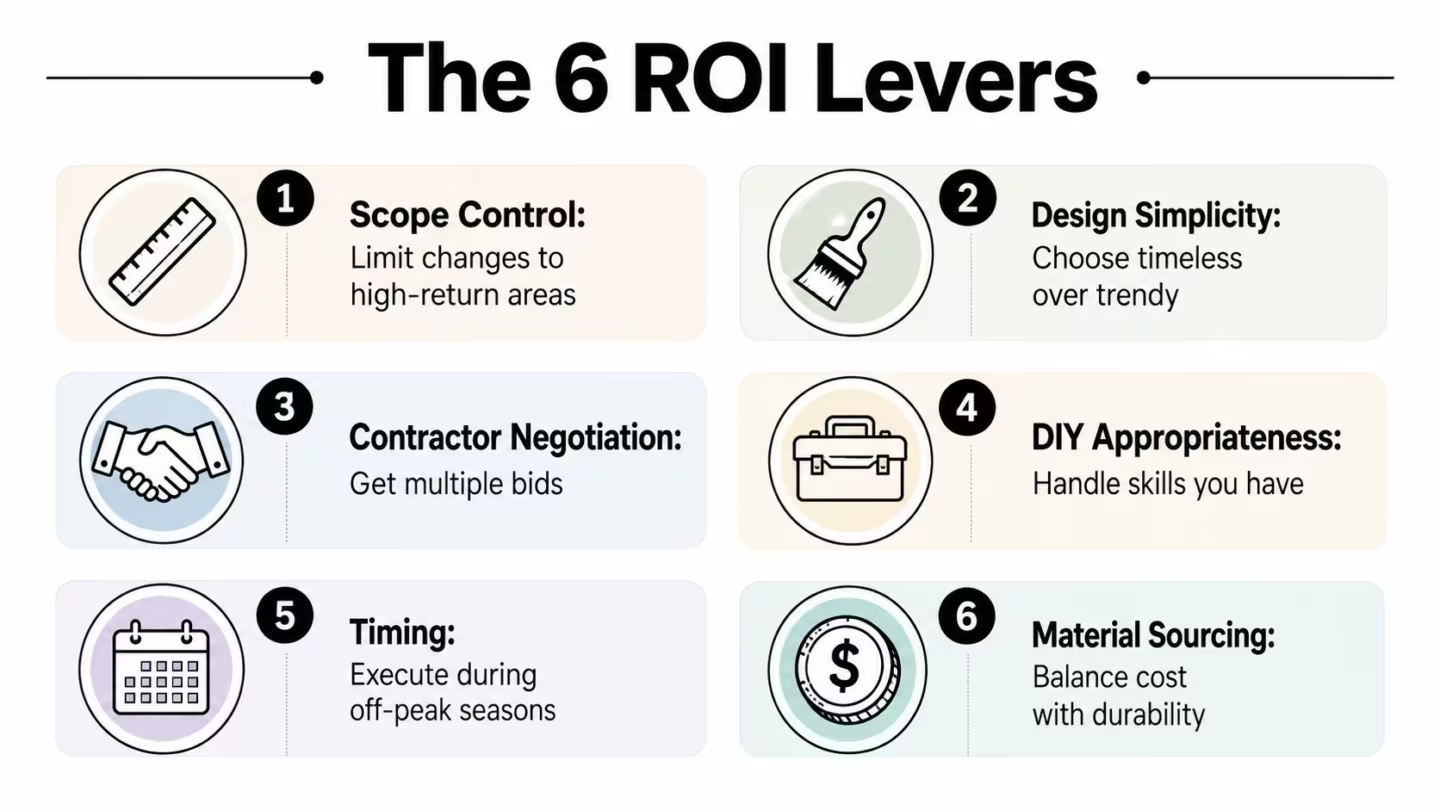
The return on a renovation gets shaped long before the final punch list. Scope is the first lever, and it's the one most owners fight too late. Keep the work centered on high-visibility, high-wear areas, and don't let the plan drift into low-return extras just because the walls are open.
Scope, materials, and sequence
Material tier matters, but not in the way showroom displays suggest. In many homes, a middle-tier cabinet line, a sensible quartz selection, and durable hardware will read better to a buyer than a highly customized import that nobody in the target market asked for. Finishes should look deliberate, not expensive for the sake of being expensive.
Permits and sequencing matter because sloppy paperwork can become a resale headache. Clean approvals, inspection records, and well-documented work reduce the risk that a future buyer or lender uses uncertainty to push back on price. In dense markets, that documentation often carries more weight than owners expect.
Document everything. The file behind the renovation, permits, plans, invoices, product cut sheets, can be as important to resale as the tile you picked.
Contractor selection and timing
The contractor decision affects ROI through labor quality, change-order control, and coordination. A good team keeps trades moving in the right order, which reduces idle time and avoidable revisions. That matters even more when a project has plumbing, electrical, HVAC, or millwork touching the same space.
Timing also changes the financial picture. If you're trying to sell soon, the renovation needs to be tight, legible, and broadly appealing. If you're refinancing or holding for rent, the question becomes whether the finished work supports valuation, occupancy, or operating stability over time.
For owners who want a single firm to coordinate design, permits, and execution in NYC or New Jersey, AGNY Services LLC is one option that handles kitchens, bathrooms, interior renovations, HVAC, flooring, windows, and related construction work. The value there isn't marketing gloss, it's having one team carry the scope from estimate through final walkthrough.
Two Sample Calculations You Can Adapt
A Brooklyn owner preparing to sell in about two years often faces the same temptation, upgrade everything because the place is already open. That's usually how budgets drift. The tighter move is a mid-range kitchen refresh that stays within the neighborhood's likely ceiling instead of chasing a showpiece result.
Brooklyn kitchen refresh
Say the project cost is $28,458, matching the minor kitchen remodel benchmark from the 2025 Cost vs. Value report, and the expected resale bump is $32,141. On the simple formula, the project recoups more than it costs before financing and timing are considered. The harder question is whether a bigger custom package would add enough incremental sale price to justify its extra scope.
If the owner borrows for the work, the result changes. Interest expense and holding time can erase a clean paper gain, especially if the sale doesn't happen soon after completion. That's why a project that looks fine as a cash deal can turn softer once debt service enters the picture.
Multi-family HVAC and window upgrade
A small landlord has a different equation. An HVAC and window upgrade may not compete with a flashy kitchen for headline resale, but it can support rent stability, reduce vacancy friction, and make the building easier to carry. That's a different form of return, and it belongs in the calculation.
The right sensitivity test is simple. If the upgrade lowers operating headaches and supports tenant retention, the value shows up over time rather than in one closing statement. If the scope is oversized for the building class, the payback can get diluted fast, especially if the work was financed and the hold period is short.
Use one spreadsheet line per benefit. Sale uplift, rent lift, reduced downtime, and financing cost should each get their own row so the project doesn't look better than it is.
Choosing Your Next Project and Talking to a Contractor
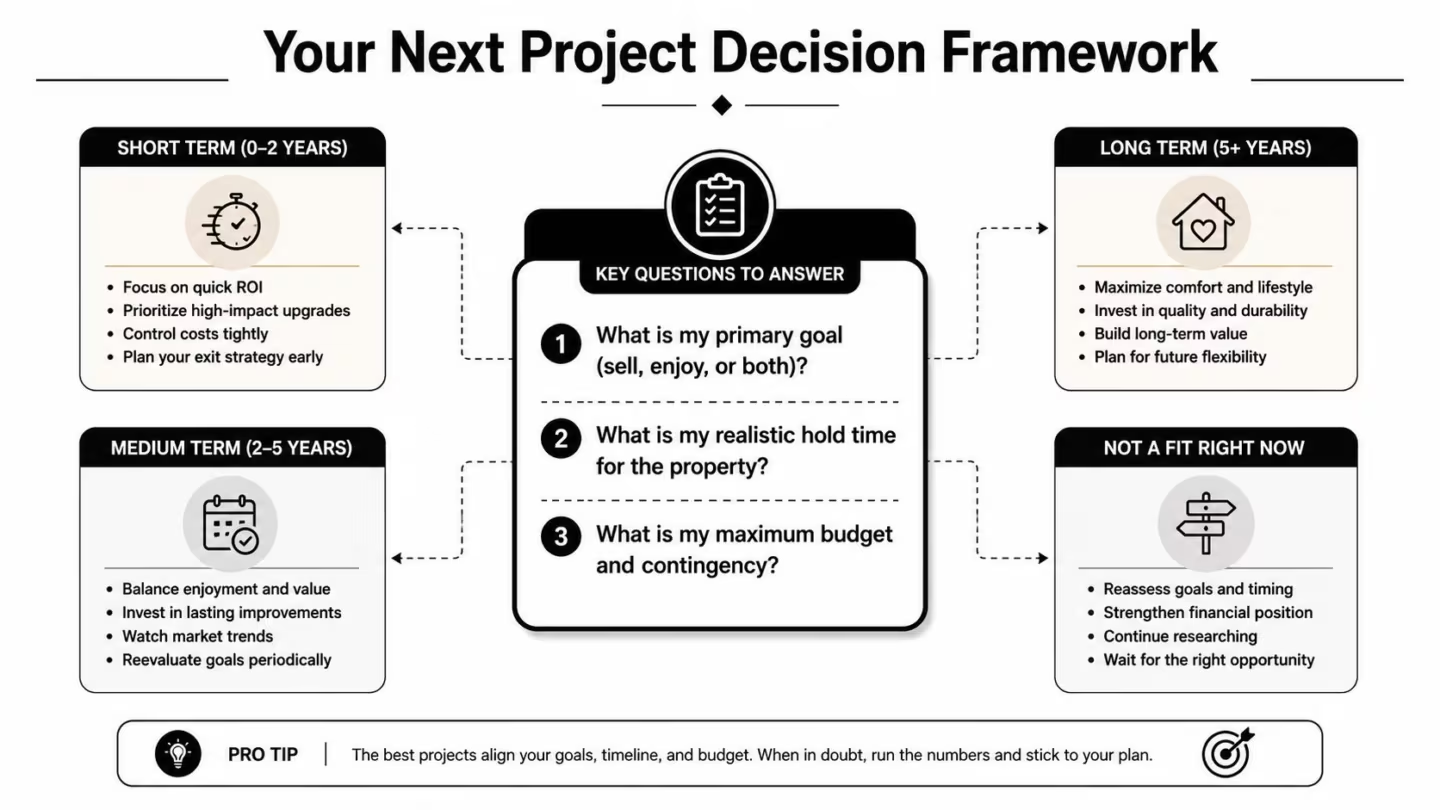
Start with three questions. What is my primary goal, sell, enjoy, or both? How long am I realistically holding the property? What is my maximum budget, including contingency? Those three answers will tell you more than any generic ranking list.
Then match the project type to the property type. A homeowner in a condo needs different ROI logic than a landlord in a two-family or a commercial owner fitting out a small office or retail space. The right scope is the one the market around you can absorb without forcing a discount later.
A contractor conversation should test the quote against local reality, not just design preferences. If the plans need permits, structural coordination, plumbing, electrical, HVAC, or tight scheduling around occupied units, the team has to be able to explain how those pieces affect cost and timeline. This Manhattan and Brooklyn contractor reference reflects the kind of work coordination that matters when the margin is thin.
If you're planning a renovation in NYC or New Jersey and want the scope pressure-tested before you spend, reach out to AGNY Services LLC for a paid estimate and consultation. They handle design coordination, permitting, and execution for kitchens, bathrooms, interiors, HVAC, flooring, windows, and other improvement work, which makes it easier to turn a published ROI idea into an actual project with a realistic finish line.