TL;DR:
- Cabinetry involves designing and building storage furniture for kitchens and bathrooms, emphasizing construction method and material choice.
- Choosing between framed and frameless designs depends on desired aesthetics, interior space, and moisture resistance, with plywood favored for longevity.
- Homeowners should select cabinetry types based on budget, space complexity, and functional needs, with professional guidance recommended for complex layouts.
Cabinetry is defined as the craft and product of designing and building cabinets, storage boxes, doors, moldings, and hardware into finished case furniture for kitchens, bathrooms, and living spaces. The industry term is “case goods” or “casework,” but most homeowners and contractors simply call it cabinetry. Understanding what is cabinetry means knowing that cabinets include both structural and decorative elements that work together to deliver function and style. Whether you are planning a full kitchen gut or a bathroom refresh, cabinetry is the single largest visual and functional investment in the room. Getting it right starts with knowing how cabinets are built, what they are made from, and which type fits your project.
What is cabinetry construction and what materials are used?
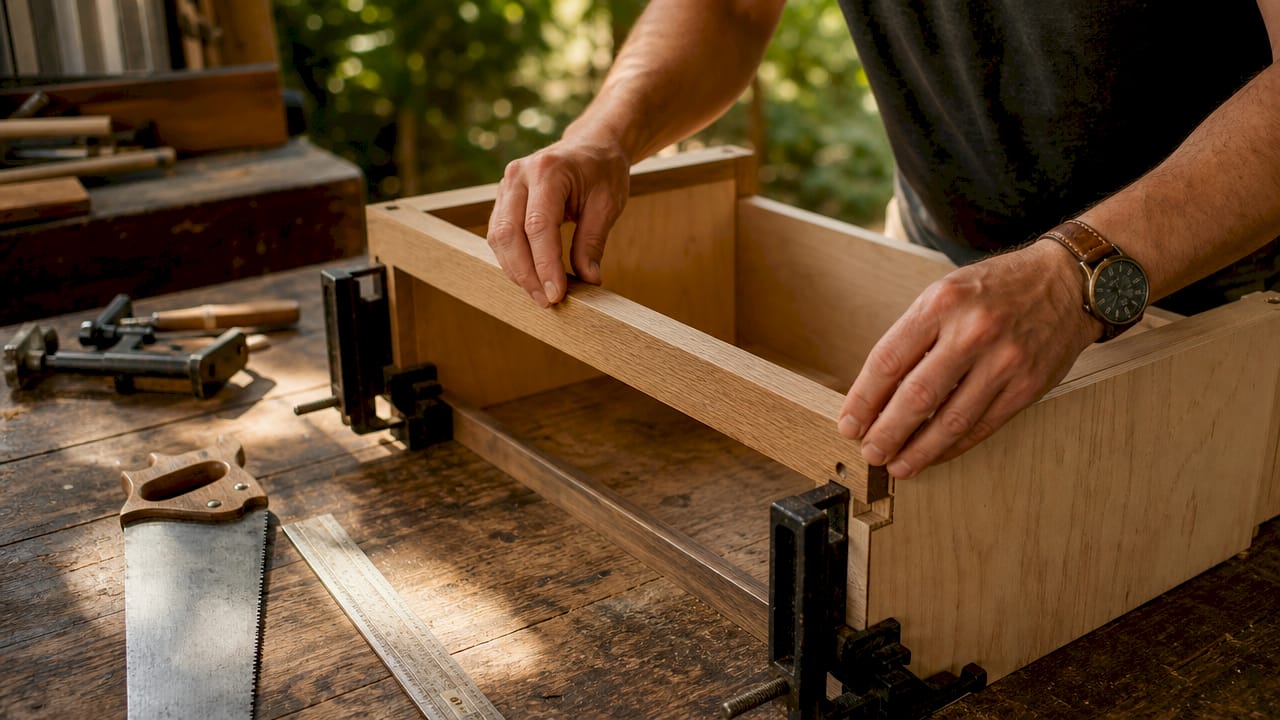
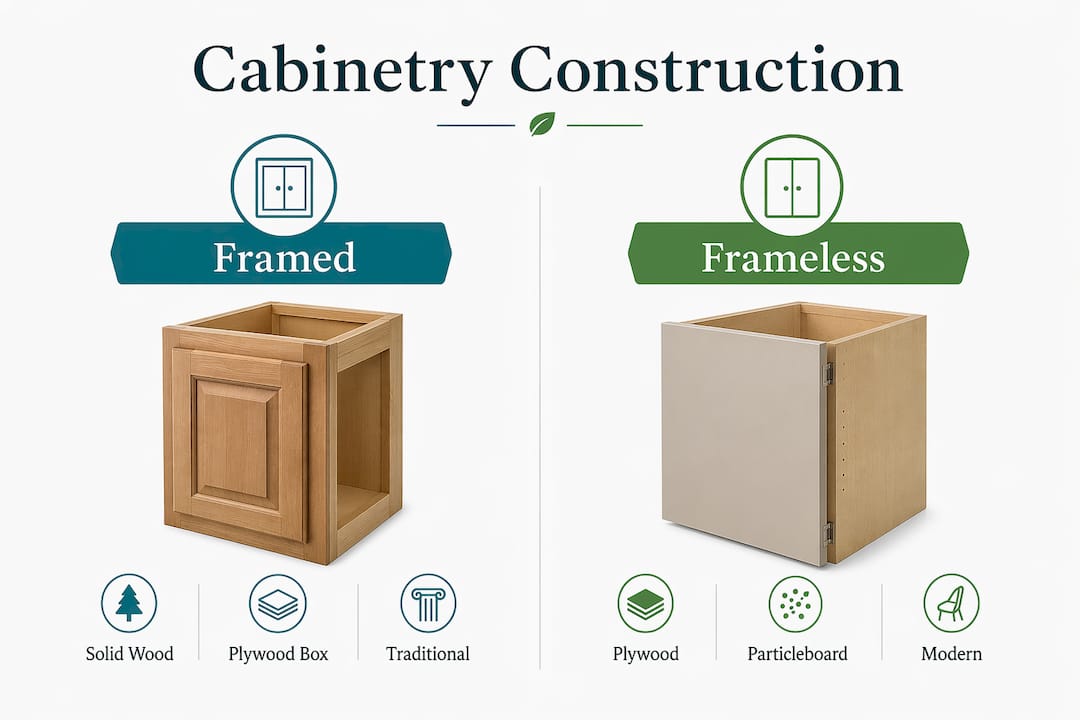
Cabinet construction falls into two distinct methods: framed and frameless. Framed cabinets include a front face frame attached to the box, which adds structural rigidity and gives the traditional look most American homeowners recognize. Frameless cabinets, also called European-style, skip the face frame entirely. That design opens up more interior storage space and creates a cleaner, modern appearance.
The face frame on a framed cabinet is typically made from solid wood and is glued and stapled to the plywood or particleboard box. This frame also gives you a solid surface for hinge mounting and door alignment. Frameless cabinets rely on the box itself for strength, so the box material matters more. Thicker panels and quality joinery are non-negotiable in frameless construction.
Material choice drives both cost and longevity. Solid wood is the most durable option, while particleboard sits at the budget end. Plywood and MDF fill the middle ground, each with different strengths. Plywood resists moisture better than MDF and holds screws more reliably. MDF takes paint finishes exceptionally well because its surface is perfectly smooth, making it a popular choice for painted cabinet doors.
| Construction method | Common materials | Best for |
|---|---|---|
| Framed | Solid wood, plywood box | Traditional kitchens, high-traffic areas |
| Frameless | Plywood, MDF | Modern kitchens, maximizing storage space |
| Either | Particleboard with laminate | Budget renovations, dry areas |
Pro Tip: For kitchens and bathrooms, always specify plywood boxes over particleboard. Particleboard swells when it contacts moisture, and cabinet bases near sinks are especially vulnerable. Plywood holds up far longer in wet environments.
What cabinetry types are available: stock, semi-custom, and custom?
Three purchasing tiers define the cabinetry market: stock, semi-custom, and custom. Each serves a different budget and renovation scope. Knowing the difference saves you from overspending on features you do not need or underspending on a kitchen that deserves better.
Stock cabinetry is manufactured in fixed sizes, typically in 3-inch width increments, and sold ready to ship from a warehouse. It is the fastest and least expensive option. The tradeoff is zero flexibility. If your wall measures 94 inches, you fill the gap with filler strips, not a perfectly sized cabinet.
Semi-custom cabinetry gives you more sizing options and a wider range of finishes and door styles. Manufacturers build these to order within a defined range of dimensions. Lead times run longer than stock, but you get a much better fit for unusual room layouts.
Custom cabinetry is built to your exact specifications with no preset dimensions. Custom cabinetry starts at roughly $600 per linear foot, reflecting the bespoke sizing, premium materials, and hand finishing involved. It is the right choice for high-end renovations, unusual room shapes, or when you want specific wood species and hardware that stock lines simply do not offer.
Pros and cons at a glance:
- Stock: Fast delivery, lowest cost, limited sizes, limited finishes
- Semi-custom: Moderate cost, more size flexibility, longer lead time, good finish variety
- Custom: Highest cost, unlimited design freedom, longest lead time, best quality control
For a deeper look at how custom and stock options compare in real renovation budgets, the cost difference often surprises homeowners who assumed custom was out of reach.
How do you choose cabinetry styles and designs for kitchen and bathroom renovations?
Cabinet style sets the entire visual tone of a kitchen or bathroom. The three most popular styles are traditional, shaker, and modern. Traditional cabinets feature raised panel doors with decorative molding. Shaker cabinets use a flat center panel with a simple frame, making them the most versatile style on the market today. Modern cabinets go flat-front with no visible frame, relying on material and hardware to create interest.
Beyond door style, overlay type changes how the door sits relative to the cabinet box. Partial overlay doors cover only part of the face frame, leaving a visible gap between doors. Full overlay doors cover most of the frame, giving a cleaner, more contemporary look. Inset doors sit flush inside the frame for a furniture-grade appearance that is the most demanding to build and install correctly.
Storage layout and ergonomics matter as much as aesthetics. Pull-out shelves, drawer inserts, and corner solutions like lazy Susans or pull-out trays turn dead space into usable storage. Upper cabinets placed too high create daily frustration. A standard upper cabinet bottom sits 18 inches above the countertop, but adjusting that height by even 2 inches can make a real difference for shorter homeowners.
Coordinating cabinetry with countertops and fixtures requires thinking in contrast or complement. White shaker cabinets pair with almost any countertop material. Dark wood tones need lighter countertops to avoid a heavy, closed-in feel. For bathroom renovations, cabinet color should also respond to tile and fixture finishes. Brushed nickel hardware reads differently against painted white cabinets than against natural wood.
Pro Tip: Choose your cabinet style based on how you actually use the space, not just how it looks in a showroom. A beautiful inset door cabinet with no interior organization is less useful than a simpler shaker cabinet with well-planned pull-outs and drawer inserts.
For inspiration on classic versus modern kitchen styles, the choice often comes down to the architecture of your home rather than personal taste alone.
What practical factors affect cabinetry selection and installation?
Moisture is the number one enemy of cabinetry in kitchens and bathrooms. Plywood is moisture-resistant and preferred for kitchens and baths, while particleboard degrades quickly when exposed to humidity or water. Solid wood expands and contracts with seasonal humidity changes, which can cause doors to warp or stick if the finish is not maintained. Proper sealing and ventilation extend cabinet life significantly in both rooms.
Installation type also shapes your renovation plan. Built-in cabinets are fixed in place and customized to fit the room, which is standard in kitchen renovations. Free-standing cabinets offer flexibility and are easier to move or replace without affecting surrounding walls. Wall-mounted cabinets, common in bathrooms, require solid blocking in the wall to carry the load safely. Skipping that step is one of the most common and costly installation mistakes.
Budget planning requires separating cabinet cost from installation cost. Cabinet boxes and doors are one line item. Hardware, installation labor, and finishing work are separate. Many homeowners budget for cabinets and then discover that installation adds 20–30% to the total. Getting a complete quote upfront avoids that surprise. For a full breakdown, the NYC kitchen remodeling cost guide covers both materials and labor in detail.
| Factor | Impact on cost | Impact on longevity |
|---|---|---|
| Plywood box construction | Higher upfront cost | Significantly longer lifespan |
| Particleboard box | Lower upfront cost | Shorter lifespan in wet areas |
| Built-in installation | Higher labor cost | Permanent, maximizes space |
| Free-standing installation | Lower labor cost | Flexible, easier to replace |
| Solid wood doors | Premium cost | Durable with proper finishing |
For homeowners planning a full cabinet replacement, the cabinet replacement guide walks through each installation phase in practical terms.
Key takeaways
Cabinetry quality is determined by construction method, material choice, and installation type working together, not by any single factor alone.
| Point | Details |
|---|---|
| Construction method matters | Framed cabinets add stability; frameless cabinets maximize interior storage space. |
| Material drives durability | Plywood boxes outperform particleboard in moisture-prone kitchens and bathrooms. |
| Three purchasing tiers exist | Stock, semi-custom, and custom cabinetry each serve different budgets and renovation scopes. |
| Style and overlay affect function | Door style and overlay type change both appearance and daily usability of the space. |
| Budget for installation separately | Labor and finishing typically add 20–30% beyond the cabinet purchase price. |
What I have learned from years of cabinetry renovations
Most homeowners walk into a cabinetry decision focused entirely on door style. That is the wrong starting point. The door is the last thing that gets built and the easiest thing to change. The box construction and the interior organization are what you live with every single day.
The biggest misconception I see is that custom cabinetry is always worth the premium. It is not always true. For a straightforward rectangular kitchen with standard ceiling height, well-made semi-custom cabinets in plywood construction will perform just as well as custom for a fraction of the price. Custom earns its cost in complex spaces: angled walls, unusual ceiling heights, or when you need specific wood species that stock lines do not carry.
Function beats aesthetics in the long run. I have seen stunning kitchens with inset doors and hand-painted finishes that the owners stopped loving within two years because the storage was poorly planned. Drawer inserts, pull-out shelves, and proper cabinet depth matter more than the finish color. Get the interior right first, then choose the door style.
My strongest advice: work with a professional for any renovation involving custom or semi-custom cabinetry. Measuring errors are expensive and often irreversible. A contractor who specializes in kitchen and bath design will catch layout problems before they become installed problems.
— Grzegorz
Agny brings cabinetry expertise to your renovation
Agny specializes in kitchen and bathroom renovations across New York, with deep experience in cabinetry selection, millwork, and full installation. Whether you need stock cabinets installed cleanly or a fully custom cabinetry solution built around an unusual floor plan, Agny handles both the design and the construction.
The team at Agny works with homeowners from the first measurement through final hardware installation, so nothing falls through the gaps between trades. If you are planning a kitchen renovation that adds real value or a bathroom upgrade that finally gets the storage right, Agny offers consultations to help you make the right cabinetry decisions before any money is spent.
FAQ
What is cabinetry in simple terms?
Cabinetry is the craft of designing and building cabinets, including the box, doors, hardware, and moldings, for storage and decorative use in kitchens, bathrooms, and other rooms. It covers both the product and the skill of making it.
What is the difference between framed and frameless cabinets?
Framed cabinets have a front face frame for structural support and a traditional look, while frameless cabinets skip the frame to offer more interior space and a cleaner modern appearance.
What is custom cabinetry and when do you need it?
Custom cabinetry is built to exact client specifications with no preset dimensions, making it the right choice for complex room layouts, unusual ceiling heights, or premium material requirements. It typically starts at $600 per linear foot.
How do I choose cabinetry materials for a bathroom?
Plywood is the best material for bathroom cabinets because it resists moisture far better than particleboard or MDF. Solid wood works well with proper sealing, but requires more maintenance in high-humidity environments.
What is the most durable cabinetry construction for kitchens?
Plywood box construction with a framed or frameless design and solid wood or MDF doors gives the best durability for kitchens. Plywood holds screws well and resists moisture, which are the two most critical performance factors near sinks and dishwashers.