
TL;DR:
- Proper contractor vetting involves verifying licenses, insurance, and reviewing detailed bids to prevent costly disputes. Confirm credentials through official databases and insurance carriers, and always collect multiple itemized proposals for comparison. Do not rush contracts or deposits and visit job sites to assess workmanship and project management for confident hiring.
Property renovation contractor vetting is the process of systematically assessing potential contractors to confirm their credentials, insurance, and track record before any work begins. Skip this step and you risk financial loss, substandard work, and legal liability that can outlast the renovation itself. Thorough vetting typically requires 2–3 hours per candidate to do correctly. That time investment is small compared to the cost of hiring the wrong person for a $50,000 kitchen remodel. This guide walks you through every stage of the process, from license checks to contract negotiation, so you hire with confidence.
What does property renovation contractor vetting actually involve?
Contractor vetting is the industry term for a structured pre-hire review process. It covers four core areas: legal credentials, financial protection, past performance, and contract terms. Most property owners focus only on price and miss the other three entirely. That gap is where renovation disasters begin.
The process applies equally to residential renovation scope bidding and commercial projects. The stakes differ in scale, but the evaluation framework is the same. A licensed general contractor managing a bathroom gut renovation needs the same scrutiny as one overseeing a full commercial buildout.
Pro Tip: Start a simple spreadsheet before you contact a single contractor. Track each candidate’s license number, insurance carrier, years in business, and reference contacts. This prevents you from relying on memory when comparing three or four bids at once.
How do you verify contractor credentials and legal compliance?
License verification is the fastest and most reliable filter in the entire vetting process. State licensing databases let you confirm a contractor’s status in under five minutes. You need to confirm three things: the license is active, the trade classification matches your project type, and there is no disciplinary history attached to the record.
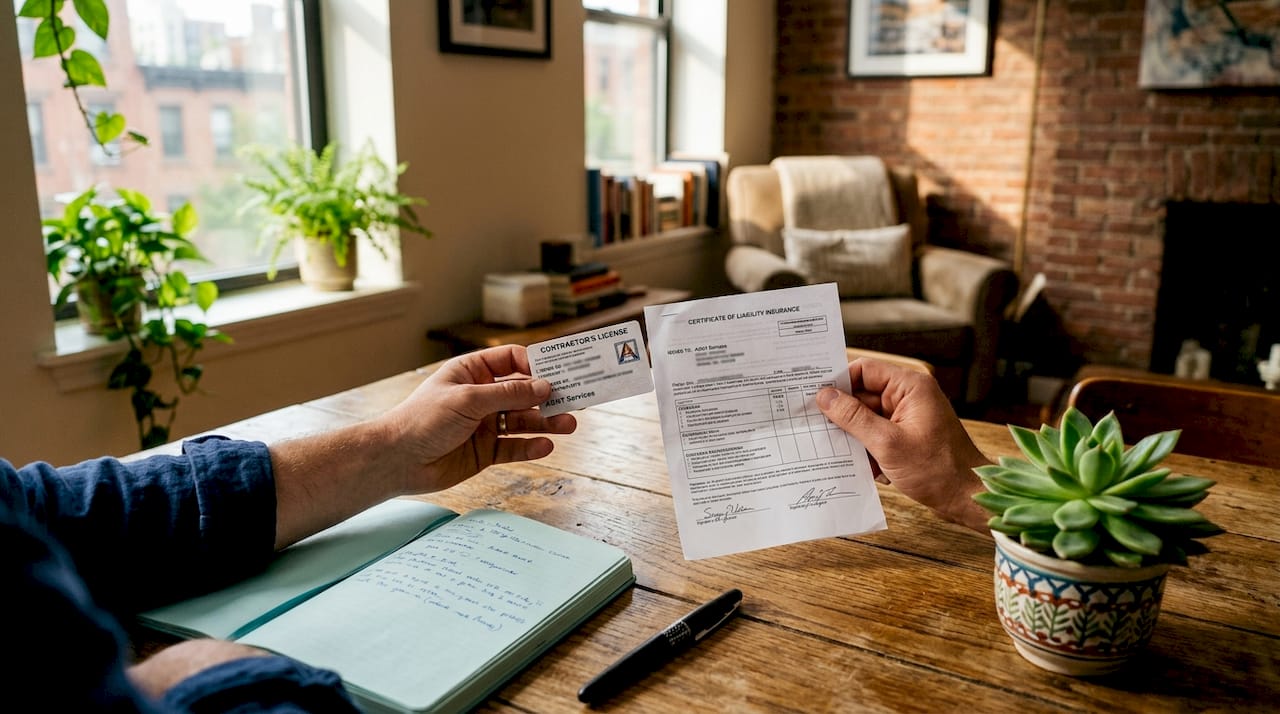
Refusal to provide a license number is an automatic disqualification. Legitimate contractors display their credentials openly. Any hesitation or deflection on this point ends the conversation.
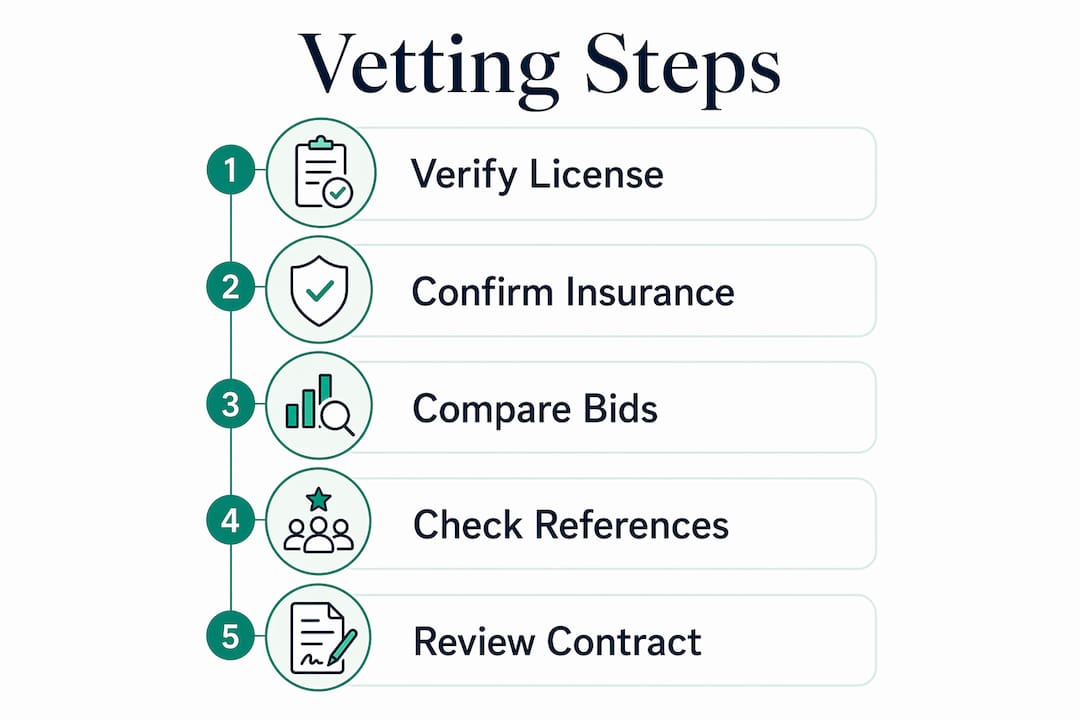
Insurance verification requires one extra step that most property owners skip. A Certificate of Insurance, or COI, is not proof of active coverage. Contractor COIs can be forged from expired policies. Call the insurance carrier listed on the document directly and ask a representative to confirm the policy is current and active. This call takes less than five minutes and eliminates a significant fraud risk.
The minimum coverage you should require:
- General liability insurance: Covers property damage caused by the contractor’s work
- Workers’ compensation insurance: Covers injuries to crew members on your property
- Umbrella or excess liability: Recommended for larger projects above $100,000
- Subcontractor coverage confirmation: Ask whether subs carry their own policies or fall under the GC’s
Pro Tip: Ask the contractor to name you as an additional insured on their general liability policy for the duration of the project. This gives you direct standing to file a claim if something goes wrong.
How do you build a shortlist and compare bids effectively?
Securing at least three detailed bids is the standard practice for any renovation project. Three bids give you a realistic price range and reveal which contractors understand your scope and which are guessing. Two bids leave you with no meaningful reference point.
A detailed bid is not a single number. A written proposal must itemize labor, materials, permit fees, and the change order process before work begins. Vague lump-sum proposals are the leading driver of cost overruns and disputes. If a contractor cannot break down their number, they have not thought through the project.
Use a scoring matrix to compare bids objectively. Rate each contractor across these criteria:
- Scope clarity: Does the bid describe exactly what will be done, room by room?
- Material specifications: Are brands, grades, and quantities listed, or just generic descriptions?
- Permit responsibility: Does the contractor pull permits, or are they pushing that onto you?
- Payment schedule: Are payments tied to milestones, or is a large upfront sum required?
- Timeline: Is a start date and completion date stated in writing?
- Warranty terms: What labor warranty is offered, and for how long?
- Communication style: Did they respond promptly and answer questions directly?
A scorecard comparing contractors by these criteria removes sales pressure from the decision. The lowest bid rarely wins on a scorecard. The most thorough proposal usually does.
Pro Tip: If two bids are close in score but far apart in price, call the higher bidder and ask them to walk you through the difference line by line. Their explanation will tell you whether the gap reflects quality or padding.
How do reference checks and job site visits confirm quality?
References are the most underused tool in the property renovation bid comparison process. Most property owners ask for references and then never call them. Call at least three recent clients, and ask specific questions rather than general ones.
Ask each reference: Did the contractor finish on time? Did the final cost match the original bid? How did they handle problems when they came up? Would you hire them again without hesitation? The last question gets the most honest answer.
Visiting a current or recent job site gives you direct evidence that no reference call can match. Look for these indicators when you visit:
- Site cleanliness: A disorganized site signals disorganized project management
- Crew professionalism: Are workers focused and on task, or scattered and idle?
- Material storage: Are materials protected from weather and damage?
- Subcontractor oversight: Is the general contractor present and directing the work?
- Workmanship visible so far: Check tile lines, drywall seams, and trim cuts for precision
Property renovation subcontractor oversight is a specific area worth probing. Ask the contractor how many subcontractors they use regularly and whether those subs are licensed and insured independently. A GC who cannot answer that question clearly does not manage their subs well. You can also find guidance on finding trustworthy contractors that covers common mistakes property owners make at this stage.
What should a renovation contract include to protect you?
A signed contract is your only legal protection once work begins. Poorly defined project scope is the top cause of renovation failures. Every contract for a renovation project should include the following elements:
- Itemized scope of work: Every task described in plain language, room by room
- Material specifications: Brand, model, grade, and quantity for every major material
- Payment schedule tied to milestones: Never pay ahead of completed work
- Upfront deposit cap: Keep deposits below 10–15% of the total contract value. Some states cap residential deposits at 10% or $1,000 by law.
- Change order process: All scope changes require written approval and a signed cost amendment before work proceeds
- Permit responsibility clause: The contractor pulls all permits. Never pull permits yourself at a contractor’s request. Doing so shifts legal and financial liability to you.
- Lien waiver requirements: Contracts should include lien waiver clauses from subcontractors and suppliers. Without them, unpaid subs can place a lien on your property even after you have paid the GC in full.
- Warranty terms: Minimum one year on labor; manufacturer warranty pass-through on materials
- Schedule and delay penalties: Define what constitutes an unacceptable delay and what remedy applies
Pro Tip: Before signing, send the draft contract to a real estate attorney for a one-hour review. The fee is typically $150–$300. That cost is negligible against a $30,000 renovation and can prevent a contract clause from costing you far more.
You can also review what permits remodeling requires to understand exactly which permits apply to your project type before the contract is finalized.
What are the biggest red flags when vetting renovation contractors?
Red flags in contractor vetting fall into two categories: warning signs that end negotiations immediately, and patterns that require closer scrutiny before proceeding.
Stop immediately if a contractor:
- Demands more than 15% upfront before any work begins
- Refuses to provide a license number or insurance certificate
- Offers a cash-only discount and suggests skipping permits
- Pressures you to sign the same day you receive the bid
- Cannot name their insurance carrier from memory
Slow down and investigate if a contractor:
- Has fewer than three verifiable references from the past two years
- Provides a bid that is significantly lower than the other two
- Uses vague language like “standard materials” without specifications
- Has been in business fewer than five years with limited documentation of past work
If a dispute arises during or after the project, document everything in writing first. Send a formal demand letter by certified mail before escalating. If the contractor does not respond, file a complaint with your state licensing board. Small claims court handles disputes up to $10,000 in most states without requiring an attorney.
The contractor who pushes hardest to skip documentation is the one most likely to need it used against them. Every verbal agreement that does not make it into writing is a promise that legally does not exist.
What I have learned from watching renovations go wrong
I have seen property owners do everything right on paper and still end up in a dispute. The reason is almost always the same: they trusted a good first impression over a thorough process. A contractor who is charming, punctual, and confident in the sales meeting is not necessarily the one who manages a job site well six weeks in.
The vetting steps in this guide are not bureaucratic checkboxes. They are filters that reveal how a contractor operates under pressure. A contractor who bristles at being asked for references or balks at a detailed contract is showing you exactly how they will behave when a problem comes up mid-project.
My honest advice: slow down at the contract stage more than any other. Most property owners rush through it because they are excited to start. That excitement is exactly what contractors who use vague contracts count on. Read every line. Ask what happens if the timeline slips. Ask who is responsible if a subcontractor damages your property. The answers tell you more than any reference call.
Trusting your instincts matters too, but only after the data checks out. If the license is valid, the insurance is confirmed, the references are strong, and the contract is detailed, then your instinct becomes a useful final signal rather than a substitute for due diligence.
— Grzegorz
Agny brings verified expertise to your renovation project
Choosing the right contractor is the hardest part of any renovation. Agny specializes in kitchen and bathroom renovations, millwork, and general contracting across New York, with licensed professionals who operate under clear, itemized scopes from day one.

Every Agny project starts with a detailed written proposal covering materials, labor, permits, and a defined change order process. Property owners who have been through a bad renovation experience find that structure reassuring rather than unusual. If you are planning a kitchen update, Agny’s kitchen renovations that add value page outlines exactly how the process works and what to expect at each stage. For bathroom projects, the bathroom renovations page covers the same level of detail. Contact Agny to get a bid that holds up to scrutiny.
FAQ
How long does contractor vetting take?
Thorough vetting requires approximately 2–3 hours per contractor candidate. License verification and insurance confirmation each take under five minutes; reference calls and site visits account for the rest.
How many bids should I get for a renovation?
Get at least three bids. Three proposals give you a realistic price range and reveal which contractors have actually read your scope and which are estimating loosely.
What is the maximum upfront deposit I should pay?
Keep your upfront deposit below 10–15% of the total contract value. Some states legally cap residential deposits at 10% or $1,000, so check your local rules before signing.
Can I pull the permits myself to save money?
No. Pulling permits yourself at a contractor’s request transfers legal and financial liability to you. The contractor is responsible for all permits related to their scope of work.
What should I do if a contractor refuses to provide insurance proof?
Treat refusal to provide a license number or insurance certificate as an immediate disqualification. Legitimate contractors carry and share this documentation without hesitation. Move to the next candidate on your list.
Key takeaways
Effective property renovation contractor vetting requires license verification, insurance confirmation, multi-bid comparison, reference checks, and a detailed written contract before any work begins.
| Point | Details |
|---|---|
| Verify credentials first | Check license status via your state database and call the insurer directly to confirm active coverage. |
| Collect at least three bids | Compare itemized proposals covering labor, materials, permits, and change order terms to avoid overruns. |
| Cap upfront deposits | Keep deposits below 10–15% of the contract total; some states enforce this limit by law. |
| Require lien waiver clauses | Include subcontractor lien waivers in the contract to protect your property from unpaid supplier claims. |
| Visit job sites in person | A site visit reveals crew professionalism, workmanship quality, and how the contractor manages subcontractors. |