You're standing in a kitchen that looks tired, but you're not sure whether it's failing. The doors are chipped, the drawer fronts belong to another decade, and the hardware is loose. At the same time, the cabinet boxes still sit square, the shelves haven't sagged, and the layout works well enough for the way your household cooks. That's the point where homeowners start searching for cabinet refacing vs replacement and often begin with the wrong question: “Which door style should I choose?”
The first question is structural. Are the existing cabinet boxes, face frames, and drawer bodies worth keeping? In New York City apartments, Brooklyn brownstones, and Northern New Jersey homes, that answer controls the cost, schedule, demolition, building coordination, and disruption more than the finish color ever will.
The Real Decision Homeowners Face in Their Kitchen
Walk into a Queens kitchen after years of daily use and you'll often find a familiar split. The doors look worn, the finish has dulled, and the hinges may be outdated, but the plywood boxes still feel solid after decades of service. The face frames are straight. The drawers run properly. Nothing smells damp under the sink.
That kitchen is a strong refacing candidate. The homeowner doesn't need a new footprint. They need a new exterior, better hardware, and perhaps more useful interior accessories. Keeping the boxes avoids tearing apart a layout that already functions.
Now compare that with a Hoboken brownstone where the sink base has swollen from repeated leaks. The particleboard bottom has softened, screws no longer hold securely, and the hinges have stripped out more than once. New doors would hide the problem for a short time, but they wouldn't repair the cabinet carcass. That kitchen needs replacement, or at least replacement of the damaged bases.
Start with the carcass, not the catalog
A contractor should inspect more than the front of the cabinet. Open every door. Remove drawers. Check the underside of the sink base, the corners, shelf pins, fasteners, back panels, and areas near dishwashers. Look for:
- Water damage: Swelling, crumbling edges, staining, or a persistent musty odor point toward replacement.
- Structural movement: Racking, loose joints, bowed sides, or separating face frames mean the box may not hold new hardware reliably.
- Drawer condition: A refacing project can include new drawer fronts, but weak drawer bodies still need repair or replacement.
- Layout problems: A kitchen that forces awkward movement or lacks workable storage won't become functional just because it has new doors.
Refacing keeps the kitchen's existing geometry. Replacement gives you the opportunity to correct cabinet height, storage, appliance clearances, and circulation. That distinction matters even more in a compact city kitchen, where a small planning error can make the whole room harder to use.
Practical rule: If the problem is how the kitchen looks, inspect it for refacing. If the problem is how the kitchen works or holds together, price replacement first.
The smartest quote starts with photographs and a physical inspection of the boxes. A door sample comes later.
What Refacing and Replacement Actually Mean
Cabinet refacing means keeping the existing cabinet boxes in place and renewing the visible portions. The crew removes the doors and drawer fronts, prepares the face frames, applies veneer or laminate to exposed surfaces, installs new doors and drawer fronts, and fits new hinges and handles. Depending on the scope, the project can also add pull-outs, soft-close hardware, drawer organizers, and other interior improvements.
Refacing changes the appearance and selected components. It does not change the cabinet footprint, box dimensions, plumbing rough-ins, electrical runs, or subfloor. If the sink, range, refrigerator, and walls stay where they are, that limitation may not matter. If the kitchen needs a different working triangle or new utility locations, refacing becomes the wrong tool.
Cabinet replacement removes the existing cabinetry and installs a new system. The new cabinets may be stock, semi-custom, or fully custom, with different heights, depths, door configurations, storage layouts, and appliance clearances. Replacement is the route for a genuine redesign, not just a cosmetic update.
The work outside the cabinet order
Full replacement commonly expands the job beyond cabinetry. Demolition can expose damaged walls or flooring. New cabinets may require countertop templating, plumbing adjustments, electrical coordination, filler changes, and repairs around the installation area. In a co-op or condo, debris removal and elevator scheduling become part of the project plan.
The gray zone is where experienced site judgment matters. A contractor may reinforce a sound box, replace only a damaged sink base, keep upper cabinets, or install new lower cabinets while refacing the rest. That partial approach can make sense when damage is localized, but it needs a written scope so you know which boxes are being retained and why.
For homeowners comparing materials and construction details before selecting either route, this resource on durable kitchen cabinet choices offers useful background on cabinet construction and finish decisions.
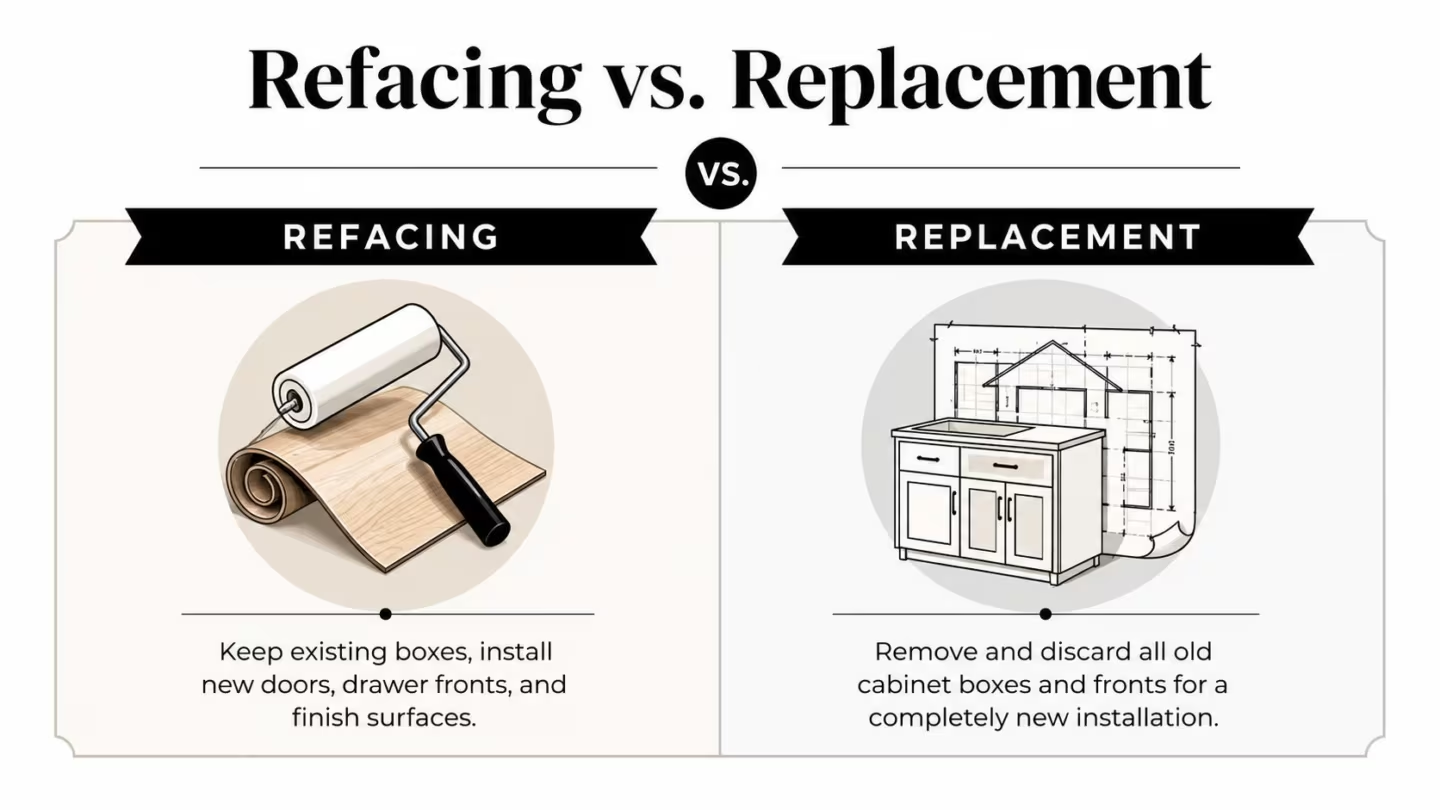
The distinction is simple. Refacing preserves the cabinet system and changes its skin. Replacement removes the system and gives you a new structure.
Side-by-Side Comparison of the Key Factors
In a New York apartment or brownstone, the cabinet boxes decide the project before the price does. Open the doors, inspect the sink base, check for swelling or loose joints, and confirm whether the layout serves the room. Sound boxes make refacing a practical choice. Damaged boxes make replacement the smarter use of money, even when the initial quote looks higher.
Price still matters, but it must be read alongside the work included. Current guides place refacing at about $4,234 to $10,226, with an average around $7,230. Replacement averages about $6,400 and can reach $30,000, depending on materials and scope, as cited above. Those broad figures cover different markets and project sizes. In New York, demolition, countertops, elevator access, building rules, and trade work can shift the quote substantially.
Refacing is often estimated at roughly 30% to 50% less than custom or semi-custom replacement, with some 2026 comparisons reporting savings of as much as 78% in particular cases. The savings come from keeping the existing boxes and layout. You avoid much of the demolition, rebuilding, and coordination that expands a replacement budget.
Cost and schedule
Refacing usually wins on schedule. Professional work for a standard kitchen commonly takes 2 to 5 days. Replacement often takes 1 to 3 weeks or more, extending to 2 to 6 weeks when demolition, installation, finish work, and countertop lead times are included, as noted earlier.
That difference matters in an occupied apartment. A shorter job means fewer temporary cooking days, fewer building access windows, and less dust and noise. It also reduces the chance that a small delay turns into another week of disruption.
Durability and materials
Refacing can hold up well when the boxes are sound and the installation is done correctly. Service life depends on the substrate, adhesive, edge treatment, hardware, moisture exposure, and workmanship. Laminate, wood veneer, and hardwood each carry different material costs, and the right choice depends on the kitchen's use, exposure to moisture, and finish requirements.
As noted in the earlier comparison, refacing commonly lasts about 15 to 20 years, while new cabinetry is often described as lasting 25 to 30 years or more. Refinishing costs less at the start, but its finish may last only about 5 to 7 years. For a heavily used kitchen, that shorter interval can make refinishing a false economy.
Design, warranty, and resale
Refacing keeps the box dimensions, cabinet footprint, toe-kick arrangement, and appliance clearances. You can change doors, drawer fronts, hardware, and storage accessories, but you cannot create a wider drawer bank where the existing box will not allow one.
Replacement gives you full layout control. Use it when the current arrangement wastes space, the boxes are damaged, or appliance clearances need to change. That flexibility brings more labor, more decisions, and more opportunities for hidden conditions to affect the budget. It can also produce a stronger resale improvement when the old layout was poor or the cabinetry was failing.
Refacing still makes financial sense when the boxes are solid and the kitchen already works. Remodeling-ROI reporting has placed cabinet refacing near a 97% reported ROI, with a median project spend around $13,000 and an earlier benchmark near 100%, as summarized earlier.
Treat the warranty as part of the comparison, not as fine print. Ask whether workmanship, hardware, veneer adhesion, paint, and manufacturer materials are covered separately. The contract should state the coverage period, exclusions, service process, and whether labor is included when a component fails.
Quick Reference Comparison
The table below is a screening tool, not a substitute for opening the boxes and checking the sink base. The cost and schedule figures reflect the ranges and industry guidance cited above, while the final quote depends on access, materials, layout, and trade work.
| Criterion | Refacing | Replacement |
|---|---|---|
| Cost range | About $4,234 to $10,226, with an average around $7,230, according to HomeAdvisor | About $6,400 on average, with projects reaching $30,000 depending on materials and scope, according to HomeAdvisor |
| Typical timeline | Professional work commonly takes 2 to 5 days, according to Fin Home Contracting | Commonly 1 to 3 weeks or more, and potentially 2 to 6 weeks with demolition, finish work, and countertops, according to Fin Home Contracting |
| Lifespan | Commonly about 15 to 20 years, dependent on materials and installation, according to HouseLogic | Commonly 25 to 30 years or more, dependent on cabinet construction and care, according to HouseLogic |
| Best box condition | Structurally sound boxes with acceptable layout and no meaningful moisture damage | Damaged, failing, undersized, poorly arranged, or unsuitable boxes |
| Layout flexibility | Keeps existing footprint, dimensions, and utility locations | Allows new heights, depths, storage layouts, appliance clearances, and utility coordination |
| Disruption level | Lower, because most demolition and box removal are avoided | Higher, because demolition, debris handling, installation, and related repairs are required |
| Resale impact | Strong value when the existing layout works and the boxes are sound, with refacing reporting near 97% ROI in recent cycle context, according to DataHorizzon Research | More visible benefit when replacement corrects damaged cabinetry or a dysfunctional layout |
| Ideal homeowner situation | Wants a visual update, faster completion, and preservation of a functional kitchen | Wants a redesigned kitchen, corrected storage problems, or a new cabinet structure |
Use refacing as the default only after the boxes pass inspection. Use replacement when the table's structural and functional conditions point that way.
Installation Process and Disruption in a Real Home
Refacing starts with protection and preparation, not demolition. The crew covers floors and nearby surfaces, removes doors and drawer fronts, labels hardware and openings, cleans the boxes, repairs minor imperfections, and prepares the face frames for the new finish. Veneer or laminate goes onto the exposed surfaces, followed by new doors, drawer fronts, hinges, pulls, and selected organizers.
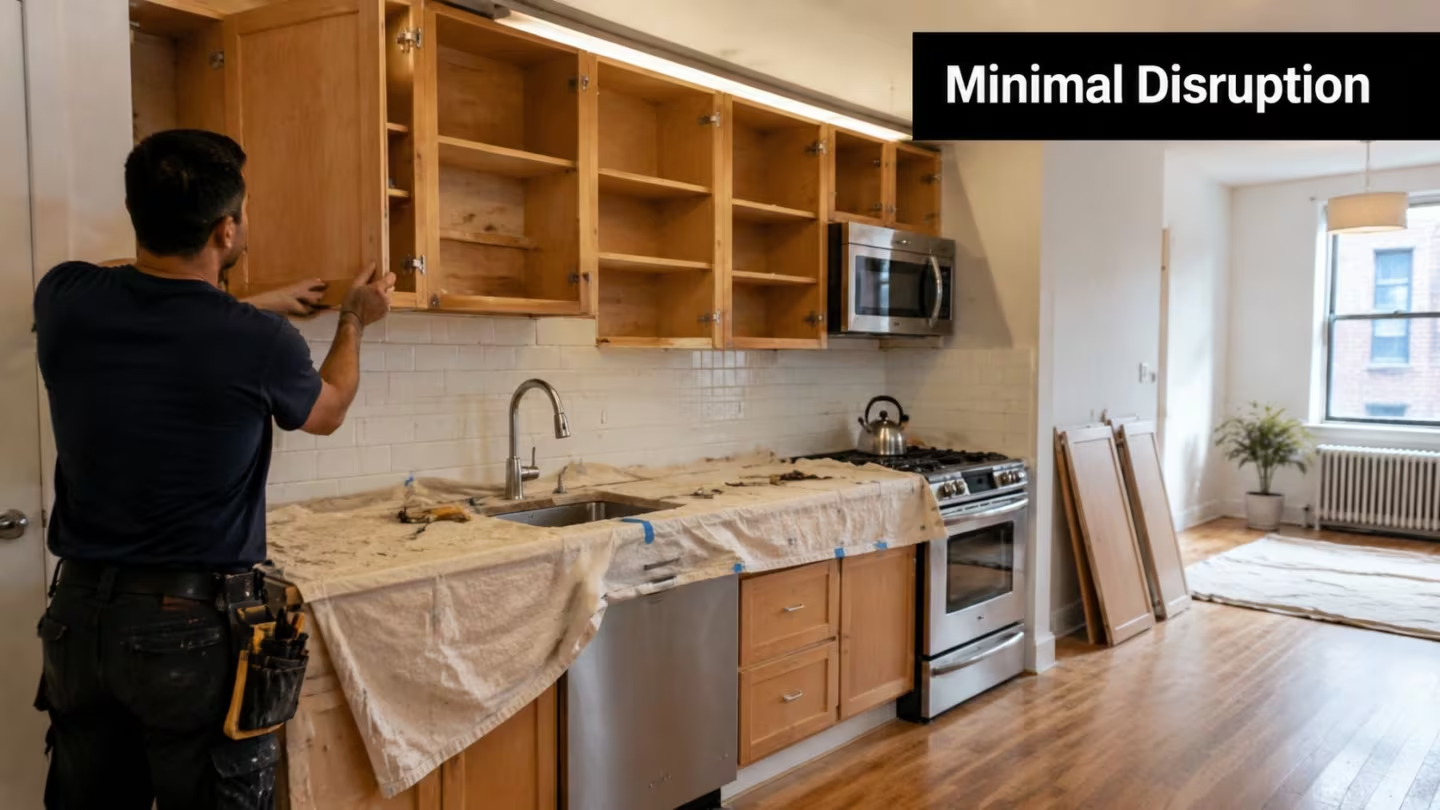
On an occupied job, the sequence usually feels manageable. The first day is removal and prep. The following work focuses on surface application, fitting, alignment, and hardware installation. Professional refacing commonly finishes in 2 to 5 days, according to Fin Home Contracting, and the kitchen may remain partly usable for much of that time, depending on which cabinets and counters are being worked on.
Replacement changes the entire site
Replacement is a construction project, not a door swap. Crews disconnect and protect appliances, remove the old cabinets, carry debris through hallways or stairs, inspect exposed walls and flooring, install new boxes, adjust fillers and panels, coordinate plumbing and electrical work, and prepare for countertop templating and installation.
The kitchen is generally out of service for a much larger portion of the job. Expect noise from demolition and fastening, dust from removal and wall repair, and possible water shutoffs when the sink or dishwasher connections change. Brownstone crews also need a clear plan for stair protection, debris staging, and street or building access.
Co-ops and condos add another layer. Management may require insurance certificates, work-hour restrictions, elevator reservations, protection of common areas, and advance notice for water shutdowns. A contractor who ignores those requirements can lose days before work even starts. For a visual reference on renovation conditions in the city, see this Manhattan and Brooklyn kitchen renovation project image.
The video below gives another view of cabinet work and renovation activity before you compare a contractor's schedule to your building rules.
Ask for the sequence in writing. “Three weeks” means little unless the proposal identifies demolition, cabinet installation, countertop templating, trade work, and final completion.
When to Choose Refacing vs When to Replace
Choose refacing when the boxes are sound, the layout already works, and your dissatisfaction is mainly visual. A good candidate has straight face frames, stable sides and backs, secure shelf supports, usable drawer bodies, and no significant swelling at plumbing fixtures. The kitchen may look dated, but it doesn't fight the way you cook.
Refacing also suits homeowners who want to stay in the apartment during the work or who need to limit demolition. It preserves the existing footprint and can refresh doors, drawer fronts, veneers, hinges, pulls, and interior accessories without rebuilding the cabinet system.
If you're happy with where the sink, range, refrigerator, and storage sit, don't pay to relocate them just because the doors look old.
Refacing makes sense when the problem is cosmetic
The strongest refacing cases have three traits:
- The boxes are solid: Plywood or high-quality MDF components remain square, dry, and firmly joined.
- The workflow is functional: You can reach the refrigerator, prep area, sink, and cooking surface without major frustration.
- The scope stays controlled: You want new surfaces, hardware, and selected storage improvements rather than a different room.
A refacing project can still include selective repairs. A contractor might reinforce a weak attachment point, replace a damaged drawer body, or swap one cabinet while retaining the rest. Don't approve that approach from a photograph alone. Water damage often extends behind the visible panel, especially beneath sinks and beside dishwashers.
Replacement is the right call when the kitchen fails structurally or functionally
Replace the cabinets when particleboard has swollen, fasteners no longer hold, shelves sag, or the boxes have shifted out of square. New fronts cannot make a failing carcass reliable. Replacement also wins when the layout wastes space, creates poor appliance clearances, lacks accessible storage, or prevents the addition of features that require different cabinet dimensions.
Choose replacement if you're already opening walls, moving plumbing, changing electrical locations, correcting floors, or installing a substantially different countertop arrangement. Keeping old boxes in that situation can force compromises and lead to rework.
New cabinetry is commonly described as lasting 25 to 30 years or more, while refacing is commonly described at about 15 to 20 years, according to HouseLogic. That longer service horizon matters in a home where the new layout solves real problems, not just appearance.
The gray zone needs a site decision
Borderline moisture damage, unusual cabinet heights, integrated lighting, historic details, and co-op alteration rules can change the recommendation. A brownstone with original millwork may need careful matching. A condo kitchen may have restrictions on hours, plumbing access, or exterior changes. An in-person assessment should determine whether reinforcement is practical or whether retained boxes will limit the finished result.
For carpentry conditions that fall between a simple surface update and a full cabinet rebuild, review this Manhattan and Brooklyn carpentry contractor project image.
The decision rule remains simple: keep the boxes when they're structurally worth keeping and the footprint works. Replace them when either condition fails. Don't let a fashionable door sample make that call for you.
Financing, Contractor Questions, and How AGNY Handles Both
A cabinet project can require serious cash, especially when replacement includes demolition, countertops, plumbing, electrical work, and repairs. Homeowners commonly compare home equity loans, HELOCs, credit cards, contractor payment plans, and cash savings. Each option solves a different problem.
A home equity loan provides a defined amount and predictable repayment structure, but the lender may require an appraisal and additional closing steps. A HELOC offers draw flexibility, which can help when the scope develops in phases, but its terms can vary and the total borrowing cost needs careful review. Credit cards and contractor-arranged plans can move faster, yet promotional terms, fees, and interest after the promotional period deserve close attention.
Cash may be the cleanest choice when the project is small and the funds are already available. For larger work, compare the borrowing cost with the risk of draining reserves. A financing decision should follow a written scope, not precede it. Homeowners researching broader approaches to funding a dream kitchen in DC can use that financing overview as a planning reference, even though local lending and contractor terms will differ.
Put these questions in writing
Before signing, ask the contractor to answer each item in the proposal:
- Licensing and insurance: Which licenses, certificates, and insurance documents apply to the project?
- Scope boundaries: Which cabinets are being refaced, replaced, reinforced, or excluded?
- Demolition: Who removes debris, protects common areas, and pays disposal charges?
- Cabinet specification: What are the box materials, door construction, finish, hardware, and organizers?
- Trade allowances: Are plumbing and electrical items fixed-price or allowances?
- Countertops: Is templating, removal, fabrication, installation, and plumbing reconnection included?
- Building compliance: Will the team meet co-op, condo, permit, and work-hour requirements?
- Older-building safety: For pre-1978 buildings, does the work require lead-paint Renovation, Repair and Painting compliance?
- Schedule: What is the start date and completion window?
- Delay terms: Does the contract include daily liquidated-damages language, and are there stated exclusions?
- Warranty: What covers workmanship, hardware, veneer, paint, and manufacturer materials?
- Change orders: How must added work be priced and approved before proceeding?
A cheap quote that leaves these questions unanswered isn't cheap. It's incomplete.
How AGNY scopes the decision
AGNY Services LLC offers a free in-home or virtual assessment, photo-based scoping, and a written scope that separates refacing from replacement line items. Its stated process includes fixed-price quotes, cabinetry sourced through partners such as Omega and Fabuwood, and one year of workmanship coverage alongside manufacturer coverage on materials.
The company lists service across Brooklyn, Manhattan, Queens, the Bronx, Staten Island, and Northern and Central New Jersey. Its typical stated lead times are 2 to 3 weeks for refacing and 4 to 8 weeks for full replacement, so homeowners should distinguish material lead time from on-site installation duration when comparing proposals.
For a clearer view of the contractor's service approach, review this AGNY Services contractor image. The useful comparison is not only the final price. It's whether the contractor has identified the box condition, documented the scope, coordinated the building requirements, and given you a schedule that reflects the actual work.
AGNY Services LLC can inspect your existing boxes, compare a refacing scope against full replacement, and coordinate the cabinet, countertop, plumbing, electrical, and finish work required for the job. Visit AGNY Services LLC to request an assessment for your NYC or New Jersey kitchen and get a written recommendation based on the condition of the cabinets, not a sales pitch.