You've found the right electric vehicle, checked whether it will fit in your NYC parking space, and then discovered the less convenient question: can your home support EV charging? A Brooklyn brownstone may have an aging electrical service. A New Jersey driveway may need a long outdoor cable route. A condo garage may require property-management approval, shared-load planning, accessibility review, and utility coordination before an electrician can mount anything.
That's why EV charging station installation isn't a matter of buying a wall unit and connecting it to an outlet. The charger, panel, circuit, location, permits, inspections, and utility service all have to work together. In the last two years, charging infrastructure has grown into a foundational market. The International Energy Agency's global charging analysis estimates that private light-duty vehicle charging points exceeded 43 million in 2025, supporting around 76 million electric light-duty vehicles, while nearly 1.8 million public charging points were added worldwide that year.
This guide is written for NYC and New Jersey homeowners, brownstone owners, landlords, condo boards, property managers, and anyone planning charging in a garage, driveway, apartment building, or mixed-use property. It focuses on the decisions that affect whether the project is safe, permitted, serviceable, and ready for future demand. AGNY Services LLC provides electrical and construction coordination for projects where the charger is part of a larger residential or commercial improvement, with information available through this NYC and New Jersey contractor resource.
Introduction to Home EV Charging in NYC and New Jersey
A homeowner in Queens may be deciding whether to order an EV before knowing where the car will charge. The parking space is available, but the electrical panel is in a basement utility room, the driveway crosses a narrow side passage, and the property has never had a dedicated high-load circuit installed. In Manhattan and Brooklyn, the same question often appears in a different form: can a building garage support a charger when several residents may eventually want one?
Home charging matters because it changes the daily experience of owning an EV. Instead of treating every trip as a search for public equipment, a homeowner can use the hours when the car is already parked. That advantage is strongest for properties with secure off-street parking, but the installation has to match the building's electrical capacity and the driver's actual routine.
NYC and New Jersey properties create distinct practical conditions:
- Older electrical systems: Brownstones, prewar homes, and converted buildings may have limited panel space, outdated equipment, or circuits that were never designed for sustained EV loads.
- Tight parking layouts: A charger may need to sit on brick, masonry, a detached garage, or a pedestal rather than a convenient interior wall.
- Shared ownership: Condos, co-ops, apartment buildings, and mixed-use properties require decisions about billing, access, load sharing, and responsibility for repairs.
- Outdoor exposure: Driveway installations need appropriate enclosures, weather sealing, cable management, and physical protection from vehicles and snow removal.
- Local approvals: The building department, electrical authority, property manager, utility, and sometimes an owner association can each affect the schedule.
When home charging makes financial sense
The value of a residential charger depends less on the equipment's appearance than on how often the vehicle returns to the property and how long it remains parked. A low-mileage driver with convenient public access may be comfortable with a basic arrangement. A commuter who returns home nightly, or a household with more than one EV, needs a more deliberate circuit and load plan.
The installation also supports resale and long-term property usefulness, but it shouldn't be justified solely as an amenity. A charger that's poorly located, difficult to access, or connected without adequate capacity can become a maintenance problem. The practical standard is simple: choose equipment that suits the vehicle, confirm the electrical system can carry it, secure the required approvals, and leave a clean path for future service.
Choosing the Right Charger Level for Your Home and Driving Needs
The charger level should follow the parking pattern, not the highest number on a product label. Level 1 uses a standard household circuit and suits long dwell times or light driving. Level 2 is the usual residential choice when a homeowner wants a dedicated circuit and meaningful overnight charging. DC fast charging belongs mainly in commercial, fleet, and public settings because it requires substantially more electrical infrastructure and is rarely a sensible home installation.
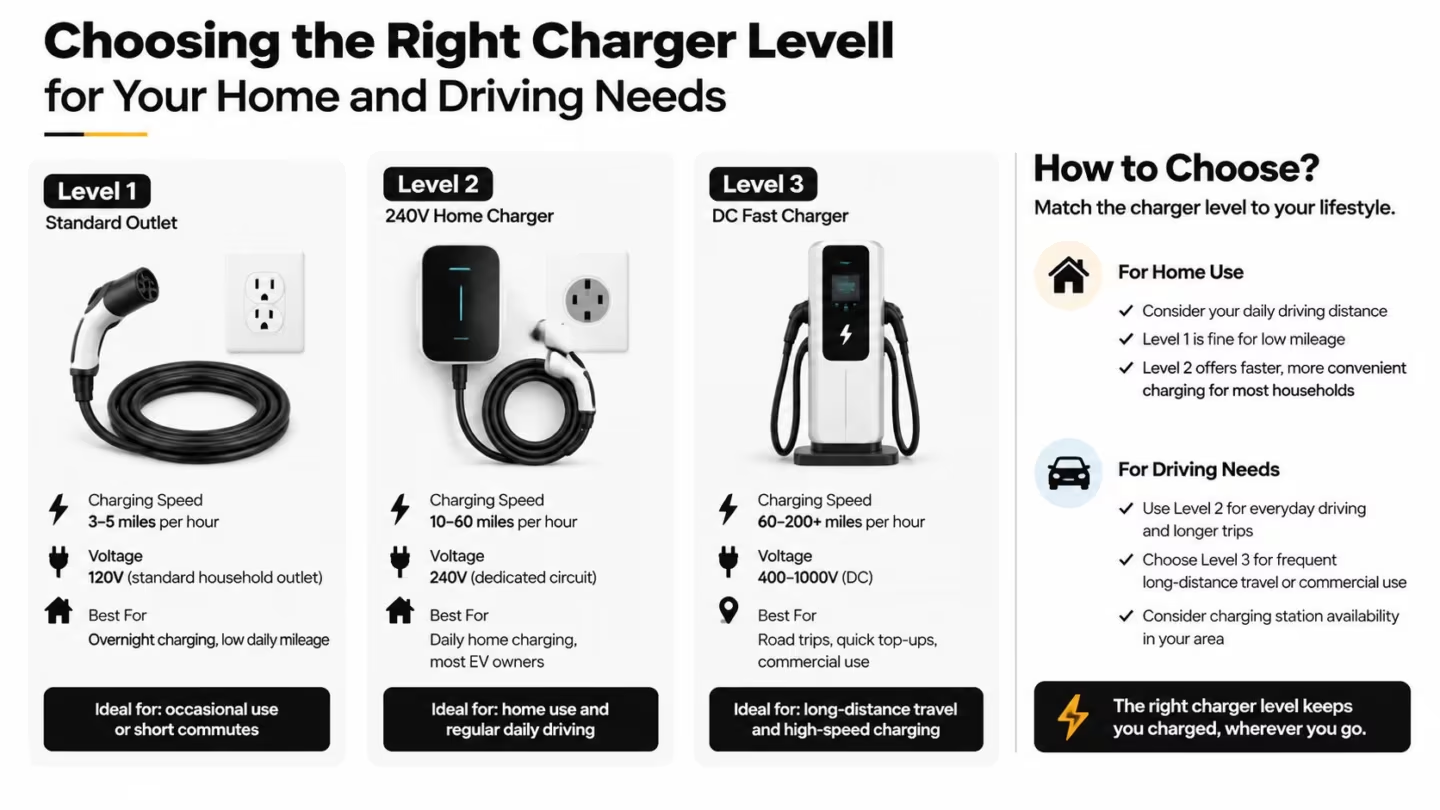
Compare the three levels before buying equipment
Level 1 can work for a homeowner who drives modest distances and leaves the vehicle parked for long periods. It typically avoids the need for a new high-capacity circuit, but the charging rate is limited and the result depends on the vehicle, outlet condition, and how much energy the car needs.
Level 2 operates through a dedicated higher-voltage circuit and provides a more practical daily routine for many NYC and New Jersey homes. In a Brooklyn garage, for example, the unit may be mounted near the parking position while the electrician routes a dedicated circuit from the basement panel. In a New Jersey home, the same charger might be installed on an exterior wall with conduit protected from weather and impact.
DC fast charging can replenish a vehicle quickly, but residential properties usually lack the service capacity, space, and cost justification for it. A home project that appears to require fast charging may be better served by Level 2 plus overnight parking and occasional public fast charging during long trips.
| Charger Level | Power and Speed | Best For | Home Requirements |
|---|---|---|---|
| Level 1 | Lower-power charging from a standard household circuit | Low-mileage drivers, long parking periods, occasional use | Suitable outlet, verified circuit condition, safe cable routing |
| Level 2 | Higher-power dedicated charging for regular home use | Daily commuters, families, garages, driveways, and planned multifamily charging | Electrical load review, dedicated circuit, suitable overcurrent protection, permitted installation where required |
| DC Fast Charging | High-power charging intended for rapid turnover | Public sites, fleets, travel corridors, and commercial properties | Major service capacity, utility coordination, substantial equipment and site planning |
The vehicle's onboard charging capability also matters. Buying a charger that exceeds what the vehicle can accept won't automatically produce faster charging. A licensed electrician should also consider whether the selected unit supports hardwiring, network features, load management, outdoor mounting, and the cable length needed to reach the vehicle without creating a trip hazard.
This short video can help visualize the differences between charging levels before you commit to equipment.
Practical rule: Choose Level 2 because it fits your parking and electrical plan, not because the charger has the largest possible output.
For condos and multifamily garages, charger selection also involves ownership and access. A private unit may be tied to one parking space and meter, while a shared installation may need network controls, load balancing, user authentication, and an agreed method for recovering electricity costs. Those decisions should be made before equipment is ordered.
Assessing Your Site and Electrical Capacity Before You Buy
In a Brooklyn row house, a detached New Jersey garage, or a multifamily parking area, the charger is only one part of the installation. Before buying equipment, confirm where its power will come from, how the cable will reach the vehicle, and whether the property can support future chargers. A site assessment should cover the electrical panel, service, parking space, mounting surface, cable route, and planned expansion.
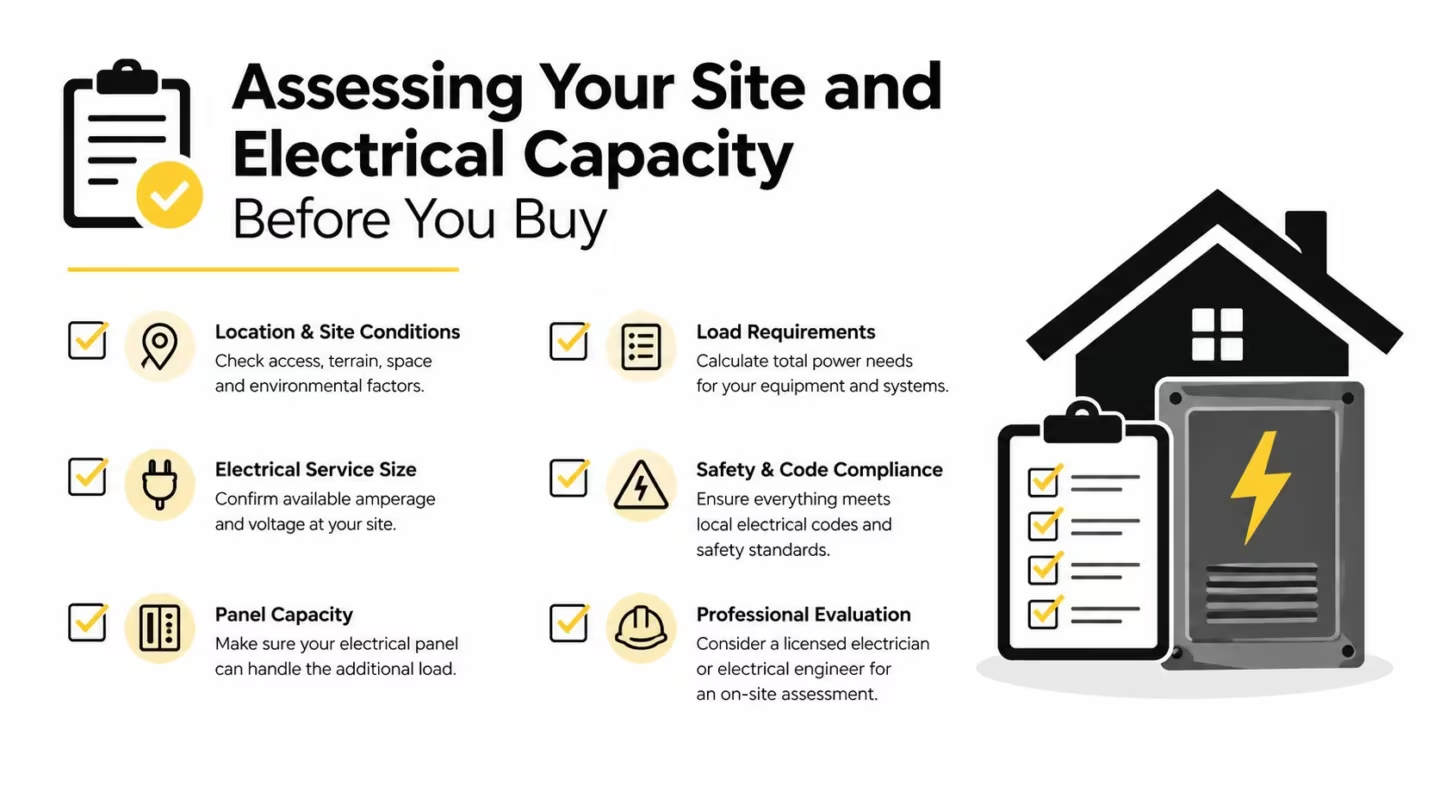
Start at the electrical panel
The electrician should record the main service rating, panel condition, available breaker spaces, existing large loads, and proposed charging load. An empty breaker position does not prove that the service has usable capacity. Electric heat, water heating, dryers, cooking equipment, air-conditioning systems, and other continuous loads all affect the load calculation.
For multifamily or commercial-grade work, the review may include the building service, house loads, tenant loads, transformer capacity, and a phased plan for additional chargers. The Amp'd Energy Solutions installation requirements guide offers background on why equipment and site requirements should be checked before purchase.
AGNY Services LLC can use this type of contractor site assessment to document existing conditions before installation work is priced. View a Manhattan and Brooklyn contractor site assessment for the kind of field review that helps identify access, routing, and construction concerns.
Walk the physical route
A site visit should answer questions that photographs often miss:
- Mounting surface: Will the charger attach to masonry, wood framing, a garage column, or a pedestal?
- Cable path: Can conductors pass through finished areas, exposed basement ceilings, exterior walls, or underground conduit?
- Distance: How far is the panel from the charger, and will the run require larger conductors because of its length?
- Obstacles: Are foundation walls, finished ceilings, fire-rated assemblies, sidewalks, landscaping, or structural elements in the route?
- Vehicle protection: Will bollards, wheel stops, or a protected mounting location be needed?
- Water and weather: Does the location require weatherproof equipment, sealed fittings, drainage planning, or snow protection?
In NYC homes, finished basement ceilings, masonry, and narrow side yards can make a short route labor-intensive. In New Jersey, a detached garage or driveway may require trenching, boring, pavement restoration, or a longer outdoor conduit run.
Future capacity matters in multifamily properties. Installing one charger without reserving panel space or conduit capacity can make later expansion disruptive. The California Energy Commission's discussion of data-driven EV charging deployment explains why charging locations, expected demand, and charger type should shape the plan.
Before requesting a firm estimate, provide photographs of the service equipment, panel directory, proposed parking space, likely cable route, and any trenching area. Measurements help, but they do not replace an electrician's inspection.
Permits Code Compliance and Safety Inspections in NY and NJ
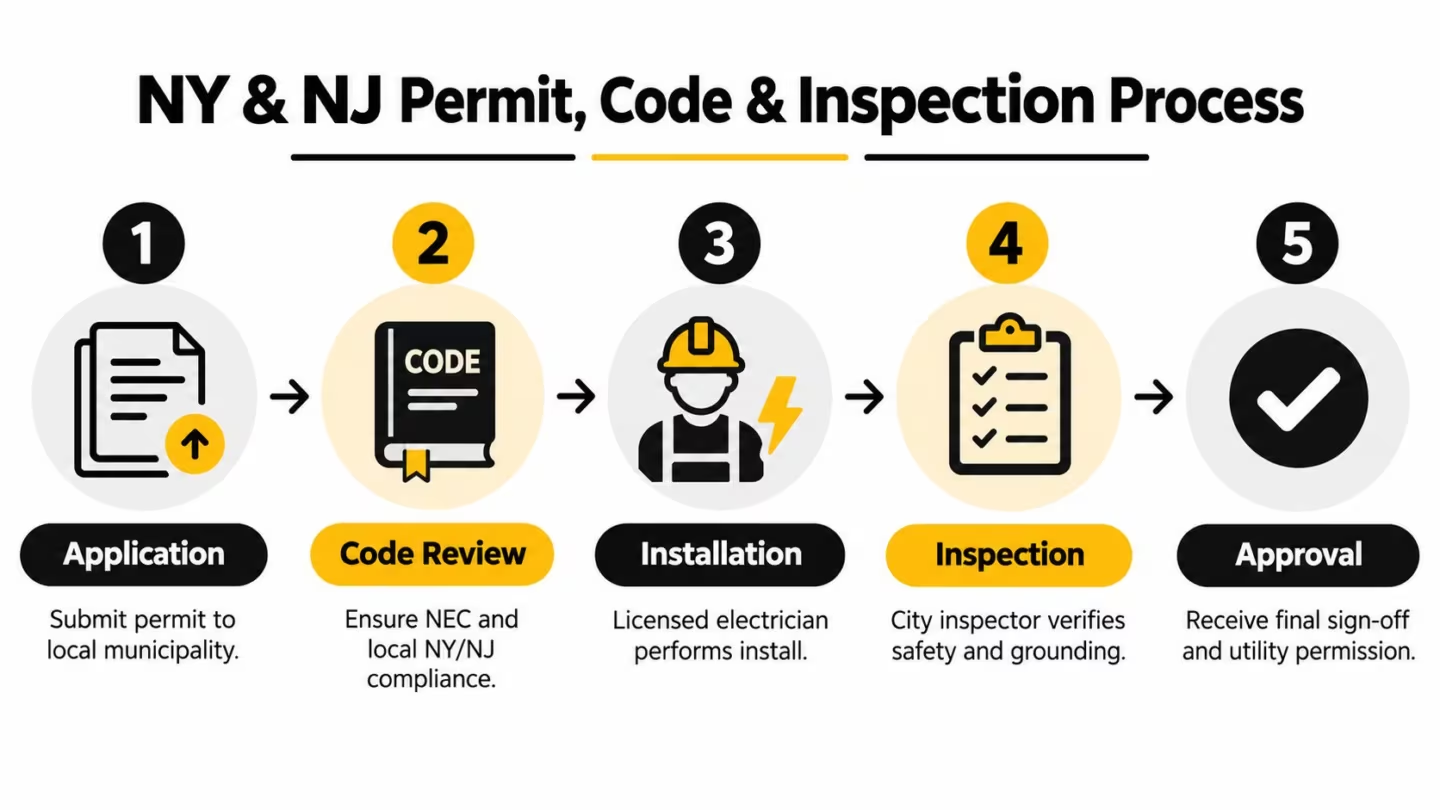
A compliant EV charging station installation follows a sequence. The exact authority having jurisdiction differs by municipality, but the work generally moves from assessment and drawings to permit application, installation, inspection, and approval. Treating the permit as an afterthought creates avoidable corrections, especially when the project affects a multifamily garage, public parking area, sidewalk, or utility service.
Follow the approval sequence
First, identify the local requirements. The municipality may require an electrical permit, and the property may also trigger building, mechanical, zoning, public-space, or accessibility review. San José guidance requires electrical permits for Level 2 installations and may require mechanical permits as well, while local rules in NYC and New Jersey must be confirmed for the specific address.
Next, prepare the application. The electrician or design professional submits the required permit application, installation drawings, load information, equipment details, and site plans. Permit fees are often cited in the $50 to $200 range for practical residential installation planning, but the EV permitting guidance from the U.S. Department of Energy's Alternative Fuels Data Center makes clear that agencies and jurisdictions use different workflows and should provide standardized processes and sample timelines.
Then install only after the approved path is clear. The physical work can include a dedicated circuit, conduit, conductors, disconnects, mounting, trenching, and equipment connections. Outdoor builds commonly call for IP65-level weatherproofing, dedicated MCB/RCD protection, proper labeling, and conductor sizing based on charger power and run length, as described in this commercial EV charging installation sequence.
Utility coordination is often the real schedule risk
A building permit doesn't guarantee that the utility can immediately support the added load. If the existing service is inadequate, the project may require a new-load review, service modification, transformer work, or coordination with the property owner and utility engineer. That process can take longer than the electrician's field installation.
Local guidance illustrates the variation. San Diego County says some Level 2 home chargers may qualify for instant permits, while commercial projects can require two to three days for permit issuance and inspection before use, according to the DOE permitting resource cited above. Those figures don't predict an NYC or New Jersey schedule. They demonstrate why a contractor should identify the authority, utility, and inspection sequence at the start.
Prepare for inspection
The inspector may verify grounding, conductor protection, disconnecting means, equipment installation, clearances, labeling, weatherproofing, and compliance with the approved drawings. In a multifamily or public-facing garage, accessibility and parking layout can also matter. The California Energy Commission's planning guidance identifies equity, reliability, utilization, and grid impact as issues that extend beyond just counting chargers.
For that reason, ask the contractor who submits the permit, who responds to corrections, who schedules inspections, and who coordinates the utility. If the answer is unclear, the schedule is unclear too.
Costs Timelines and Rebates You Can Expect
A credible EV charging budget separates predictable equipment from site conditions that can change the project. Hardware is only one line item. Electrical routing, panel work, trenching, surface restoration, mounting, permit handling, inspection corrections, and utility coordination can all affect the final price.
Permit fees are often cited in the $50 to $200 range, according to this EV charger installation guide. That amount shouldn't be mistaken for the total permitting and design cost. A straightforward home installation may need only an electrical permit, while a multifamily or commercial garage can involve building review, accessibility planning, public-space permissions, engineered drawings, and utility work.
What moves the budget
The low-complexity project is usually close to the panel, has an accessible mounting surface, uses an existing service with adequate capacity, and avoids major finished-surface repair. Costs rise when the charger sits far from the electrical room, the route crosses masonry or pavement, conductors need to be upsized, or the panel and service require modification.
The following questions are more useful than asking for a generic “charger price”:
- Is the charger wall-mounted or pedestal-mounted?
- How much conduit and conductor length is included?
- Does the estimate include trenching, boring, patching, and restoration?
- Are permit fees, drawings, inspection visits, and corrections included?
- Will the contractor perform a load calculation before recommending equipment?
- What happens if the utility requires a service upgrade?
- Are network activation, testing, and owner instruction included?
For broader market context, the 2026 EV charger installation cost guide from Lighthouse Energy Services can help commercial and multifamily owners understand why comparable charger models can produce very different installed totals.
Build a schedule around the unknowns
A simple home installation may move quickly once the permit is approved and equipment is available. The unpredictable phase is utility coordination. A service upgrade, transformer review, or multifamily approval can extend the project well beyond the physical wiring work.
Plan the purchase around approvals rather than delivery of the charger. Confirm current New York, New Jersey, utility, and manufacturer incentives before using any rebate in your financial calculation. Programs change, may have eligibility rules, and can require preapproval, approved contractors, inspection records, or proof of installation.
The return on investment is also property-specific. For a homeowner, the value may come from convenience, dependable overnight charging, and avoiding repeated public charging trips. For a landlord or workplace, the calculation may include tenant service, employee access, paid charging, maintenance, and electricity recovery. Use conservative assumptions and keep incentives separate until eligibility is confirmed in writing.
How to Select a Licensed Contractor and Finalize Your Installation
The right contractor should be able to discuss the panel and permit path before discussing finishes or software features. Ask for proof of New York or New Jersey licensing appropriate to the work, general liability coverage, workers' compensation coverage where required, and experience with the type of property you own.
Use a written vetting checklist
A serious proposal should identify the charger model or performance requirements, circuit design, conductor and conduit route, mounting method, protection, permit responsibility, inspection responsibility, and exclusions. It should also explain what happens if the load calculation finds insufficient capacity.
Ask these questions directly:
- Who performs the load calculation?
- Who submits and closes the permit?
- Who contacts the utility if service capacity is inadequate?
- Which party pays for unforeseen trenching or panel work?
- How will the installation be tested and commissioned?
- What warranty applies to labor, wiring, equipment, and workmanship?
- Will the contractor provide labeling, operating instructions, and maintenance guidance?
A contractor who promises an exact schedule without asking about the utility, municipality, panel, parking arrangement, or property ownership structure is giving you a marketing answer rather than a project assessment.
Check the finished work before sign-off
At the final walkthrough, confirm that the charger is secure, the cable reaches the vehicle without crossing a pedestrian path, the circuit and disconnect are labeled, protective devices are installed as designed, and exterior penetrations are sealed. The electrician should test operation, verify communication or network setup if applicable, and explain how to shut down the equipment safely.
For a garage or multifamily property, review access rules, parking markings, bollards, accessibility features, drainage, lighting, and responsibility for future repairs. Keep the permit documents, inspection approval, equipment manual, warranty information, and panel schedule together. This documentation matters if the property is sold, the service is upgraded, or another charger is added later.
AGNY Services LLC is one option for owners seeking a licensed New York and New Jersey contractor that coordinates electrical work, permitting, construction tasks, paid estimates, consultations, and final walkthroughs. You can also review this electrical contractor resource for Manhattan and Brooklyn when comparing local providers.
For a site-specific EV charging assessment, AGNY Services LLC can review your panel capacity, parking location, conduit route, permit needs, and utility coordination before you purchase equipment. Visit AGNY Services LLC to request a paid estimate or consultation for a code-aware installation in NYC or New Jersey.