TL;DR:
- Fire safety regulations for businesses are based on national standards and enforced locally by fire marshals.
- Maintaining proper fire extinguishers, alarms, exit routes, fire-rated doors, and employee training ensures continuous compliance.
Fire code basics for businesses are the fundamental fire safety regulations every commercial property must meet to protect occupants, property, and legal standing. These rules draw from national standards like the NFPA (National Fire Protection Association) and the IFC (International Fire Code), plus OSHA workplace safety mandates, and are enforced locally by fire marshals. Getting them wrong costs more than a citation. A fire code violation can void your insurance, trigger forced closure, and in the worst case, cost lives. This guide gives you the core knowledge to stay compliant and stay safe.
What are the essential components of fire code compliance for businesses?
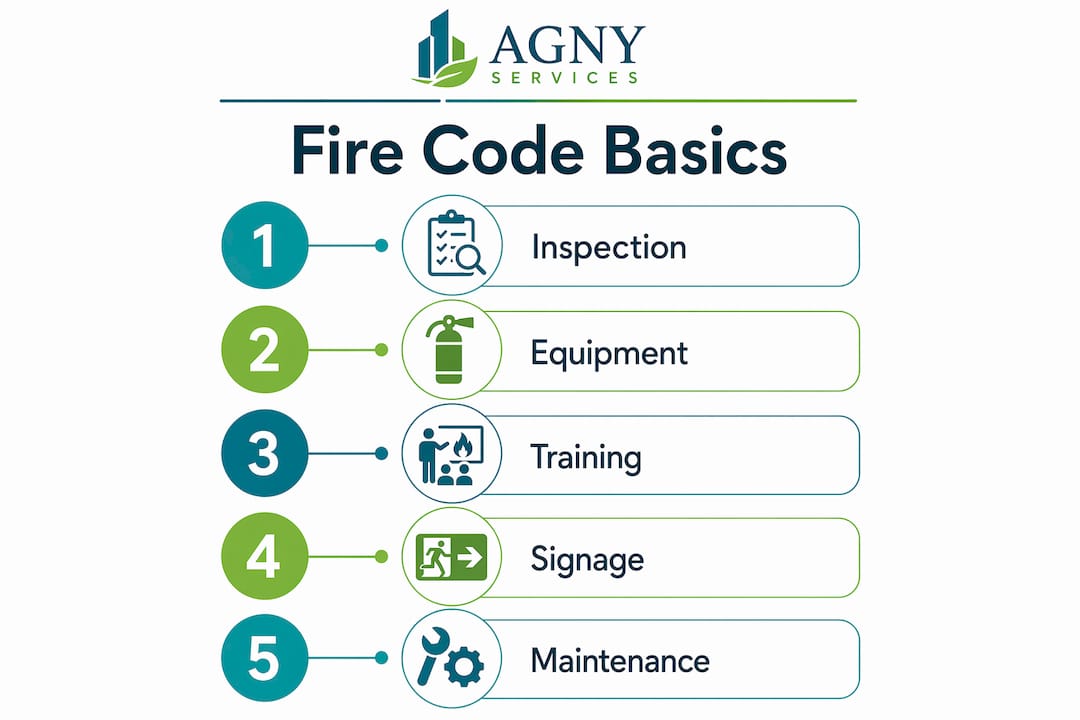
Fire code compliance rests on five interconnected systems. Each one must work correctly on its own, and all five must work together.

Fire extinguishers
Placement and maintenance rules are specific. Standard commercial buildings require 2A-10BC extinguishers per 3,000 square feet, mounted 4 inches to 5 feet off the floor, within 75 feet of travel distance for ordinary hazards and 30 feet for high-hazard areas. A licensed professional must service them annually. That annual tag is not optional. An inspector will check it, and an expired tag is an immediate citation.
Alarms, detectors, and sprinkler systems
Smoke detectors and fire alarm systems must be tested on a schedule set by your local authority. Sprinkler systems require 18 inches of clearance from stored items in sprinklered buildings, and 24 inches where no sprinklers exist. Blocking a sprinkler head with a shelf or a box is one of the most cited violations in commercial inspections. Electrical panels require 36 inches of unobstructed clearance for emergency access.
Exit routes, signage, and emergency lighting
Every exit route must stay clear, lit, and marked at all times. Exit signs must be illuminated and visible from the path of egress. Emergency lighting must activate automatically when power fails. These are not suggestions. OSHA mandates exit routes, extinguisher availability, emergency plans, and employee training as baseline workplace fire safety requirements.
Fire-rated doors and storage
Fire-rated doors must close and latch without being propped open. Storage in corridors, stairwells, or near fire-rated assemblies is prohibited. Even a single cardboard box left in a stairwell can trigger a violation.
Employee training and emergency action plans
Every business must maintain a written emergency action plan and train employees on it. New hires need training before they start working. The plan must include evacuation routes, assembly points, and designated personnel roles.
Pro Tip: Post your emergency action plan near break rooms and entrances, not just in a binder in the manager’s office. Inspectors check whether it is accessible, not just whether it exists.
What are the most common fire code violations and how to avoid them?
The most cited violations are predictable, and most are preventable with a simple weekly walkthrough.
Blocked or locked exits. Propping a fire door open or stacking boxes in an exit corridor is the single most common citation. Exit routes must remain clear at all times, with no locks or devices that prevent free egress from inside.
Expired or missing inspection tags. Fire extinguishers, sprinkler systems, and alarm panels all require dated inspection tags. Top 2026 fire code citations include expired tags as a leading cause of violations, alongside blocked exits and improper storage near sprinkler heads.
Improper storage near sprinkler heads and electrical panels. Storing goods too close to sprinkler heads prevents proper water distribution in a fire. Blocking electrical panels prevents emergency shutoff. Both are cited regularly and both are easy to fix.
Extension cords used as permanent wiring. Extension cords are temporary tools. Running one under a carpet or through a wall to power a permanent workstation violates the IFC and creates a serious ignition risk.
Non-functional emergency lighting. Emergency lights must activate when power fails. Bulbs burn out, batteries die, and nobody notices until an inspector tests the system. Test yours monthly.
Outdated evacuation plans. A plan that still shows the old floor layout or lists employees who left two years ago is a liability. Update your plan every time your space or team changes.
Pro Tip: Walk your facility every Monday morning with a workplace safety checklist in hand. Catching a blocked exit before an inspector does costs nothing. Catching it after costs fines, time, and credibility.
Compliance drift is the quiet accumulation of small violations caused by daily operational changes. An employee chains a door for convenience. A delivery gets stacked in a corridor temporarily and stays there for weeks. These small shifts add up. Structured quarterly audits of 47 points help identify issues before they become citations.
How do local amendments and jurisdictional differences affect fire code compliance?
NFPA codes are technical standards, not laws. They become law only when a state or municipality formally adopts them, and most jurisdictions amend them when they do. That distinction matters enormously for your compliance strategy.
NFPA codes provide detailed national standards, but local jurisdiction amendments can significantly alter compliance requirements. A business that assumes national guidelines are sufficient without verifying local specifics is taking a real legal risk.
Common examples of local amendments include:
- Stricter occupancy limits than the national model
- Additional sprinkler requirements for buildings that the IFC would not require to be sprinklered
- Shorter inspection intervals for fire alarm systems
- Local permit requirements before any fire system testing begins
- Mandatory use of approved third-party agencies for system inspections
Some jurisdictions require pre-authorization before testing fire systems, and reports from non-approved contractors are rejected outright. That means a failed inspection even when the system itself is working correctly.
“Businesses must verify local code specifics before assuming compliance based on national guidelines. The gap between NFPA standards and local law is where most unexpected violations occur.”
Your local fire marshal is the authoritative source on what applies to your building. Schedule a pre-inspection meeting before any renovation or occupancy change. Most fire marshals will walk your space informally and flag issues before they become formal citations. That conversation costs nothing and can save thousands.
The occupancy classification of your building also determines which fire code requirements apply. A retail store, a restaurant, and a warehouse all carry different requirements for alarm types, sprinkler systems, and egress. Keeping your occupancy classification documentation current is a compliance requirement in itself.
What best practices keep your business compliant and fire-safe year-round?
Compliance is not a one-time event. Treating it as a continuous system rather than an annual checkbox produces better outcomes and fewer inspection surprises. Here is how to build that system.
- Build a relationship with your local fire marshal. Proactive engagement with fire marshals reduces inspection surprises and operational disruptions. Introduce yourself before you need them.
- Run structured quarterly audits. A 47-point self-audit conducted every quarter catches compliance drift before it becomes a citation. Use a written checklist, not memory.
- Document everything. Keep records of every inspection, maintenance visit, and training session. Inspectors ask for documentation. Insurance adjusters ask for documentation. Courts ask for documentation.
- Know your insurance policy. Insurance policies often mandate ongoing fire code compliance as a coverage condition. A violation that disables your sprinkler system can void a claim after a fire.
- Act immediately after a violation notice. A notice is not a fine yet. Most jurisdictions give a correction window. Use it. Document the correction and request a re-inspection in writing.
Pro Tip: When your alarm or sprinkler system goes offline for repairs, fire watch is legally required after 4 hours of downtime in a 24-hour period. Trained personnel must patrol, monitor, and document rounds until the system is certified back online. This is not optional and is often overlooked.
For facility managers handling renovations, the commercial renovation compliance guide covers frequently cited fire safety violations that arise specifically during construction phases.
| Compliance task | Recommended frequency |
|---|---|
| Fire extinguisher inspection | Monthly visual check, annual professional service |
| Emergency lighting test | Monthly |
| Sprinkler clearance check | Weekly during high-inventory periods |
| Full self-audit | Quarterly |
| Emergency action plan review | Annually or after any layout change |
Key Takeaways
Fire code compliance is a continuous operating system, not a checklist, and businesses that treat it that way face fewer violations, lower insurance risk, and safer workplaces.
| Point | Details |
|---|---|
| Know your local code | NFPA standards become law only when locally adopted, often with amendments that change your requirements. |
| Maintain clearances | Keep 18 inches around sprinkler heads and 36 inches in front of electrical panels at all times. |
| Audit quarterly | A structured 47-point audit every quarter catches compliance drift before inspectors do. |
| Document every action | Inspection records, training logs, and maintenance reports protect you legally and with insurers. |
| Act fast on violations | Use the correction window, document the fix, and request a written re-inspection confirmation. |
Fire codes reward the prepared, not the lucky
I have seen facility managers treat fire code compliance the same way people treat car maintenance: they ignore it until something breaks. That approach works until it doesn’t, and when it doesn’t, the consequences are severe.
The insight that changed how I think about this is simple. Compliance drift is invisible until it isn’t. Daily operational decisions, a propped door here, a box in a corridor there, accumulate quietly. By the time an inspector arrives, you are not looking at one violation. You are looking at a pattern that suggests systemic neglect.
The businesses I have seen handle inspections well share one habit: they treat their fire marshal as a resource, not an adversary. A pre-inspection walkthrough with your local marshal costs an afternoon. It routinely surfaces issues that would have cost thousands in fines and remediation. That is not luck. That is preparation.
One thing most articles skip: your occupancy classification drives everything. If you renovate and your use changes, even slightly, your fire code requirements may change with it. A storage room converted to a break room changes egress requirements. A kitchen added to an office triggers suppression system rules. Check your classification before you change your space, not after.
For facility managers, the facility maintenance workflow guide offers a structured approach to embedding fire safety checks into daily operations without adding significant overhead.
— Grzegorz
How Agny supports fire-safe renovations and compliance
Renovation projects are one of the most common triggers for fire code violations. Walls move, sprinkler coverage changes, exit routes shift, and permit requirements multiply. Agny works with business owners and facility managers to plan renovations that meet local fire code requirements from the start, not as an afterthought.

Whether you need guidance on renovation financing options for compliance-driven upgrades or a contractor who understands the permit and inspection process, Agny brings that expertise to every project. Understanding permit requirements for 2026 is especially relevant for businesses planning construction or significant interior changes this year. Contact Agny directly to discuss your project and get a clear picture of what compliance looks like for your specific space.
FAQ
What are fire codes for businesses?
Fire codes for businesses are legally enforceable regulations that govern fire prevention, detection, suppression, and egress in commercial buildings. They draw from national standards like the NFPA and IFC, enforced locally by fire marshals.
How often should a business inspect its fire extinguishers?
Fire extinguishers require a monthly visual check by staff and an annual professional service by a licensed technician. The annual service must be documented with a dated inspection tag on the unit.
What happens if a business fails a fire code inspection?
The business receives a violation notice with a correction deadline. Failure to correct within that window can result in fines, forced closure, or both. Insurance coverage may also be affected if violations involve disabled fire protection systems.
Do NFPA codes apply automatically to my business?
NFPA codes are technical standards, not automatic law. They apply only after a state or local jurisdiction formally adopts them, often with amendments. Always verify which version your local authority has adopted before assuming compliance.
What is fire watch and when is it required?
Fire watch is a legally required patrol service activated when a fire alarm or sprinkler system goes out of service for more than 4 hours in a 24-hour period. Trained personnel monitor the building and document rounds until the system is repaired and certified.