TL;DR:
- Investing in high-quality millwork offers long-lasting durability, improved daily function, and increased resale value. It provides better structural joinery and hardware, reducing maintenance costs significantly over the property’s lifespan. Focused millwork in key areas enhances marketability, buyer perception, and generates a high return on investment.
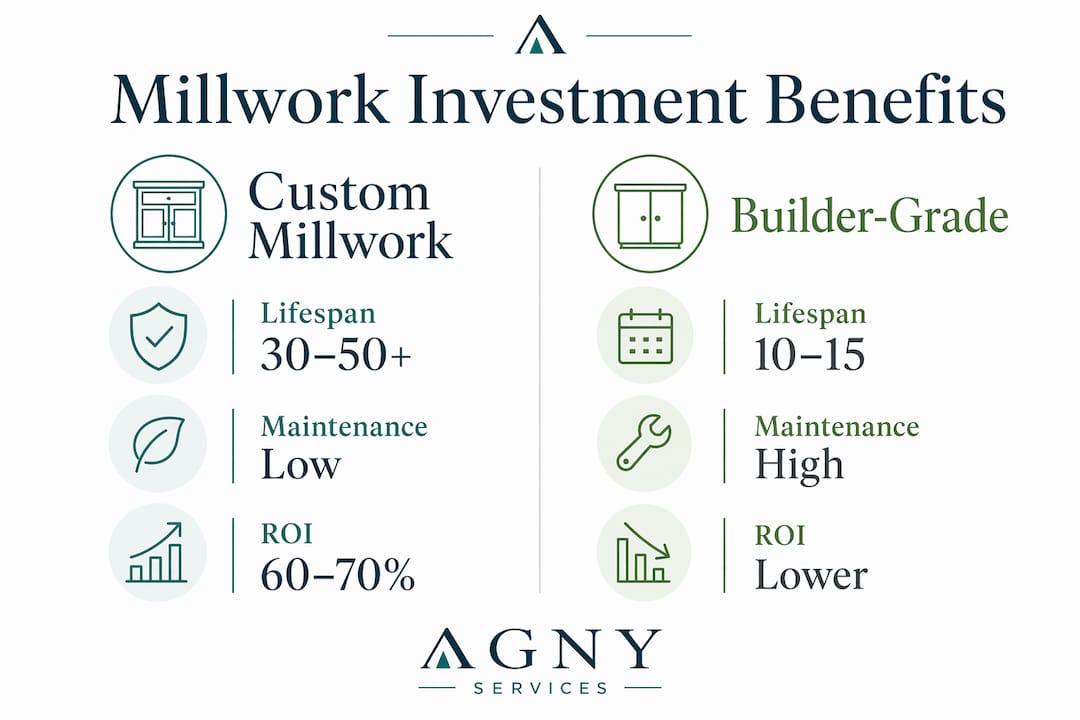
Millwork is defined as custom wood elements, including cabinetry, built-ins, moldings, and paneling, fabricated to fit a specific space and architectural intent. Investing in millwork is one of the few renovation decisions that pays back in three directions at once: durability, daily functionality, and resale value. Custom millwork built from premium hardwoods lasts 30–50+ years, compared to 10–15 years for builder-grade alternatives. That gap in lifespan translates directly into lower maintenance costs and a stronger long-term return on every dollar spent.
Why invest in millwork: the case for quality over cost
The financial argument for millwork investment starts with construction quality. Builder-grade cabinetry relies on dowels and glue joints that weaken over time. Custom millwork uses joinery techniques like mortise-and-tenon that actually strengthen with age, creating a structural bond that outlasts the finish itself.
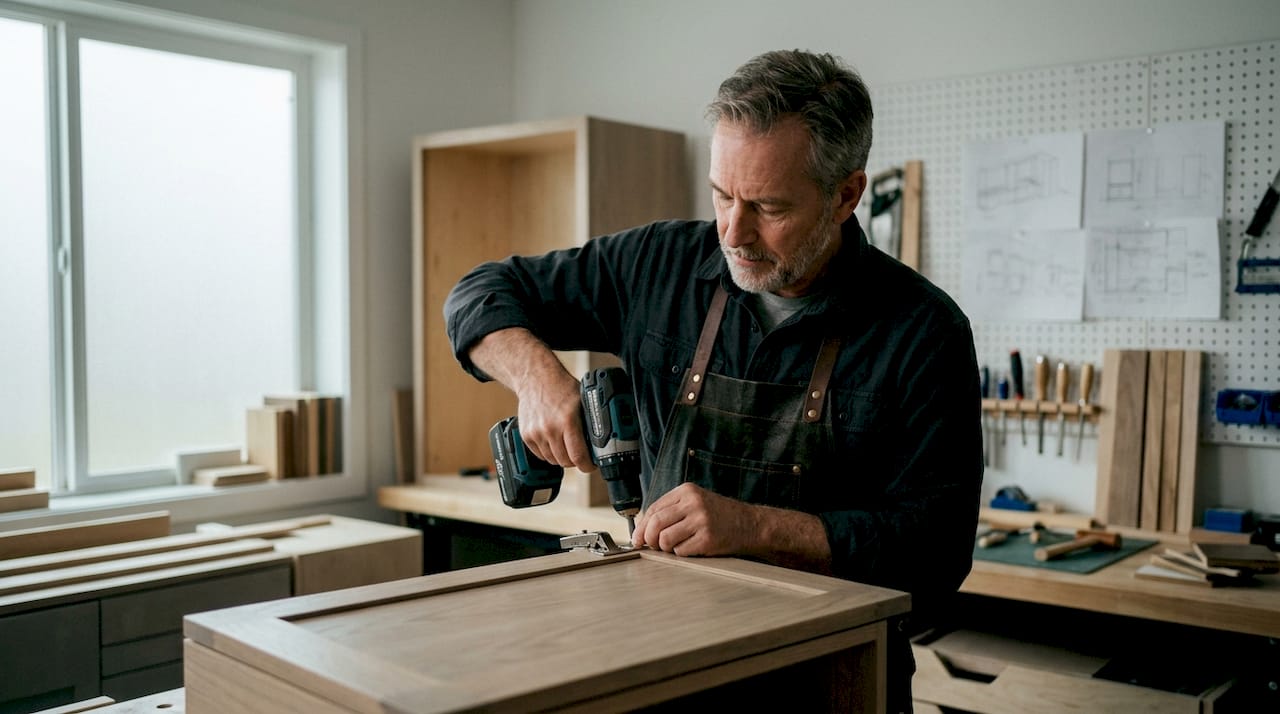
Hardware tells the same story. Premium soft-close hinges used in custom millwork withstand 80,000–200,000 cycles of operation without losing smooth function. Standard hardware on stock cabinetry typically fails well before that threshold. That difference shows up in repair bills and replacement timelines.
The lifecycle cost advantage is significant. Quality millwork reduces maintenance and replacement costs by 40–60% over a property’s lifespan. For a real estate investor managing multiple units or a homeowner planning a long hold, that reduction compounds into real savings.
Pro Tip: When comparing millwork bids, ask each fabricator to specify the joinery method and hardware cycle rating. Those two details reveal more about long-term value than the price tag alone.
| Feature | Custom millwork | Builder-grade cabinetry |
|---|---|---|
| Lifespan | 30–50+ years | 10–15 years |
| Joinery method | Mortise-and-tenon | Dowels and glue |
| Hardware durability | 80,000–200,000 cycles | Standard, lower threshold |
| Maintenance cost impact | 40–60% reduction over lifespan | Higher replacement frequency |
Which areas of a property deliver the highest return?
Not every room delivers equal return on millwork investment. Targeting high-visibility and high-use areas produces the strongest ROI and the most immediate impact on buyer perception.
Luxury renovation advisors consistently point to fireplaces, media walls, mudrooms, and kitchen cabinetry as the areas where millwork creates the most memorable first impressions. These are the spaces buyers photograph, remember, and reference when making offers.
The areas that consistently outperform on ROI include:
- Kitchen cabinetry and built-ins. The kitchen is the single most scrutinized room in any property transaction. Custom cabinetry signals quality throughout the entire home.
- Fireplace surrounds and built-in shelving. These features create architectural authenticity that buyers associate with premium construction.
- Mudrooms and entryways. Functional millwork in transition spaces communicates thoughtful design and practical value.
- Media walls and home office built-ins. These features address how people actually live, making spaces feel purpose-built rather than generic.
- Coffered ceilings and wainscoting. Architectural millwork details in living and dining rooms signal craftsmanship at a glance.
Luxury home renovations that focus millwork on these key areas yield 70–85% return on investment by enhancing architectural authenticity. That figure holds because buyers in competitive markets pay attention to craftsmanship details that justify premium pricing.
Pro Tip: If budget is limited, concentrate millwork spend on the kitchen and one statement living area. Those two spaces drive the majority of buyer perception and appraisal value.
Agny’s approach to kitchen renovations follows this logic precisely, prioritizing millwork placement where it creates the strongest visual and financial impact.
What functional and aesthetic benefits does millwork offer beyond resale value?
Resale value is the headline benefit, but millwork investment also changes how a home feels and functions every day. That daily quality of life return matters to property owners who plan to live in the space before selling.
Custom millwork incorporates integrated storage solutions that optimize underused areas, improving organization without adding visual clutter. A built-in mudroom bench with concealed storage, for example, solves a real problem while looking intentional. Stock furniture cannot replicate that fit.
The functional benefits stack up across four practical categories:
- Space optimization. Custom built-ins use every inch of available space, including corners, alcoves, and awkward wall segments that standard furniture ignores.
- Integrated technology. Features like charging stations and hidden compartments adapt spaces to how families actually use them, without visible cable clutter or retrofitted solutions.
- Spatial harmony. Precision millwork uses sub-millimeter joinery and premium hardwoods to achieve seamless integration with complex architectural elements, creating rooms that feel composed rather than assembled.
- Design personalization. Custom millwork reflects the homeowner’s specific needs, from a home office with built-in filing to a kitchen with pull-out pantry drawers sized for a specific appliance.
Custom millwork blends luxury aesthetics with functional design, transforming large or unused spaces into purposeful areas. That transformation is not cosmetic. It changes how rooms are used and how they are valued.
The role of millwork in design extends beyond decoration. It defines room purpose, improves traffic flow, and creates a sense of architectural intention that no amount of furniture arrangement can replicate.
How does millwork influence property marketability and buyer perception?
Millwork investment signals craftsmanship and quality to buyers before they open a cabinet or read a listing description. That signal is powerful because it operates on perception, not just specification.
Homes with recognized millwork improvements reduce marketing time while commanding higher sale prices. Buyers in luxury markets move faster on properties that feel finished and intentional. Millwork delivers that feeling more reliably than paint, fixtures, or flooring.
The financial performance of millwork in competitive markets is well documented. Quality millwork increases home value by 60–70% of its cost, a return that most home improvements do not achieve. Most renovation spending depreciates quickly. Millwork holds value because it is structural, permanent, and visually distinctive.
“Distinctive architectural details distinguish properties in competitive luxury markets, increasing marketability. Buyers pay attention to craftsmanship details that create memorable first impressions and justify premium pricing.”
Strategic millwork allocation in key impression areas creates an integrated, authentic architectural feel that supports premium property pricing. That authenticity is difficult to fake and impossible to replicate with off-the-shelf products.
For property owners preparing to sell, understanding custom millwork versus stock cabinetry is the first step toward making renovation decisions that hold up under appraisal and buyer scrutiny. Partnering with experienced builders who understand renovations that increase home value helps ensure millwork spend lands in the right places.
Key Takeaways
Millwork investment delivers measurable returns in durability, daily functionality, and resale value, making it one of the strongest renovation decisions a property owner can make.
| Point | Details |
|---|---|
| Lifespan advantage | Custom millwork lasts 30–50+ years versus 10–15 years for builder-grade alternatives. |
| Maintenance savings | Quality millwork reduces replacement and maintenance costs by 40–60% over a property’s lifespan. |
| Resale ROI | Millwork increases home value by 60–70% of its cost, outperforming most renovation categories. |
| Strategic placement | Kitchens, fireplaces, and media walls deliver the highest buyer impact and ROI of 70–85%. |
| Buyer perception | Homes with custom millwork sell faster and command higher prices in competitive markets. |
What I’ve learned from years of millwork renovations
The most common mistake property owners make is treating millwork as a luxury add-on rather than a structural investment. They budget for it last, cut it first, and then wonder why their renovation feels unfinished.
The second mistake is hiring on price. Millwork fabrication is labor-intensive by design. The cost reflects custom measurement, precision fabrication, and on-site installation that stock products cannot replicate. When a bid comes in significantly below market, the savings usually come from thinner materials, weaker joinery, or hardware that fails within five years. That is not a bargain. It is a delayed expense.
What actually works is focused allocation. You do not need millwork everywhere. You need it in the rooms that buyers see first and remember longest. A kitchen with well-executed custom cabinetry and a living room with a built-in fireplace surround will outperform a whole-house renovation done with builder-grade materials every time.
The craftsmen you choose matter as much as the design. Ask to see completed projects in person, not just photographs. Look at how corners meet, how doors align, and how hardware operates after years of use. Those details tell you everything about whether the investment will hold.
Millwork also works best when it is planned alongside the broader renovation, not added afterward. When Agny coordinates millwork with electrical, plumbing, and structural work from the start, the result is integrated and intentional. Retrofitting millwork into a finished space always costs more and looks like an afterthought.
— Grzegorz
Agny’s custom millwork and renovation expertise
Agny specializes in custom millwork and full-scale renovations for property owners and real estate investors across New York City. Every project starts with a clear understanding of where millwork will create the most value, whether that is a kitchen built-in, a media wall, or a complete architectural overhaul.
Agny’s kitchen renovation services integrate custom millwork from the planning stage, so cabinetry, storage, and architectural details work together as a single system. The result is a finished space that performs under appraisal and holds up over decades of daily use. If you are planning a renovation and want millwork that delivers real financial return, Agny’s team is ready to build a plan around your property’s specific goals.
FAQ
What is millwork and why does it add value?
Millwork refers to custom wood elements like cabinetry, built-ins, moldings, and paneling fabricated for a specific space. It adds value by improving durability, functionality, and architectural quality in ways that stock products cannot replicate.
How much ROI does millwork investment typically return?
Quality millwork increases home value by 60–70% of its cost, with luxury renovations focused on key areas like fireplaces and media walls returning 70–85%. That performance is uncommon among home improvements, most of which depreciate quickly.
Is custom millwork worth the higher upfront cost?
Yes. Custom millwork lasts 30–50+ years and reduces maintenance costs by 40–60% over a property’s lifespan, making the higher initial cost a net savings over time.
Which rooms benefit most from millwork investment?
Kitchens, fireplace surrounds, mudrooms, and media walls deliver the highest return. These high-visibility spaces drive buyer perception and appraisal value more than any other area of the home.
Does millwork help a property sell faster?
Homes with recognized millwork improvements reduce marketing time while commanding higher sale prices. Buyers in competitive markets respond to craftsmanship details that signal quality throughout the property.