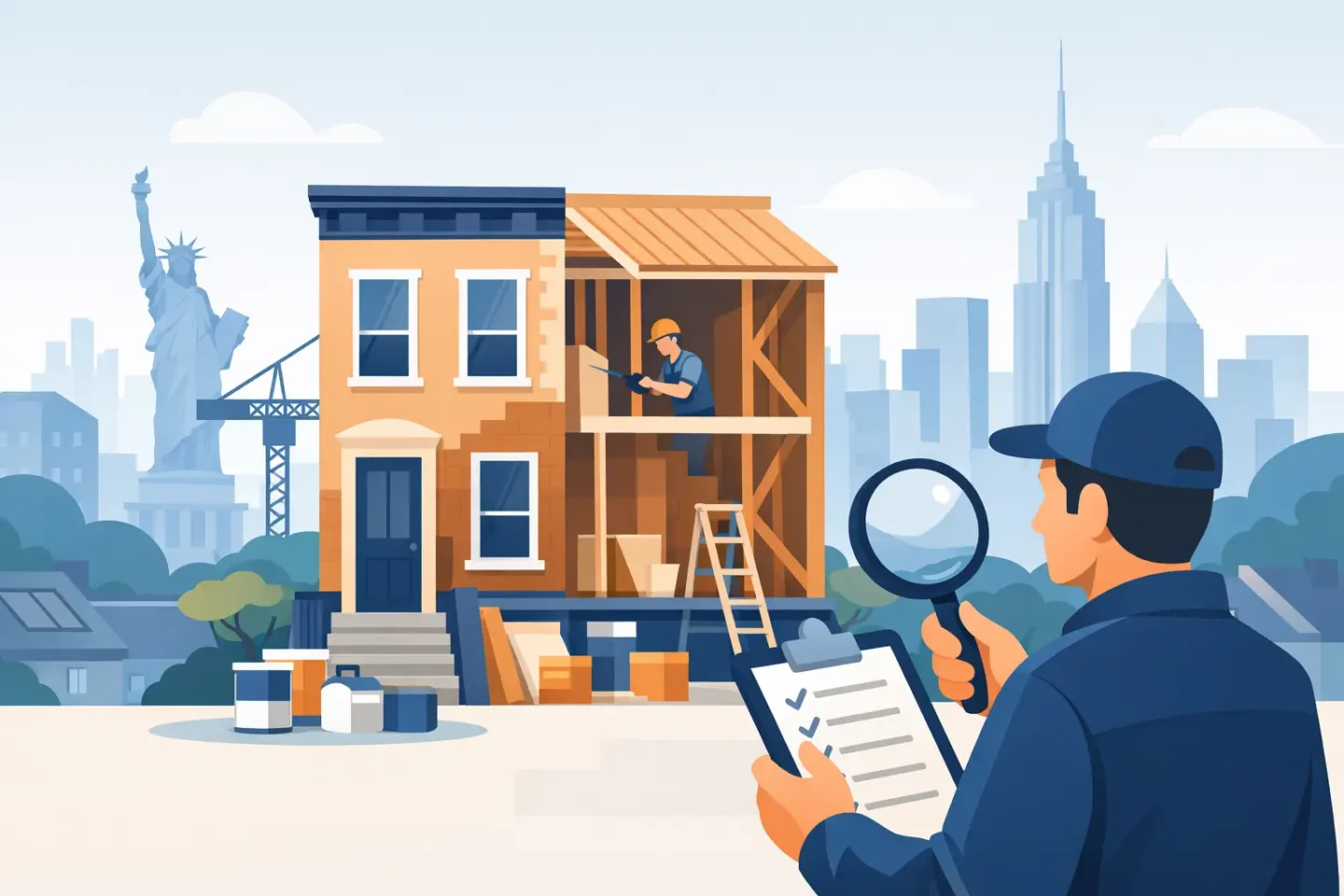
A failed inspection rarely starts with one bad detail. More often, it starts weeks earlier – with unclear scope, rushed sequencing, missing paperwork, or trades working without a shared standard. That is why a strong home renovation inspection guide matters long before an inspector steps on site, especially in New York City where building rules, apartment policies, and permit requirements can shape the entire project.
For homeowners, condo and co-op unit owners, investors, and commercial property clients, inspections are not just a box to check. They protect safety, confirm code compliance, and help preserve the value of the work you are paying for. They also affect schedule. A beautifully designed renovation can still stall if rough plumbing is covered too early or electrical work is not ready when the inspection is called.
What a home renovation inspection guide should actually cover
Many people assume inspections happen at the end of the project. In reality, most substantial renovations involve multiple checkpoints tied to specific phases of work. The exact list depends on scope, building type, and whether permits are required, but inspections often follow the hidden systems first and the finishes later.
That distinction matters. Once walls are closed, it becomes far more difficult and expensive to verify wiring, piping, venting, framing changes, or fire-stopping. A practical home renovation inspection guide should therefore focus on timing as much as technical standards. The goal is not simply to pass. The goal is to build correctly, document correctly, and move forward without avoidable disruption.
In NYC, that usually means understanding two overlapping realities. First, there are municipal rules tied to permits and code. Second, there may be building-specific requirements from a co-op board, condo management, landlord, or commercial property manager. Those two systems do not always move at the same speed, and they do not always ask for the same documentation.
The inspection stages that shape renovation success
Pre-construction review
The first inspection mindset starts before demolition. At this stage, the project team should confirm existing conditions, approved plans, permit requirements, and any building restrictions on work hours, debris removal, wet-over-dry-room rules, noise control, and protection of common areas.
This stage is where expensive misunderstandings are prevented. If an apartment building requires specific shutoff procedures for plumbing work or advance notice for riser access, that should be built into the schedule. If the design intent calls for relocating fixtures, the team should confirm whether the proposed layout aligns with code, building policy, and structural limitations before materials are ordered.
Rough-in inspections
Rough inspections are among the most important in any renovation because they evaluate what will soon be hidden. Electrical rough-ins may involve wiring methods, box placement, load planning, grounding, and panel work. Plumbing rough-ins may review drain, waste, vent, water line routing, slope, shutoffs, and fixture locations. HVAC work may be checked for duct routing, equipment connections, and ventilation requirements.
If structural modifications are part of the project, framing and reinforcement can also come under review. In older NYC buildings, this phase often requires added care because existing conditions can be inconsistent. What is on paper may not perfectly match what is inside the walls. When that happens, experienced project oversight becomes essential. Adjustments may be necessary, but they must be made in a controlled, documented way.
Insulation, fire-stopping, and close-in approvals
Not every project will require the same intermediate inspections, but close-in approvals are a common pressure point. This is where sequencing matters most. If insulation, draft-stopping, or fire-stopping is required, it must be completed properly before surfaces are closed. In multifamily buildings, details related to sound control, penetration sealing, and rated assemblies can also carry added weight.
This phase is easy to underestimate because the work is not visible in the final reveal. Yet it has a direct impact on safety, compliance, and the long-term performance of the space.
Final inspection and sign-off
The final inspection evaluates whether the completed work aligns with approved scope and applicable code. Fixtures, devices, finishes tied to safety performance, and overall installation quality may all come into focus. Final sign-off is also where paperwork discipline becomes important. If earlier inspections were missed, if permit records are incomplete, or if changes were made without proper documentation, the last phase can become unnecessarily complicated.
What inspectors tend to notice first
Inspectors are trained to look beyond surface polish. A room can appear finished and still raise immediate concerns if the fundamentals are not in order. They often notice whether work looks coordinated, whether access is safe and clear, and whether installed elements appear consistent with the approved scope.
They also notice signs of rushed execution. Misaligned device locations, unsecured piping, unsupported ducts, overfilled boxes, poor patching around penetrations, and inaccessible shutoffs can suggest larger quality-control issues. Even small items can slow progress if they indicate the project is not ready for review.
For owners, this is an important distinction. Inspections are not solely about catching major violations. They are also about verifying that the work has been managed with discipline. That is one reason professionally coordinated renovations tend to move more efficiently. Precision on the small details usually reflects control over the larger process.
Why NYC renovations need tighter inspection planning
New York projects operate inside more constraints than most suburban renovations. Access windows are narrower. Material deliveries may need to be scheduled around elevators, loading zones, and neighbor considerations. Buildings may require certificates of insurance, licensed trades, protective measures, and advance approval for certain activities. In many cases, the city approval process and the building’s own administrative process run side by side.
That makes timing especially sensitive. If one trade finishes late, the next trade may miss the window for inspection readiness. If an inspection is called too early, the site may fail simply because the work is incomplete. If it is called too late, downstream installations can be delayed. In occupied buildings, those delays can ripple outward quickly.
This is where a single renovation partner can offer real value. When design intent, trade coordination, permit awareness, and field supervision are managed together, inspection readiness becomes part of the construction strategy rather than a last-minute scramble. AGNY Services approaches renovation with that level of oversight because in NYC, execution quality is inseparable from administrative control.
Common mistakes that create inspection problems
The most common issue is covering work before it is ready to be reviewed. This often happens when a schedule is pushed too aggressively or when one trade assumes another has already cleared a requirement. Reopening walls or ceilings is costly, frustrating, and avoidable.
Another frequent mistake is making field changes without updating the appropriate documentation. Some changes are minor and manageable. Others affect code compliance, fixture placement, ventilation, or system loads. If the completed work no longer matches the approved path, corrections may be required before sign-off.
There is also the problem of fragmented responsibility. When separate vendors handle demolition, plumbing, electrical, millwork, and finish work without tight leadership, inspection preparation can fall into the gaps. One trade may complete its portion correctly, but the site as a whole may still not be inspection-ready.
How owners can protect the process
Homeowners and property managers do not need to know every line of code, but they should expect a clear inspection plan from the team they hire. That plan should identify which permits apply, which inspections are anticipated, who is responsible for scheduling them, what conditions must be met before each visit, and how approvals will be documented.
It is also wise to ask how unforeseen conditions will be handled. In older apartments, brownstones, and mixed-use buildings, hidden issues are not unusual. The right response is not improvisation without control. It is a documented adjustment process that protects scope, compliance, and finish quality together.
Finally, judge readiness by more than appearances. A premium renovation is not just elegant when complete. It is methodical at every stage. Clean execution behind the walls, responsible sequencing, and proper approvals are part of what makes the end result durable and defensible.
The best renovations feel effortless to the client because the complexity has been managed well behind the scenes. Inspections are one of the clearest places where that discipline shows. When your team treats inspection planning as part of craftsmanship, the finished space is not only beautiful – it is built with the level of control your investment deserves.