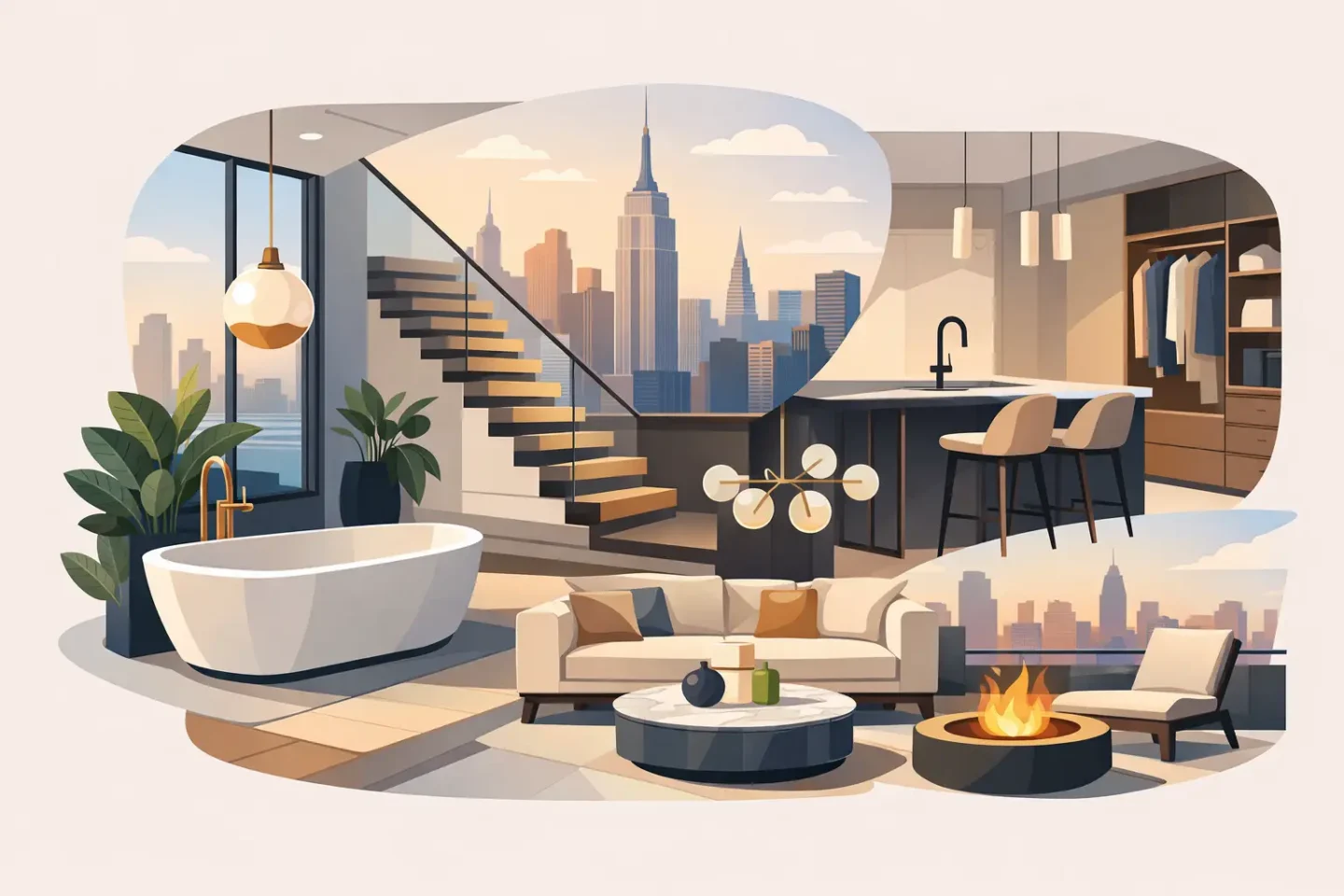
A marble slab may still signal luxury, but in New York renovations, the real marker of quality is restraint. The strongest luxury renovation design trends are not about excess. They are about precision, comfort, and materials that feel exceptional because every detail has been resolved.
For Manhattan and Brooklyn property owners, that distinction matters. Space is limited, buildings come with rules, and every finish decision has to hold up not only visually but operationally. A beautiful apartment that ignores storage, lighting, acoustics, or board requirements is not truly high-end. The most successful renovations now pair elevated design with disciplined execution.
What luxury renovation design trends really look like now
Luxury has shifted away from showroom-style interiors that announce themselves immediately. Clients are asking for spaces that feel tailored, calm, and highly functional. The design language is quieter, but the craftsmanship is more demanding.
That means cleaner architectural lines, fewer but better materials, integrated storage, and custom details that make a home feel considered rather than decorated. In practice, the trend is less about adding more and more about editing with confidence.
In New York City, there is also a practical layer to every luxury choice. Large-format stone, custom metalwork, specialty lighting, smart systems, and bespoke millwork all require coordination across trades, delivery logistics, approvals, and installation tolerances. Good design is only half the job. Bringing it to life correctly is where value is protected.
1. Warm minimalism is replacing stark modernism
For years, high-end interiors leaned heavily on crisp white surfaces, cooler grays, and a gallery-like feel. That aesthetic is softening. Today’s luxury homes still favor clean lines, but they are warmer and more livable.
Think plaster-like wall finishes, white oak or walnut cabinetry, brushed metal accents, and stone with movement and depth rather than high-contrast patterns. The result is refined without feeling cold. Rooms look curated, but they also invite daily use.
This trend works especially well in city residences where natural light can vary dramatically from room to room. Warmer palettes help interiors feel grounded, particularly in prewar apartments or townhomes where owners want to preserve character while modernizing function.
The trade-off is that warm minimalism leaves very little room for poor workmanship. When the palette is restrained, alignment, reveals, paint quality, and millwork detailing become more visible. Simplicity is expensive because the execution has to be exact.
2. Custom millwork is doing more than storage
Built-ins have always added value, but they now play a larger architectural role. One of the clearest luxury renovation design trends is the use of custom millwork to shape how a home feels, not just where things are stored.
Floor-to-ceiling cabinetry is being designed to conceal appliances, integrate desks, hide media equipment, and create uninterrupted visual lines. In bedrooms and dressing areas, millwork is becoming more tailored, with interior lighting, specialized compartments, and material continuity that makes closets feel like part of the architecture.
In smaller New York footprints, this approach is more than aesthetic. It reduces visual clutter and makes every square foot work harder. A well-designed wall of millwork can replace multiple pieces of furniture, improve flow, and create a calmer interior.
It does, however, require early coordination. Electrical layouts, HVAC access, lighting, and appliance dimensions all need to be resolved before fabrication. That is where full-scope planning matters.
3. Kitchens are becoming quieter and more architectural
Luxury kitchens are moving away from obvious statement features and toward cohesion. You still see premium appliances and impressive stone, but the room increasingly reads as part of the home rather than a separate showcase.
Flush cabinetry, integrated refrigeration, concealed pantries, and slab backsplashes are common. Islands are often designed with softened edges or furniture-like detailing to make them feel less commercial. Hardware is becoming subtler, and in some projects disappearing altogether through channel pulls or touch-latch systems.
There is also growing interest in mixed materials. A kitchen may pair painted cabinetry with wood veneers, or combine honed stone with aged metal accents for depth. These combinations feel more custom than a single finish applied everywhere.
For busy homeowners, this trend has a clear benefit. The kitchen stays highly functional while presenting a cleaner, more composed appearance. The challenge is that integrated design leaves less flexibility during construction. Appliance lead times, ventilation requirements, and utility rough-ins need to be locked in early.
4. Bathrooms are leaning into spa-level comfort
A luxury bathroom is no longer defined only by surface material. Clients want a better sensory experience. That includes improved lighting, quieter ventilation, radiant floor heating, steam showers, soaking tubs where space allows, and more thoughtful transitions between wet and dry zones.
Natural stone remains a strong choice, but the application is changing. Instead of using multiple competing materials, many owners prefer a more monolithic look with continuous slabs, large-format porcelain, or carefully matched tile that creates visual calm.
Vanities are also becoming more furniture-driven, with custom finishes, integrated medicine cabinets, layered lighting, and better drawer organization. The goal is not simply elegance. It is daily ease.
In New York apartments, space constraints mean every spa-like feature has to earn its place. A steam shower may offer more practical luxury than a freestanding tub that crowds circulation. The best result depends on layout, lifestyle, and building conditions, including waterproofing requirements and plumbing limitations.
5. Statement stone is being used with more discipline
Stone remains central to high-end renovation, but the trend is less about visual overload and more about strategic impact. Instead of applying bold stone everywhere, designers are using it in concentrated moments where it can define a room.
That might mean a dramatic kitchen island, a full-height fireplace surround, a book-matched shower wall, or a single slab vanity backsplash. These gestures create presence without making the space feel busy.
There is also growing interest in quieter stones with subtle veining, leathered finishes, and warmer undertones. They provide richness without dominating the palette. This is often a smarter approach in urban residences where multiple materials are already competing for attention.
From a construction standpoint, specialty stone demands careful site access, templating, substrate preparation, and installation sequencing. In elevator buildings and occupied residences, logistics can shape design choices just as much as aesthetics.
6. Lighting is becoming a finish, not an afterthought
One of the most transformative upgrades in luxury interiors is also one of the easiest to underestimate. Lighting now functions as architecture. It shapes mood, highlights material quality, and changes how a space is experienced from morning to evening.
Layered lighting plans are replacing single-source solutions. Recessed fixtures still have a place, but they are now paired with cove lighting, integrated millwork lighting, decorative pendants, art lights, and low-level illumination in bathrooms and hallways.
What matters most is control. Dimming, scene-setting, and fixture placement should align with how the home is actually used. A beautifully renovated room can feel flat if the lighting is too harsh, too sparse, or poorly located.
This is particularly relevant in New York homes where natural light conditions vary and neighboring buildings can limit exposure. Thoughtful lighting design adds luxury because it adds comfort.
7. Flexible spaces are being designed to feel permanent
The home office is no longer a temporary accommodation, but the best luxury renovations do not let flexibility look improvised. Multi-use rooms are being designed with the same finish level as primary living spaces.
That may include guest rooms with concealed workstations, den areas separated by glass partitions, or dining spaces with integrated storage that support both entertaining and remote work. The difference is in the detailing. When flexibility is designed in from the start, it feels intentional.
This matters for urban owners who expect more from fewer rooms. Every area needs to support changing routines without sacrificing visual order. The strongest layouts do not chase every trend. They solve for how the client actually lives.
8. Craftsmanship is becoming the trend behind every trend
There is a reason so many luxury interiors are becoming visually quieter. When materials are edited down and detailing becomes more restrained, craftsmanship carries more of the experience.
Flush transitions, mitered corners, level flooring, aligned stone veining, crisp trim work, smooth wall preparation, and precisely installed fixtures all register immediately, even when a guest cannot name why the room feels expensive. Quality is often perceived through control.
That is especially true in New York, where renovation conditions are rarely simple. Building access, permits, inspections, aging infrastructure, and coordination across plumbing, electrical, HVAC, millwork, and finish trades all affect the final result. A polished design concept can lose value quickly if execution is fragmented.
This is why many sophisticated clients prioritize a renovation partner that can manage the full scope with discipline. For firms like AGNY Services, high-end work is not only about beautiful materials. It is about protecting design intent through planning, oversight, and precise installation.
Where these luxury renovation design trends are headed
The direction is clear. Luxury is becoming more personal, more architectural, and more dependent on execution. Homeowners are investing in spaces that feel calm, tailored, and durable rather than purely decorative.
That does not mean every renovation should look understated. Some clients want stronger contrast, richer color, or more expressive materials, and that can be the right move when it reflects the property and the owner. The common thread is that high-end design now works hardest when it is specific to the space, not copied from a showroom or social feed.
If you are planning a renovation, the best place to start is not with a trend board. It is with a clear understanding of how you want the space to function, what the building allows, and what level of finish the project deserves. When those pieces align, the design feels current without trying too hard – and it keeps its value long after trends shift.