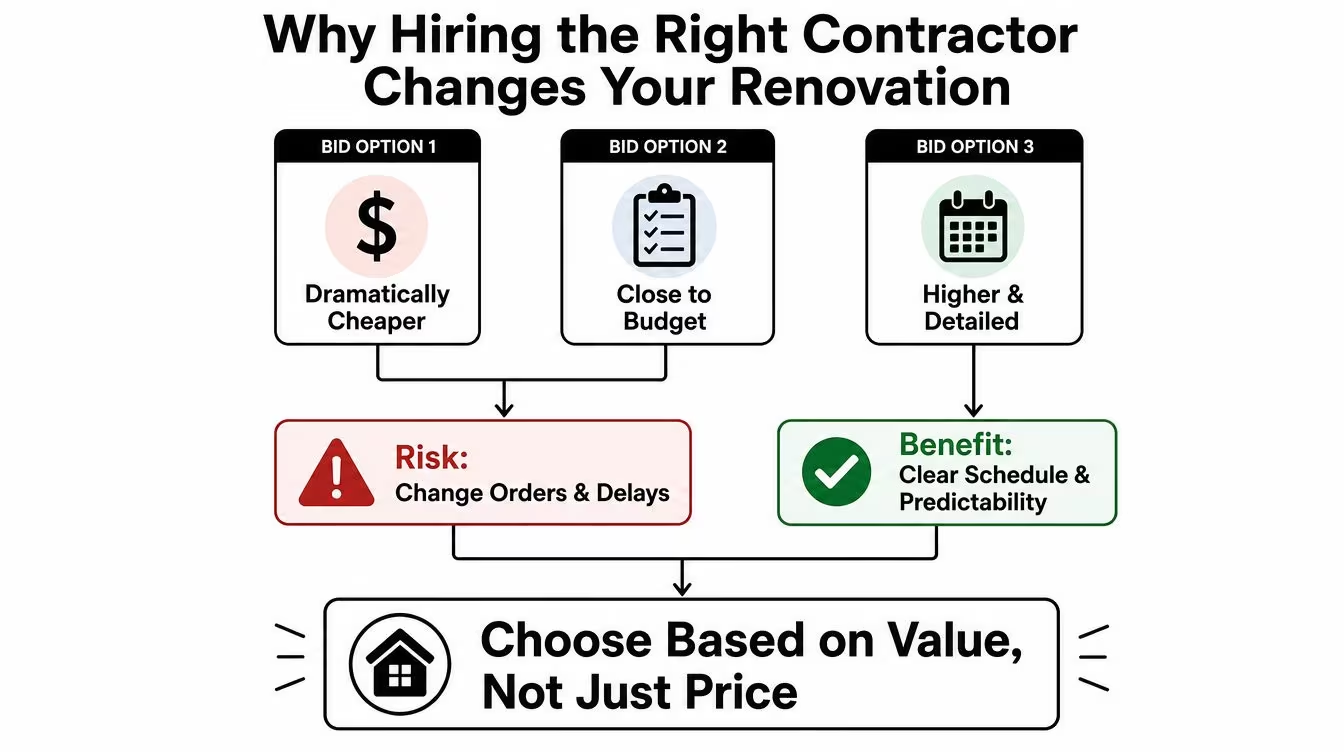
You've got three bids for the same kitchen renovation. One is dramatically cheaper, one sits close to your budget, and the third costs more but includes a clear schedule, permit plan, and detailed list of materials. The cheap bid looks attractive until you notice that demolition, disposal, inspections, and several finish items aren't included.
That's how a manageable renovation turns into delays, arguments over change orders, and a half-finished space. If you're learning how to hire a contractor, start with this rule: choose the contractor who can control the entire job, not the one who prints the lowest number.
Why Hiring the Right Contractor Changes Your Renovation
A contractor does more than install cabinets or coordinate painters. The right one translates drawings and selections into a lawful sequence of work, schedules trades, protects the occupied parts of your home, manages deliveries, and tells you early when an assumption no longer holds.
That matters even more in New York City and New Jersey, where renovation work can involve building approvals, inspections, co-op or condo rules, and several licensed trades. A contractor who treats permitting as an afterthought can create a problem before the first wall comes down. Licensing programs are designed to address competency, bonding, insurance, and consumer-protection requirements, so credential checks belong at the beginning of the process, not after a dispute appears. The contractor licensing data brief explains why the correct credential depends on the project and trade scope.
Start by defining what success means. Decide which features are essential, which finishes can change, how much disruption you can tolerate, and whether you'll remain in the home. Then identify legal and building constraints, including landmark status, structural work, utility changes, occupied-building requirements, and board approvals.
A serious contractor should be able to explain:
- Work sequence: What happens first, and which trades depend on earlier inspections?
- Schedule control: Who will be on site, and how will delays be reported?
- Site protection: How will floors, hallways, elevators, furniture, and occupied rooms be protected?
- Change management: How will added work be priced and approved?
- Closeout: What documents, sign-offs, warranties, and corrections will you receive?
Practical rule: A detailed process isn't automatically proof of quality, but a vague process is a reliable warning sign.
Use a broader guide to choosing a contractor if you want another general screening framework, but keep your local permit and inspection requirements at the center of the decision. The best choice is the team offering the most complete, realistic, and compliant plan, not merely the lowest bid.
Define Your Scope and Budget Before You Call Anyone
Contractors can't price a sentence such as “renovate the bathroom.” They can price a defined package that states which room is affected, what gets removed, what gets installed, which materials are specified, and what the contractor must restore afterward.
Write the scope before inviting anyone to the site. Include demolition, patching, painting, disposal, protection, cleaning, utility work, and restoration of disturbed surfaces. Attach drawings, appliance specifications, finish schedules, model numbers, and photographs when available. State exclusions directly, because silence creates assumptions.
A kitchen scope might identify cabinet locations, countertop material, appliance models, lighting changes, plumbing moves, flooring transitions, backsplash limits, wall repairs, debris removal, and final cleaning. “Fix whatever is wrong” is not a scope. It's an invitation to argue later.
Separate constraints from preferences
Your budget should have a working target, available financing limit, and contingency reserve. For older NYC and NJ buildings, a reserve of 10% to 20% is recommended in the provided renovation guidance for concealed conditions such as damaged framing, outdated wiring, concealed plumbing, or asbestos concerns. Keep that reserve untouched until construction exposes a real unknown.
Constraints are different from preferences:
- Building constraints: Co-op work hours, elevator reservations, insurance forms, landmark approvals, and occupied-home rules.
- Deadline constraints: A lease date, sale, school schedule, or required business reopening.
- Technical constraints: Structural limits, utility capacity, access restrictions, and existing conditions.
- Flexible preferences: Premium fixtures, custom millwork, decorative lighting, or finish upgrades.
Give every bidder the identical package. Ask each one to mark inclusions, exclusions, allowances, and assumptions. Comparable bids require comparable information.
Project Definition Worksheet
| Category | What to Document | Example |
|---|---|---|
| Project area | Rooms, floors, and affected systems | Kitchen, adjacent hallway, electrical panel |
| Work included | Demolition, installation, repairs, and restoration | Remove cabinets, install new cabinetry, patch walls |
| Materials | Brands, models, finishes, and allowances | Appliance model, countertop material, tile selection |
| Permits | Expected filings, inspections, and responsible party | Contractor coordinates required building filings |
| Site conditions | Access, occupancy, protection, and building rules | Home remains occupied, elevator booking required |
| Exclusions | Work specifically outside the contract | Furniture, decorative art, owner-supplied appliances |
| Closeout | Documents and completion requirements | Punch list, warranties, sign-offs, cleaning |
For visual planning, a project reference such as this kitchen renovation example for Manhattan and Brooklyn can help you communicate the intended level of finish. It won't replace drawings or a written scope, but it can reduce misunderstandings during early conversations.
Verify Licensing, Insurance, and Complaint Records
A license is a minimum filter, not a guarantee of craftsmanship. Most U.S. states require contractors to hold a license by law, and working without one can be illegal in some circumstances. Verify the exact credential required for your project, because general construction, electrical, plumbing, demolition, and other work may fall under different rules. The licensing reference linked earlier explains why asking “Are you licensed?” isn't specific enough.
In New York City, check the Department of Buildings records for the contractor's license or registration status, applicable license class, complaints, and disciplinary history. In New Jersey, verify the contractor's Home Improvement Contractor registration through the Division of Consumer Affairs, then contact the local construction office about municipal requirements and trade credentials.
Don't accept a license number verbally. Match the legal entity on the license with the name on the proposal, insurance certificate, contract, and payment instructions.
Insurance needs independent verification
Request a certificate of insurance directly from the contractor's broker. A photocopy may be expired, incomplete, or issued for a different legal entity. Review:
- General liability: Coverage for third-party injury and property damage.
- Workers' compensation: Coverage for employees where required.
- Disability coverage: Documentation that may apply to the contractor's workforce.
- Policy dates: Coverage must remain active throughout the project.
- Named entity: The insured name should match the contracting business.
- Subcontractor coverage: Ask who insures each subcontractor and their employees.
For a practical explanation of what a COI must include, review the certificate details before you sign. If the contractor says insurance will be “handled later,” pause the hiring process.
Read complaints for patterns
Search official complaint and disciplinary records, then study the subject matter. A repeated pattern involving missed schedules, unsafe conditions, permit failures, unresolved deposits, or abandoned work deserves more attention than a single isolated complaint.
| Item | Verify Through | Red Flag |
|---|---|---|
| License or registration | NYC Department of Buildings or NJ Division of Consumer Affairs | Number doesn't match the business entity |
| License class | Relevant city, state, or local authority | Credential doesn't cover the proposed work |
| Insurance | Contractor's insurance broker | Expired dates or unclear insured name |
| Workers' compensation | Certificate and applicable state requirements | Contractor won't provide documentation |
| Complaint history | Official disciplinary and complaint databases | Repeated unresolved project failures |
| Permit capability | Local building authority and contractor references | Claims permits aren't necessary |
| Business identity | Contract, address, license, and payment records | Cash-only pressure or shifting company names |
Ask references about communication, schedule control, site cleanliness, and how the contractor handled defects. You can also use this electrical contractor reference for Manhattan and Brooklyn when evaluating whether the proposed team understands the trade scope involved.
Interview Questions and Red Flags During Site Visits
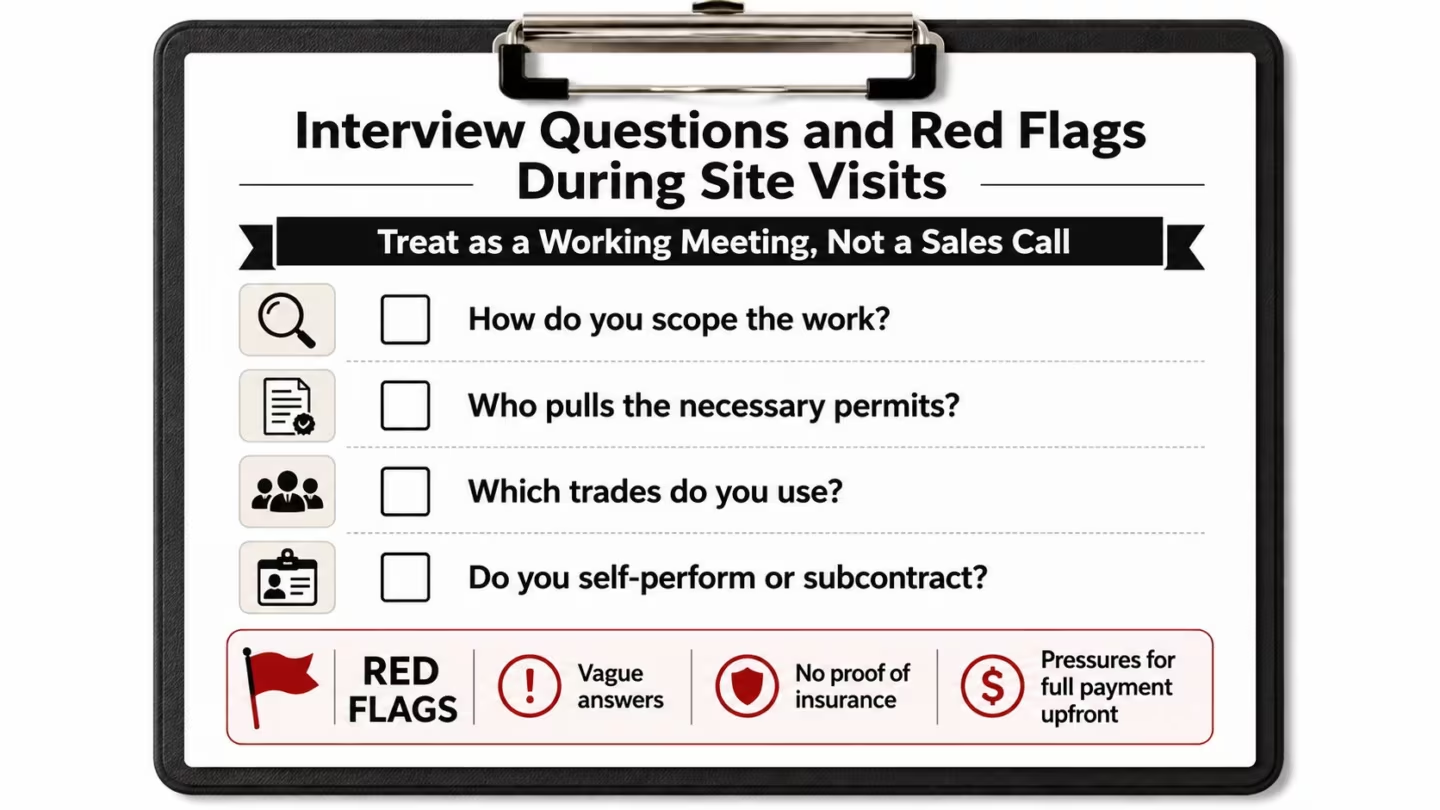
Treat the site visit as a working meeting, not a sales presentation. A contractor who spends the first hour asking about access, existing conditions, board rules, finishes, and permit responsibility is usually gathering the information needed for a serious estimate. A contractor who barely measures the space and promises an instant price is guessing.
Ask direct questions and write down the answers. You're testing the contractor's operating system, not just their personality.
Questions that expose the real project plan
Start with the work itself:
- How do you define the scope? Ask what documents they need before pricing and what they believe is excluded.
- Who pulls the permits? Get the responsible person's name and ask when filings occur.
- Which trades do you use? Find out which work is self-performed and which is subcontracted.
- Who supervises the site? Identify the on-site superintendent or project manager.
- What job are you completing before mine starts? This reveals whether the proposed start date is realistic.
- How do you price changes? Require a written process before any extra work begins.
- How will you protect the home? Ask about dust control, floor protection, daily cleanup, and debris removal.
- How do inspections affect sequencing? The answer should connect inspections to the schedule, not treat them as paperwork.
Request the names of the last three comparable NYC or NJ projects. Call those owners and ask whether the contractor finished the work, communicated problems, honored the payment process, and returned to correct defects.
Watch conduct, not just answers
Punctuality matters, but so does preparation. Does the contractor bring measuring tools, review your documents, photograph existing conditions, and ask who controls design decisions? Do they identify access problems before you mention them?
Red flags include vague timelines, refusal to provide references, pressure for a same-day deposit, hostility toward every previous client, and claims that required permits are unnecessary. A contractor who blames architects, suppliers, inspectors, and former customers for every problem may be telling you how future disputes will sound.
Use this video as another prompt for your interview preparation:
Don't reward confidence without documentation. The contractor who asks careful questions, explains uncertainty, and commits answers to writing is easier to manage than the contractor who promises everything immediately.
Comparing Bids Without Falling for the Lowest Price
A low bid is useful only after you know what it includes. Ask at least three qualified contractors for written bids based on the same scope, the same finish allowances, and comparable start and substantial-completion assumptions. Washington State contractor guidance recommends obtaining at least three written bids, checking active license status, confirming bonding and insurance, and reviewing license history through its contractor hiring guidance.
Normalize every proposal before comparing totals. Look for omitted demolition, dumpsters, permits, temporary protection, patching, painting, inspections, cleanup, and closeout documents. An omitted line item isn't a saving. It's an unpaid obligation waiting to become a change order.
NAHB warns that an unusually low bid can signal cash-flow trouble or underpricing of labor and materials, while Travelers recommends comparing estimates and reviewing past work rather than selecting the cheapest offer. The construction labor market also creates scheduling risk. The U.S. Bureau of Labor Statistics reported 248,000 construction job openings in April 2025, and trade reporting cited 188,000 openings at the end of August 2025, as referenced in the provided NAHB material. Those conditions make overcommitment and schedule slippage realistic concerns.
Side-by-Side Bid Comparison Worksheet
| Line Item | Bidder A | Bidder B | Bidder C |
|---|---|---|---|
| Demolition and disposal | |||
| Permits and filing coordination | |||
| Labor and subcontractors | |||
| Materials and allowances | |||
| Protection and daily cleanup | |||
| Inspections and corrections | |||
| Change-order markup | |||
| Start and completion assumptions | |||
| Warranty and closeout |
Score the bids on scope completeness, schedule realism, inspection sequencing, communication, insurance, references, and payment structure. If one proposal is materially below the others, ask the contractor to explain every difference in writing. Don't ask them to “match the price.” That encourages cuts you may not see until the work is underway.
Contract Terms You Should Never Skip
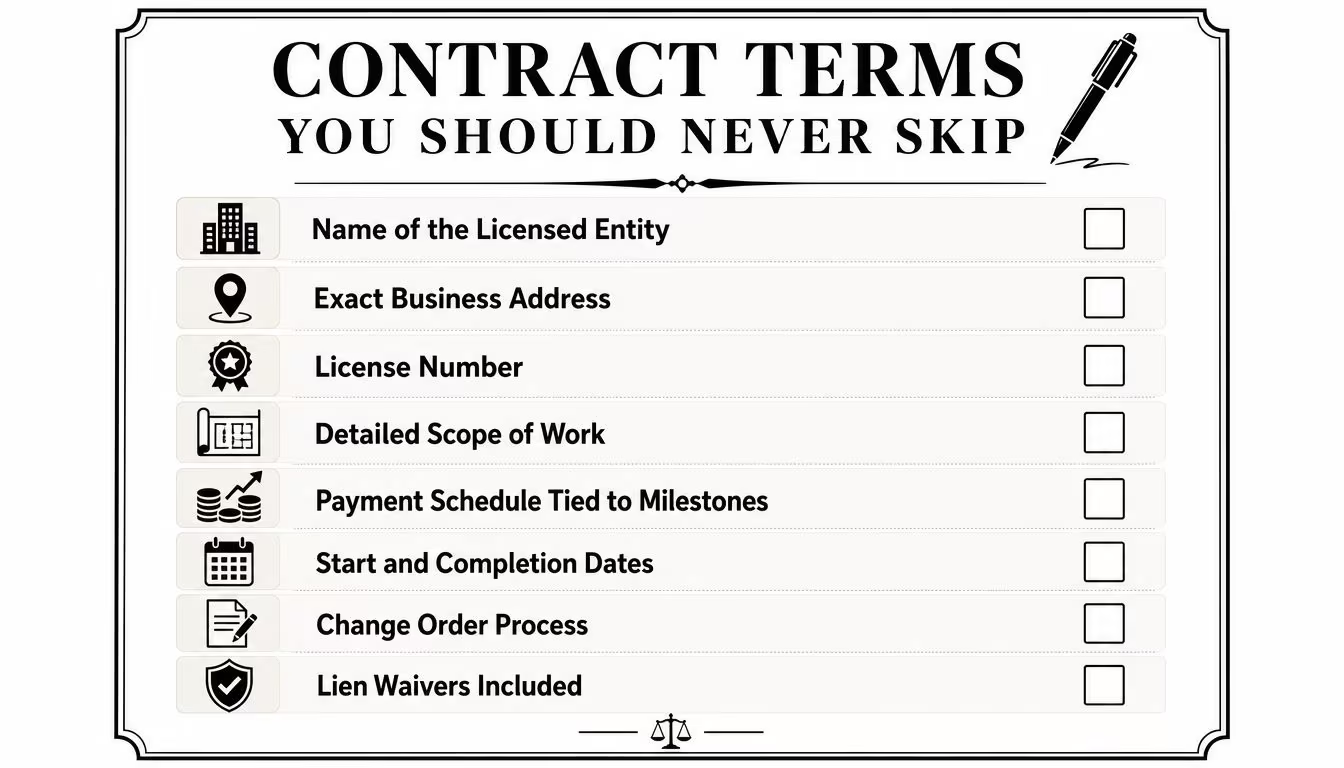
A handshake is not protection in NYC or New Jersey. Your contract should identify the licensed legal entity, project address, license number, scope attachments, payment terms, schedule, insurance obligations, change-order process, warranty, and closeout requirements.
Tie payments to completed milestones or verified inspections. Don't pay because a calendar date arrived if the work connected to that payment hasn't been completed. The provided Florida construction-industry guidance emphasizes the importance of a detailed written agreement because construction disputes can become expensive and slow. Arcadis data cited in that guidance reported a global average construction dispute value of $52.6 million in 2021, with average dispute resolution time increasing by almost 15% that year. The same source reported average dispute lengths of 15.4 months globally and 16.7 months in North America. Those figures concern large construction disputes, but the lesson applies to residential work: ambiguity has a long tail.
Put the scope in an attachment
List rooms, finishes, model numbers, allowances, demolition limits, restoration work, and exclusions line by line. If the contractor says “standard fixtures,” define the allowance or specify the product. If you're supplying appliances, state who receives, stores, installs, and protects them.
Change orders should require a written description, price, schedule impact, contractor markup, and signatures before extra work begins. Verbal approvals create memory contests.
Control money and completion
The contract should state the deposit and payment limits that apply to your project and location. The supplied contract guidance states that the deposit cannot exceed the legal limit or 10% for most residential work. Have local counsel confirm the applicable rule before signing, especially for unusual project structures.
Include a start date, substantial-completion date, delay procedure, and any negotiated liquidated-damages provision. Warranty language should be specific. The provided guidance recommends at least one year on workmanship, with longer coverage for structural or roofing work where appropriate.
Require lien waivers from subcontractors and suppliers before final payment clears. A contractor's failure to pay a supplier can create a serious problem even after you've paid the contractor.
Keep every exhibit, approved selection, change order, invoice, inspection record, and communication in one project folder. A clean paper trail helps you manage the work while it's active and gives you an advantage if something goes wrong.
Permits, Inspections, and Code Compliance in NYC and NJ
Permitting is where many renovations either become controlled projects or start accumulating liability. In NYC, structural, electrical, plumbing, and facade work can require Department of Buildings filings and inspections. In New Jersey, local construction officials enforce the Uniform Construction Code, with permits commonly implicated by additions, electrical work, plumbing work, and major renovations. The exact requirement depends on the work and municipality, so the contractor must identify the authority and filing path before demolition.
Ask three questions in writing:
- Who pulls the permit?
- What permit or application number will I receive?
- Who pays for corrections if an inspection fails?
Don't accept “we've done this before” as an answer. Ask for the permit history for your address and confirm the status with the relevant authority. In NYC, that means checking Department of Buildings records and applicable filing systems. In New Jersey, contact the local construction office and request the permit and inspection process for the property.
Unpermitted work can create problems during insurance claims, refinancing, resale, and later renovations. Buyers and their professionals may question work that lacks permits or final approvals, and an owner may be left paying to investigate or legalize it. A cheap bid that ignores permit responsibility can therefore become the expensive bid after a stop-work order, failed inspection, or correction demand.
Permit Requirements at a Glance
| Trigger | NYC, DOB | NJ, Local UCC |
|---|---|---|
| Structural changes | Confirm filing and approval requirements with the Department of Buildings | Confirm requirements with the local construction official |
| Electrical work | Use the applicable licensed professional and required filing or inspection process | Confirm state and local credential and permit requirements |
| Plumbing work | Verify the applicable licensed plumber and DOB requirements | Confirm local UCC permit and inspection requirements |
| Major renovation | Review scope with the contractor, architect, or filing professional | Ask the local construction office which permits apply |
| Landmark or historic property | Check landmark and building approvals before work starts | Confirm municipal or local historic restrictions where applicable |
| Inspections | Build required DOB inspections into the sequence | Build local UCC inspections into the schedule |
| Closeout | Obtain required sign-offs and project records | Obtain final approvals and inspection documentation |
Inspection sequencing should appear in the schedule. Plumbing and electrical work may need to be inspected before walls close, while structural or fire-safety items may require their own review. If an inspection fails, the contractor should document the reason, identify the correction, state who performs it, and revise the schedule instead of hiding the issue.
A bathroom renovation reference such as this Manhattan and Brooklyn bathroom renovation example can help you discuss finish expectations, but it doesn't replace permit verification or inspection planning.
Finish with a controlled closeout
Walk the project with the contractor and, when involved, your architect or designer. Create a punch list with every defect, missing item, finish issue, photograph, responsible party, and correction date.
Before releasing final funds, confirm:
- Required sign-offs: All applicable inspections and approvals are complete.
- Lien protection: Waivers arrive from every relevant subcontractor and supplier.
- Warranty records: Workmanship, equipment, and manufacturer documents are organized.
- Project records: As-built drawings, paint codes, appliance model and serial numbers, and maintenance instructions are collected where applicable.
- Site condition: Debris, rental equipment, temporary protection, and contractor materials are removed.
- Utilities: Accounts or temporary services held by the contractor are transferred or closed.
Hold the final 10% to 15% until the punch list is closed and the required documents are in hand, as recommended in the provided project guidance. Don't release it on a verbal promise that someone will return next week.
AGNY Services LLC offers paid estimates, design coordination, permit and inspection support, renovation execution, and final walkthroughs for residential and commercial projects in New York and New Jersey. If you want a contractor evaluated on scope clarity, documentation, code compliance, and closeout discipline, visit AGNY Services LLC to discuss your project.