
TL;DR:
- A material schedule connects every required building material to project phases, suppliers, and delivery dates. It helps prevent cost overruns, delays, and construction bottlenecks by guiding procurement, delivery, and labor sequencing. Regular updates and clear communication ensure schedule accuracy and project success.
A material schedule is defined as a phase-aligned document that lists every building material required for a project, including quantities, suppliers, specifications, and delivery dates. Without one, projects risk budget overruns from emergency shipping costs and idle labor caused by missing inventory. The industry term you will also hear is “materials procurement schedule,” and both names describe the same planning tool. For construction and renovation professionals, this document sits at the center of every well-run project.
What is a material schedule and what does it include?
A material schedule is a structured reference document that connects every required building material to a specific project phase, supplier, and delivery window. It is not a simple shopping list. It is a living project management tool that drives procurement decisions from groundbreaking through final finishes.

The schedule covers the full scope of a build. Foundation work requires concrete, rebar, and formwork. Framing demands lumber, hardware, and sheathing. Finishes involve tile, cabinetry, fixtures, and paint. Each phase gets its own section in the schedule, with materials listed in the order they are needed on site.
Beyond material names and quantities, an effective schedule includes unit prices, total costs, manufacturer part numbers, and quality certifications. These details prevent costly substitution errors when a supplier ships a different product than specified. They also support compliance checks during inspections.
Delivery logistics belong in the schedule too. Delivery windows, drop-off locations, and phase-specific timing keep site congestion low and minimize the amount of material sitting in storage. Supplier contact information and storage handling notes round out the document.
Pro Tip: Add a “notes” column to your schedule for each line item. Use it to flag items with long lead times, substitution restrictions, or special handling requirements. This single column prevents more miscommunications than any meeting ever will.
A well-built schedule typically uses a table format. Here is a simplified example of what one section looks like:
| Phase | Material | Quantity | Supplier | Lead Time | Delivery Date | Unit Cost |
|---|---|---|---|---|---|---|
| Framing | Structural lumber | 2,400 BF | ABC Lumber | 5 days | March 10 | $0.85/BF |
| Finishes | Porcelain floor tile | 320 SF | Tile Depot | 3 weeks | April 14 | $4.20/SF |
| Plumbing | Copper pipe 3/4" | 180 LF | Metro Supply | 2 days | April 20 | $1.10/LF |
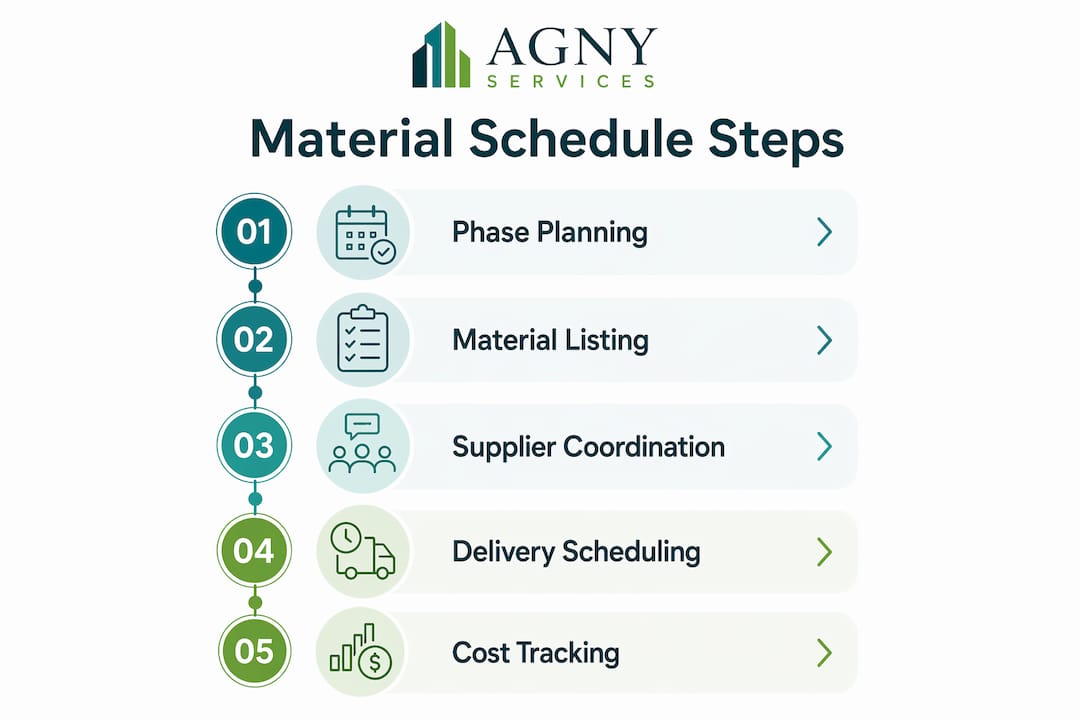
How to create a material schedule step by step
Building a material schedule starts with the project drawings and specifications. These documents are the authoritative source for every material type, grade, and quantity the design requires. Pull from architectural drawings, structural drawings, and the project specification book before you touch a spreadsheet.
- Extract the full materials list from drawings and specs. Go trade by trade: civil, structural, mechanical, electrical, plumbing, and finishes. Flag any item that requires a specific manufacturer or product standard.
- Organize by construction phase. Group materials by when they are needed on site, not alphabetically or by trade. Foundation materials come first, then structure, then enclosure, then MEP rough-in, then finishes.
- Gather supplier lead times and pricing. Contact suppliers early. Long-lead items like structural steel, custom windows, or doors require ordering 8–12 weeks in advance to avoid milestone slippage. Standard commodity materials typically need 2–5 days.
- Plan delivery timing against the construction sequence. Materials should arrive approximately two working days before installation. This window gives the site team time to inspect deliveries without accumulating excess inventory.
- Add contingency quantities. Wastage allowances of 5–10% reduce last-minute procurement pressure when cuts go wrong or damaged pieces need replacement.
- Share the schedule with all trades and suppliers. A centralized document replaces scattered emails and verbal conversations. Every subcontractor sees the same delivery plan.
- Set a review cycle. Update the schedule weekly during active construction. Prices change, lead times shift, and scope changes happen. A schedule that is not updated becomes a liability.
Pro Tip: Use a digital spreadsheet or a field management platform from day one. A paper schedule cannot send alerts when a delivery is late or flag a line item that has not been ordered yet. Even a shared Google Sheet beats a printed binder.
For NYC projects specifically, renovation timeline obstacles like building access restrictions and elevator scheduling add complexity to delivery planning. Factor those constraints into your delivery windows before finalizing dates.
Why does material scheduling matter for project success?
Material scheduling is the foundation of successful project logistics. Failure to plan properly is a leading cause of costly delays and budget overruns in construction. The connection is direct: when materials are not on site when needed, crews stop working. Idle labor costs money every hour.
The schedule also governs critical path management. Delays in procurement or delivery disrupt task dependencies, pushing back milestones and creating bottlenecks that ripple through the entire project. A two-week delay on a custom window order can push back drywall, paint, and final inspections by the same amount.
Sharing the schedule with subcontractors and suppliers creates a single source of truth. Centralized scheduling reduces miscommunication that would otherwise spread through emails, phone calls, and informal conversations. Every trade knows what is coming, when it arrives, and where it goes.
A material schedule does more than track inventory. It defines when every trade can start work, which means it controls your labor costs as directly as it controls your procurement costs. Treat it as a financial document, not just a logistics checklist.
The cost benefits compound when you plan buffer stock correctly. Ordering 5–10% extra on cut materials avoids emergency same-day orders at premium prices. Identifying long-lead items early lets you lock in pricing before market fluctuations hit. Both practices require a schedule that is built before procurement begins, not during it.
Common pitfalls when material schedules are missing or inaccurate include:
- Emergency freight charges for materials ordered too late
- Idle crew time when a phase cannot start due to missing materials
- Substitution errors when a supplier ships an unapproved product
- Storage damage from materials delivered too early and left exposed
- Scope creep when change orders are not reflected in updated quantities
Challenges and best practices for keeping schedules accurate
A material schedule is only useful if it stays current. Change orders are the most common threat to accuracy. Every scope change affects quantities, delivery dates, and sometimes suppliers. The schedule must be updated within 24 hours of a change order approval, not at the next weekly meeting.
Supplier lead times shift without warning. A lumber yard that quoted five days in january may need ten days by march due to demand spikes. Digital dashboards and software tools enable real-time tracking of materials, helping teams identify variances before they become delays. Daily monitoring catches problems when they are still manageable.
Site storage is a scheduling variable that most teams underestimate. Bulk materials like lumber and drywall are vulnerable to weather, theft, and damage when stored too long. Timing deliveries to arrive close to installation reduces these risks. For high-value items like custom cabinetry or specialty fixtures, coordinate with the site superintendent to confirm secure storage is available before scheduling delivery.
Best practices for maintaining an accurate schedule:
- Assign one person as the schedule owner. Shared ownership means no ownership.
- Log every supplier communication, including lead time updates and price changes.
- Flag long-lead items in a separate “critical procurement” list reviewed weekly.
- Communicate every schedule change to affected trades within 24 hours.
- Use construction management insights to benchmark your scheduling process against current industry practice.
Coordinating multiple trades around a shared material schedule is one of the highest-leverage activities a project manager can do. When every subcontractor works from the same delivery plan, conflicts drop and productivity rises.
Key Takeaways
A material schedule is the single document that connects procurement, delivery, and labor sequencing, making it the most direct tool for controlling both project timelines and costs.
| Point | Details |
|---|---|
| Definition and purpose | A material schedule lists all materials by phase, quantity, supplier, and delivery date to prevent work stoppages. |
| Critical details to include | Add manufacturer part numbers, quality certifications, and lead times to prevent substitution errors and delays. |
| Long-lead item planning | Order structural steel, custom windows, and doors 8–12 weeks in advance to protect critical path milestones. |
| Delivery timing | Schedule materials to arrive two working days before installation to balance readiness with storage risk. |
| Schedule maintenance | Update the schedule within 24 hours of any change order and assign one person as the document owner. |
What I have learned from building material schedules on real projects
The biggest mistake I see on renovation projects is treating the material schedule as something you build once and file away. Teams spend hours creating a detailed document before construction starts, then never open it again once the first delivery arrives. By week three, the schedule is fiction and the project is running on memory and phone calls.
The second mistake is separating the schedule from the budget. Every line item in a material schedule has a cost. When a substitution happens or a quantity changes, the budget changes too. Professionals who track both in the same document catch overruns before they become crises. Those who keep them separate find out at the end of the job.
What actually works is weekly schedule reviews with the site superintendent and the procurement lead in the same room. Not a status email. Not a shared folder. A 30-minute conversation where someone walks through every open order, every pending delivery, and every item that has not been confirmed yet. That meeting catches more problems than any software dashboard.
The last thing I will say: transparency with subcontractors pays off every time. When trades know what is coming and when, they plan their crews accordingly. When they are surprised by a late delivery, they bill you for the wait. Sharing the schedule costs nothing. Hiding it costs real money.
— Grzegorz
How Agny approaches material scheduling in renovation projects
Agny works with construction and renovation professionals across New York City on projects where material coordination directly determines whether a timeline holds or collapses.

From kitchen renovations to full apartment buildouts, Agny builds material schedules as a core part of project planning, not as an afterthought. Every project starts with a phase-aligned procurement plan that accounts for NYC-specific delivery constraints, long-lead custom items, and trade sequencing. If you are planning a renovation and want a team that treats scheduling as a financial tool, not just a logistics document, contact Agny to discuss your project. For professionals managing budget alongside timelines, Agny’s renovation financing options are also worth reviewing before procurement begins.
FAQ
What is a material schedule in construction?
A material schedule is a phase-aligned document listing every required building material with quantities, suppliers, specifications, and delivery dates. It connects procurement to the construction sequence to prevent work stoppages and cost overruns.
How is a material schedule different from a materials list?
A materials list simply catalogs what is needed. A material schedule adds delivery timing, supplier lead times, phase sequencing, and cost data, making it a project management tool rather than just an inventory reference.
When should you start building a material schedule?
Start building the schedule as soon as architectural drawings and specifications are available, before any procurement begins. Long-lead items like custom windows or structural steel require ordering 8–12 weeks in advance, so early scheduling is critical.
What happens if a material schedule is not updated after a change order?
An outdated schedule leads to incorrect quantities, wrong delivery dates, and potential substitution errors. Update the schedule within 24 hours of any approved change order to keep procurement and site teams aligned.
How do you handle long-lead items in a material schedule?
Flag long-lead items in a separate critical procurement list and order them first. Structural steel, custom doors, and specialty fixtures typically need 8–12 weeks of lead time, and missing their order window pushes back dependent tasks across the entire project.