Slow and inconsistent payments cost the U.S. construction industry an estimated $299 billion in 2025, described as a hidden 14% tax on the sector, while general contractors spend about 65 hours per month managing payments to subcontractors and suppliers, according to industry reporting on construction's cash-flow crisis. For a homeowner in New York City or New Jersey, that problem doesn't stay in an accounting file. It can show up as a crew moved to another job, materials ordered late, permits held up, or a renovation that loses momentum at the worst possible time.
A well-built contractor payment schedule is therefore more than a billing form. It is a project-control system that connects cash availability with verified work, inspections, documentation, and closeout. The strongest schedules protect the homeowner from paying for unfinished work while giving the contractor enough liquidity to keep labor, materials, and specialty trades moving.
Why Payment Schedules Determine Project Success
A renovation can have sound drawings, a capable crew, and a realistic scope, yet still fall behind when payment timing doesn't match construction timing. Contractors often need to pay workers, suppliers, and subcontractors before the owner receives the finished visual result. If approved work sits unpaid, the contractor may have to choose between financing the job personally and redirecting resources to projects with more predictable cash flow.
That pressure is widespread rather than limited to one difficult client. Recent reporting found that 70% of contractors regularly face delayed payments, 82% wait 30 or more days past the expected payment date, subcontractors wait about 96 days on average to get paid, and only 5% consistently receive payment on time. Those figures come from a 2025 construction payment survey reported by Business Wire. A payment schedule can't eliminate every delay, but it can make approval standards, documentation, and responsibility clear before tension reaches the job site.
Calendar billing versus completed work
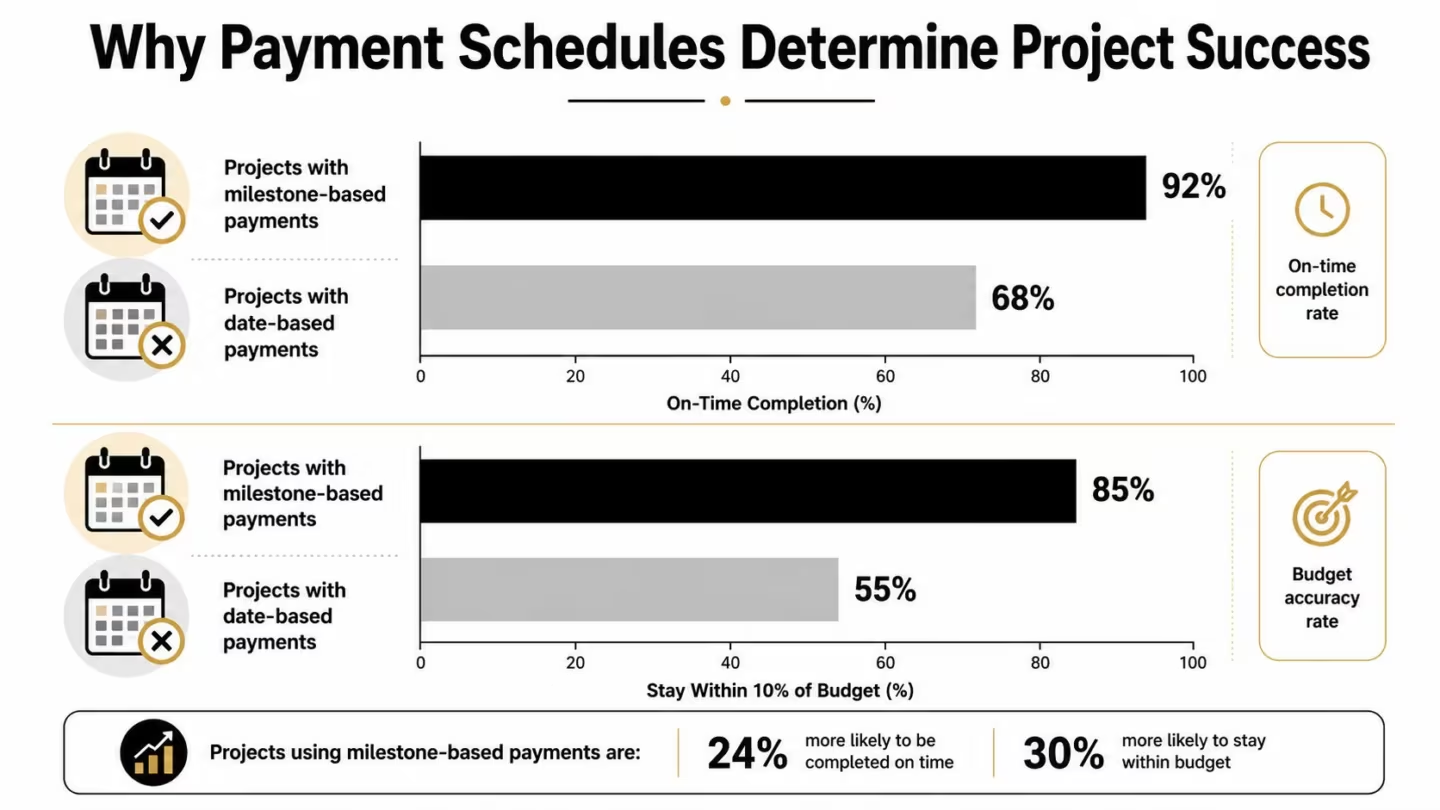
Calendar-based billing pays because a date arrived. That may be easy to administer, but it doesn't answer the homeowner's most important question: what has been completed and verified? A draw due every two weeks can become contentious when inspections are pending, materials haven't arrived, or a trade is only partially finished.
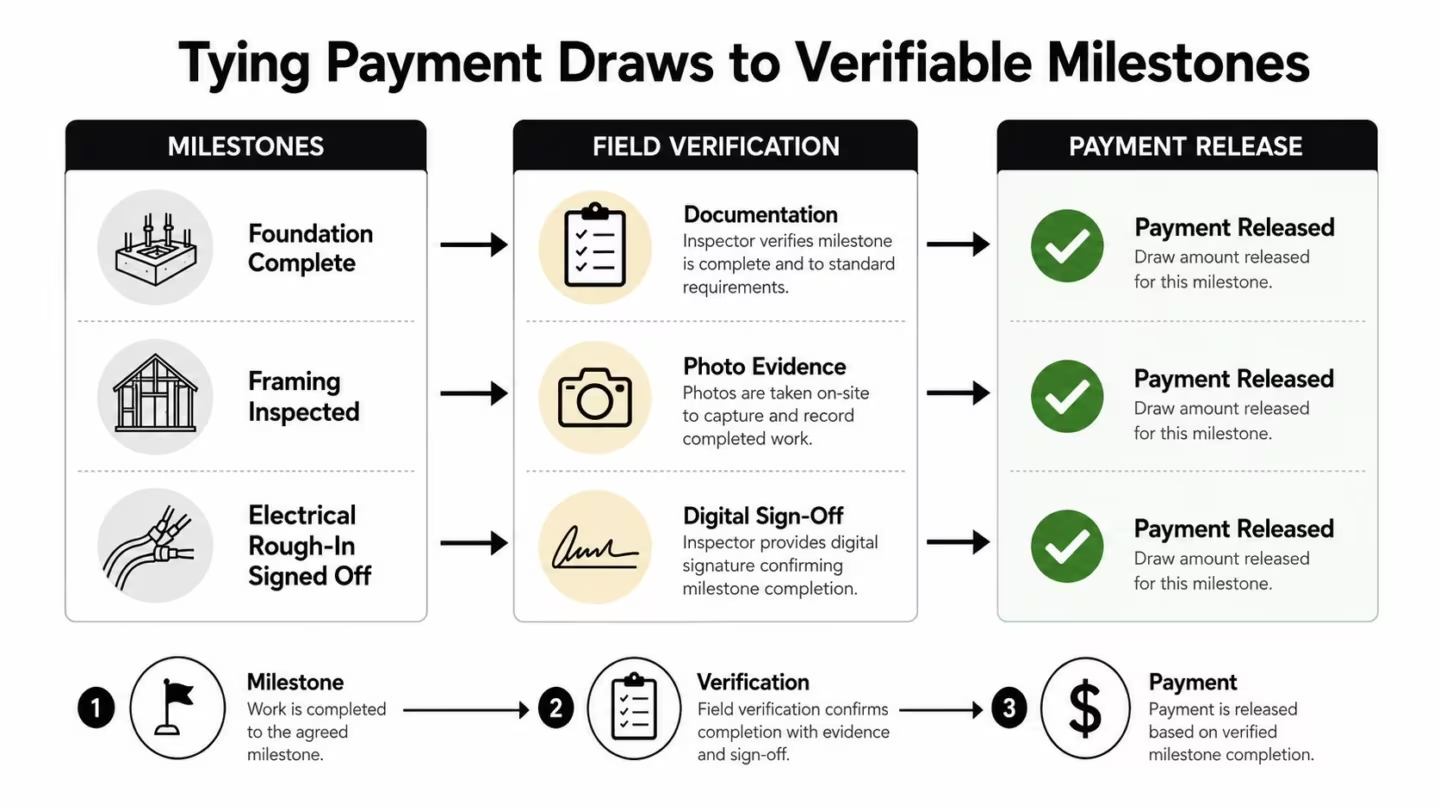
Milestone billing ties payment to observable events. A draw might be submitted after framing is complete and inspected, after rough plumbing and electrical receive sign-off, or after the space is ready for drywall. These triggers give both sides something concrete to review.
A useful schedule also includes an approval process. The contractor submits an application with photographs, invoices where relevant, inspection records, and updated backup. The homeowner or project representative reviews the package against the contract, identifies any disputed item in writing, and releases the undisputed amount according to the agreed terms.
Practical rule: Pay for documented progress, not for optimism about what will be finished next week.
For a renovation in a Manhattan co-op, Brooklyn townhouse, or New Jersey property, this approach also creates a cleaner record for owners, property managers, architects, and lenders. A visual example of renovation work in Manhattan and Brooklyn can show progress, but photographs should support, not replace, written milestone definitions and inspection records.
Tying Payment Draws to Verifiable Milestones
The phrase “50% complete” sounds practical until the parties disagree about what it means. Does it refer to labor, installed materials, the contract value, or the visible portion of the room? A reliable contractor payment schedule replaces that subjective phrase with conditions someone can verify in the field.
Write the trigger before work begins
Start by listing the major construction stages and the evidence required for each one. A milestone should answer three questions:
- What work is included? Define the scope, such as completed partitions, installed rough plumbing, or set cabinets.
- How will completion be verified? Identify an inspection sign-off, site walkthrough, photograph set, delivery record, or trade certification.
- What happens if part of the milestone is incomplete? State whether the draw is reduced to the undisputed portion or held until correction.
For framing, “framing complete” is weak language. “Interior partitions framed in accordance with approved drawings, inspected where required, and ready for rough mechanical installation” is much stronger. For rough MEP work, identify the systems separately so a completed electrical rough-in isn't treated as proof that plumbing and HVAC work are also finished.
Useful renovation triggers
A kitchen schedule might use cabinet delivery as a material event, cabinet installation and leveling as an installation event, countertop templating as a fabrication trigger, and final fixture testing as a closeout event. A bathroom schedule can distinguish demolition, waterproofing inspection, rough plumbing sign-off, tile installation, fixture connection, and final testing.
These distinctions matter because materials and labor don't always reach the site at the same time. If the contract only pays after an entire room is finished, the contractor may have to finance high-value materials for too long. If it pays for materials without delivery confirmation or ownership documentation, the homeowner may pay for items that aren't securely allocated to the project.
Handle change orders inside the same system
A change order should identify the added or deleted scope, price adjustment, schedule effect, and the milestone where the work will be paid. Don't let an approved change order disappear into the next invoice. That creates confusion about whether a draw reflects original contract work, extra work, or both.
The cleanest process is simple. The contractor submits the change order before performing the changed work, the owner approves it in writing, and the revised milestone schedule records where the cost belongs. If an emergency requires immediate action, document the reason, photographs, authorization, and pricing as soon as practical.
Field evidence is more persuasive when it's collected consistently. Timestamped photographs, inspection records, delivery tickets, and a short site report can turn a disagreement into a straightforward comparison against the contract.
Recommended Milestone Percentages and Retainage
Payment percentages should reflect the actual cash demands of the work. Demolition, rough trades, millwork, tile, and finish labor have different cost patterns, so one universal schedule rarely works perfectly for every renovation. The percentages below are practical planning examples, not a substitute for pricing the specific scope, materials, permits, and subcontractor commitments.
| Milestone | Kitchen Renovation | Bathroom Renovation | Full Gut Renovation |
|---|---|---|---|
| Contract signing and mobilization | 10% | 10% | 10% |
| Demolition and site preparation | 15% | 15% | 15% |
| Framing and rough mechanical work | 25% | 25% | 25% |
| Inspections and wall-close preparation | 15% | 15% | 15% |
| Cabinets, tile, finishes, and installation | 25% | 25% | 25% |
| Final retainage and closeout | 10% | 10% | 10% |
The table works best when each percentage is attached to a defined deliverable. A kitchen draw for cabinets shouldn't be payable merely because the cabinets were ordered. Require confirmation that the specified materials were delivered to the project, inspected for visible damage, and recorded against the approved selections. A kitchen renovation reference for Manhattan and Brooklyn properties illustrates why finish work often needs more detailed verification than a broad percentage label.
Retainage is a control, not a punishment
Retainage is commonly set at 5% to 10% of each progress payment, with release conditions tied to completion and defect correction, as described in construction retention guidance from Mastt. In federal construction contracting, the Federal Acquisition Regulation states that when progress is unsatisfactory, the government may retain part of a progress payment, but the withheld amount shall not exceed 10% of the approved estimated amount. That federal ceiling is often treated as a reference point, although private contracts and local rules can differ.
The homeowner should avoid vague language such as “retainage released at completion.” Define completion as substantial completion plus final punch-list resolution, required warranties, as-built drawings, operation and maintenance manuals, final inspections, and appropriate lien waivers. Releasing all withheld funds at substantial completion can remove negotiating power before small but important closeout items are resolved.
At the same time, retainage shouldn't become an indefinite holdback. The contractor has already performed the work, and an owner who withholds an excessive or undefined amount can create the cash-flow problem the schedule was supposed to prevent. A fair clause states what must be delivered, who verifies it, and when the undisputed retainage becomes payable.
Contract Language and Lien Waiver Protections
A payment schedule protects only what the contract says. Every draw should identify the amount requested, the milestone completed, approved changes, stored or delivered materials, retainage, prior payments, and the balance remaining. The paperwork should be easy to compare with the scope and hard to reinterpret after a dispute starts.
Build a repeatable draw package
Require the contractor's payment application to include:
- Progress detail: A line-item description of completed work and the associated contract value.
- Verification records: Inspection sign-offs, photographs, delivery documentation, or trade confirmations.
- Change-order support: Written approvals for additions, credits, substitutions, and schedule effects.
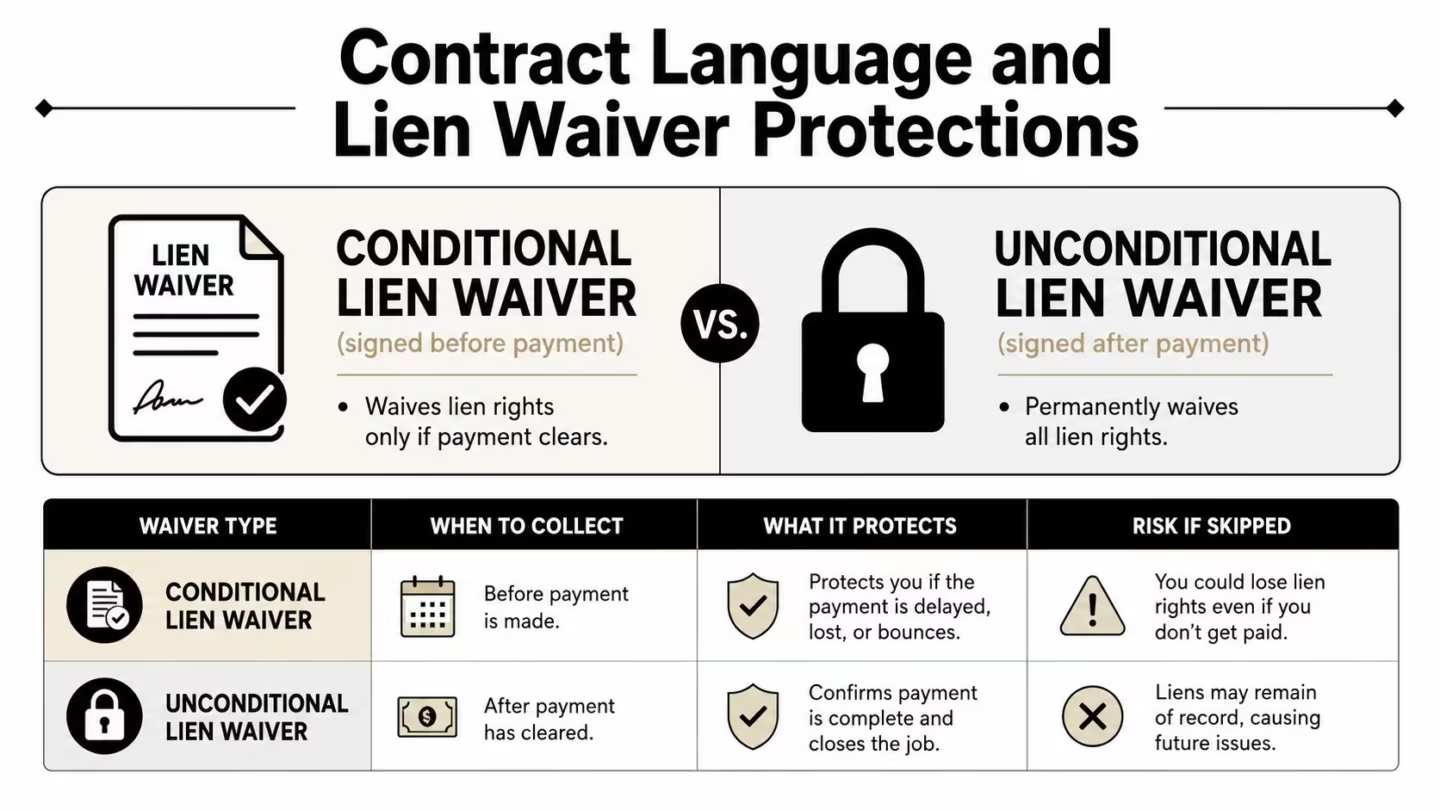
- Lien documentation: Conditional waivers from the contractor and relevant lower-tier parties before payment, followed by unconditional waivers after funds clear.
- Updated accounting: Prior payments, retainage withheld, current amount due, and remaining contract balance.
Conditional and unconditional waivers serve different purposes. A conditional waiver limits lien-rights waiver to the condition that the payment clears. An unconditional waiver gives up lien rights without that same payment condition, so it should generally be collected after payment has been received and reconciled.
Add approval windows and permit conditions
The contract should state how the owner reviews a draw, what documentation starts the review period, and how disputed items are identified. It should also distinguish between a payment dispute and silence. Without an approval process, an owner may assume the invoice is incomplete while the contractor assumes it has been accepted.
For work requiring municipal oversight, connect the relevant draw to permit and inspection records. In New York City, that may include documentation associated with the Department of Buildings process. In New Jersey, the applicable municipality and inspection authority may control the record. The contract shouldn't say “inspection passed.” It should identify the inspection or sign-off expected for that stage.
Sample concepts include language requiring payment only for work completed in accordance with the approved scope, allowing the owner to withhold a reasonably disputed amount while paying undisputed work, and making final payment contingent on punch-list completion, closeout documents, warranties, and final waivers. Because lien rights and waiver forms vary by jurisdiction, an attorney should review the final language for the property and project type.
Red Flags in Contractor Payment Proposals
A contractor's proposed schedule reveals how that contractor thinks about risk. A reasonable request for mobilization funds may cover early labor, permits, deposits, and materials. A schedule that collects substantially more than the value of work completed leaves the homeowner financing the project without equivalent control.
Warning signs worth challenging
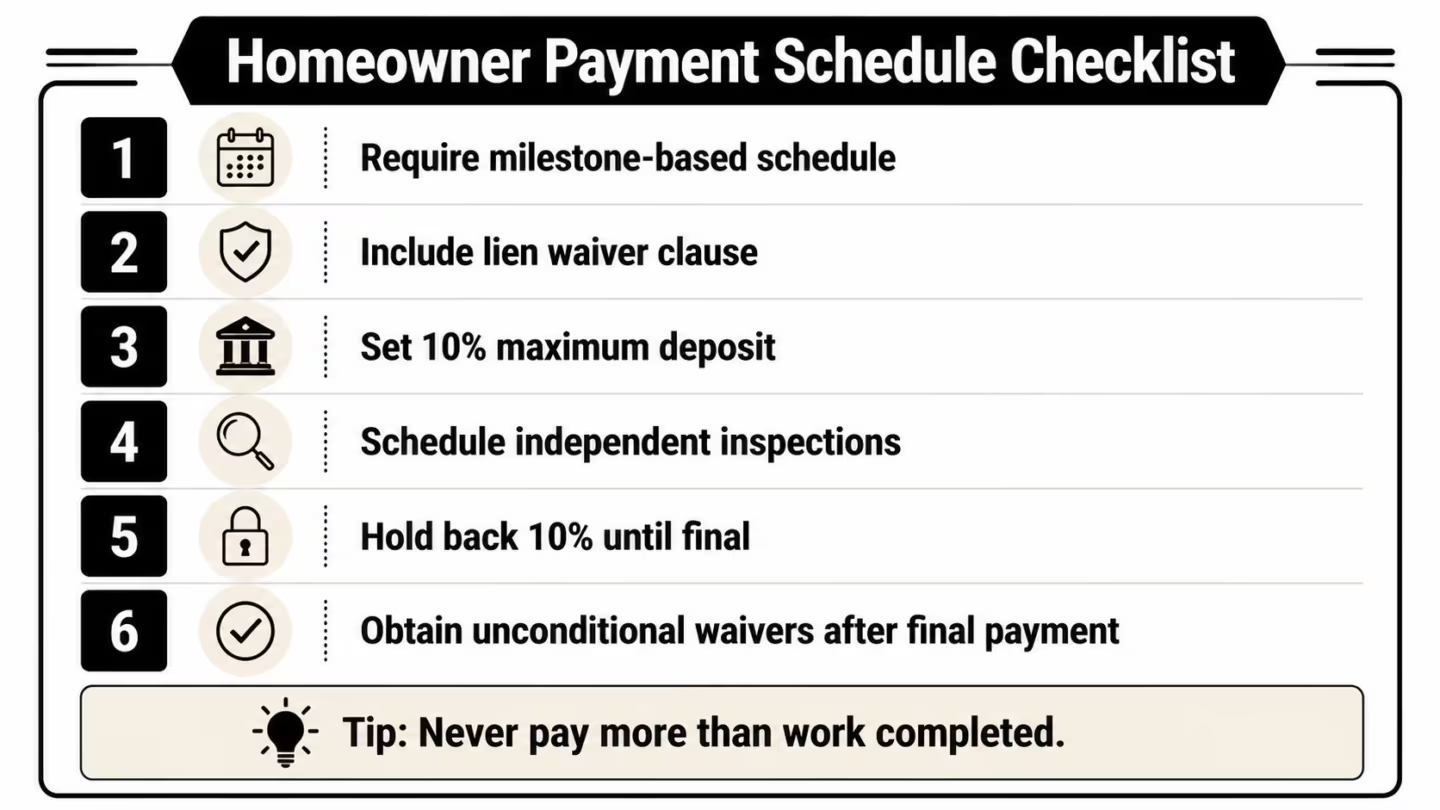
A front-loaded opening draw is the first concern. A homeowner should ask what the initial payment buys, where the money goes, and what tangible work or materials will be present afterward. The infographic supplied for this guide uses a 10% maximum deposit as a homeowner safeguard, but actual deposit rules can depend on the contract, jurisdiction, project type, and applicable law. Treat that figure as a negotiation reference, not a universal legal rule.
Vague milestones create disputes before the first invoice arrives. “Roughly halfway done,” “materials on order,” and “substantially complete” need definitions, evidence, and a process for partial completion. A better proposal names the rooms, systems, inspections, and documents that establish the trigger.
Calendar-only draws pay for elapsed time rather than installed work. This structure can be especially risky when a renovation is waiting on a permit, inspection, owner selection, or long-lead material. Dates still have a place in the schedule, but they should forecast expected progress, not independently authorize payment.
No retainage or closeout language leaves the homeowner with little financial leverage during punch-list work. The opposite problem also matters. A contractor proposal that holds an undefined final amount indefinitely may make it difficult to keep a closeout crew available.
No approval deadline creates an avoidable cash-flow gap. The contract should explain how quickly the owner reviews a complete application, what happens when information is missing, and how undisputed amounts are handled.
Read the schedule against the scope
Take the proposal and map every draw to actual labor, materials, and inspections. If the schedule pays for finishes before rough work is complete, or pays a large amount before permits and mobilization tasks are addressed, ask the contractor to rebalance it. A transparent contractor can explain the cash need behind each stage and accept objective verification.
A fair schedule doesn't eliminate risk. It assigns each risk to the person best positioned to manage it.
If the contractor refuses milestone definitions, won't provide a lien-waiver process, or treats reasonable documentation as distrust, the issue isn't only contract wording. It may indicate a working relationship that will become harder once changes and delays begin.
NYC and New Jersey Legal Considerations
New York City and New Jersey renovations sit inside different combinations of state, municipal, building, permit, licensing, contract, and lien requirements. A payment schedule should acknowledge those layers instead of assuming that a generic form fits a brownstone, co-op apartment, commercial build-out, and suburban renovation equally well.
In NYC, required work may depend on Department of Buildings filings, permit status, inspections, sign-offs, and building-specific rules. Co-op and condominium projects can add review by a managing agent, board, superintendent, or building engineer. Those approvals can affect when work is allowed to proceed and when a milestone can reasonably be verified, so the contract should identify which approvals belong to the contractor and which depend on the owner or building.
New Jersey projects may involve municipal construction officials, permit inspections, contractor registration or disclosure requirements, and the state's construction lien framework. Prompt-payment protections and lien procedures can vary by project category and contract structure. A residential homeowner shouldn't assume that rules designed for a public or commercial contract automatically apply to a private home renovation.
Mechanics lien deadlines also require careful handling. The responsible deadline may depend on the property, claimant, project type, notice requirements, and the date relevant work or payment occurred. Don't rely on a payment schedule to extend a legal deadline, and don't treat a waiver as valid without confirming its wording and timing under the governing law.
Align legal requirements with project administration
A practical contract should identify:
- The governing jurisdiction: State, municipality, property location, and applicable building rules.
- Permit responsibility: Who files, pays for, coordinates, and supplies evidence of required approvals.
- Payment documentation: What a complete application includes and how disputed amounts are handled.
- Lien protection: Which waivers are required from the contractor, subcontractors, and suppliers.
- Escalation path: When the parties involve an architect, construction manager, mediator, or attorney.
Legal review becomes especially important when a project includes structural work, multiple subcontractors, co-op or condo rules, commercial tenants, financing, or a significant change-order program. An attorney can also confirm that deposit, retainage, waiver, and prompt-payment provisions comply with the location and contract type.
Homeowner Payment Schedule Checklist
Use the checklist as a working file, not a document you read once at contract signing. Keep the signed agreement, scope, plans, selections, permits, invoices, inspection records, photographs, change orders, payment confirmations, and waivers in one organized folder.
Before signing
- Verify the contractor: Confirm licensing or registration requirements for the location and work type, then request current insurance certificates.
- Read the draw schedule: Match every payment to completed scope, required evidence, and a written approval process.
- Define the deposit: Ask what the opening payment covers and confirm that the amount is consistent with applicable law and the negotiated risk allocation.
- Set retainage terms: State the amount withheld, the release conditions, and the process for resolving punch-list items.
- Add change-order rules: Require written pricing and authorization before non-emergency extra work proceeds.
During construction
- Maintain a payment log: Record the application date, milestone, requested amount, approved amount, retainage, payment date, and outstanding dispute.
- Photograph progress: Capture wide views and close-ups of framing, rough mechanicals, waterproofing, concealed work, delivered materials, and completed finishes.
- Schedule inspections: Coordinate required municipal, building, architect, or independent inspections before the related draw becomes due.
- Collect conditional waivers: Obtain the required conditional lien waivers with each payment application and track waivers from lower-tier parties.
- Document disagreements: Identify the exact line item, missing evidence, or incomplete work. Pay undisputed amounts when the contract requires that approach.
A bathroom renovation can hide critical work behind walls and tile, so keep inspection records before those areas are covered. A bathroom renovation example for Manhattan and Brooklyn homes reinforces why photographs and sign-offs should be collected before finishes conceal waterproofing, piping, and electrical work.
Before final payment
- Walk the punch list: Write each item with a location, responsible party, and agreed correction standard.
- Confirm closeout documents: Collect warranties, as-builts where required, operation and maintenance information, inspection records, and final approvals.
- Verify lien status: Obtain final unconditional waivers after payment clears, using forms appropriate to the project and jurisdiction.
- Reconcile the contract: Confirm approved change orders, credits, retainage, prior payments, and the final balance.
- Release funds deliberately: Pay the final amount when the contract's closeout conditions are satisfied, not merely because the crew has left the property.
If the parties disagree about a milestone, pause the disputed portion, preserve photographs and correspondence, and bring in the architect, construction manager, or attorney identified in the contract. For homeowners planning a kitchen, bathroom, commercial, or full interior renovation, AGNY Services LLC offers design coordination, permitting, construction, documentation, and final walkthrough support across NYC and New Jersey. Contact the team to discuss a payment schedule that matches verified work, protects cash flow, and keeps your project properly staffed through closeout.