A Brooklyn brownstone renovation is moving quickly. The walls are open, the electrician is reviewing circuit locations, and the homeowner is deciding whether to install ordinary switches now and add smart devices later. That choice affects more than convenience. Once drywall, tile, cabinetry, and finished millwork are in place, adding network cabling, sensor wiring, dedicated outlets, HVAC controls, or door hardware becomes more disruptive and may produce a collection of disconnected gadgets instead of a dependable system.
The strongest home automation benefits come from matching technology to a practical goal, such as energy control, security, property protection, accessibility, maintenance, comfort, or whole-home coordination. This guide prioritizes eight benefits by renovation usefulness for NYC and New Jersey homeowners, investors, property managers, and commercial clients. The supplied estimates and examples are planning references, not guaranteed results. Actual performance depends on the building, equipment, occupancy, installation quality, subscriptions, and user behavior.
Before finishes are installed, coordinate wiring, networking, power, HVAC, plumbing, sensor placement, privacy, backup connectivity, and future expansion. A smart thermostat only works as intended when it matches the heating and cooling equipment. A leak sensor only helps when it sits where water can reach it. A smart lock needs compatible door hardware and reliable power. Planning those details during a kitchen, bathroom, HVAC, electrical, or full-home renovation creates more value than buying random devices after the project is complete.
1. Enhanced Energy Efficiency and Cost Savings
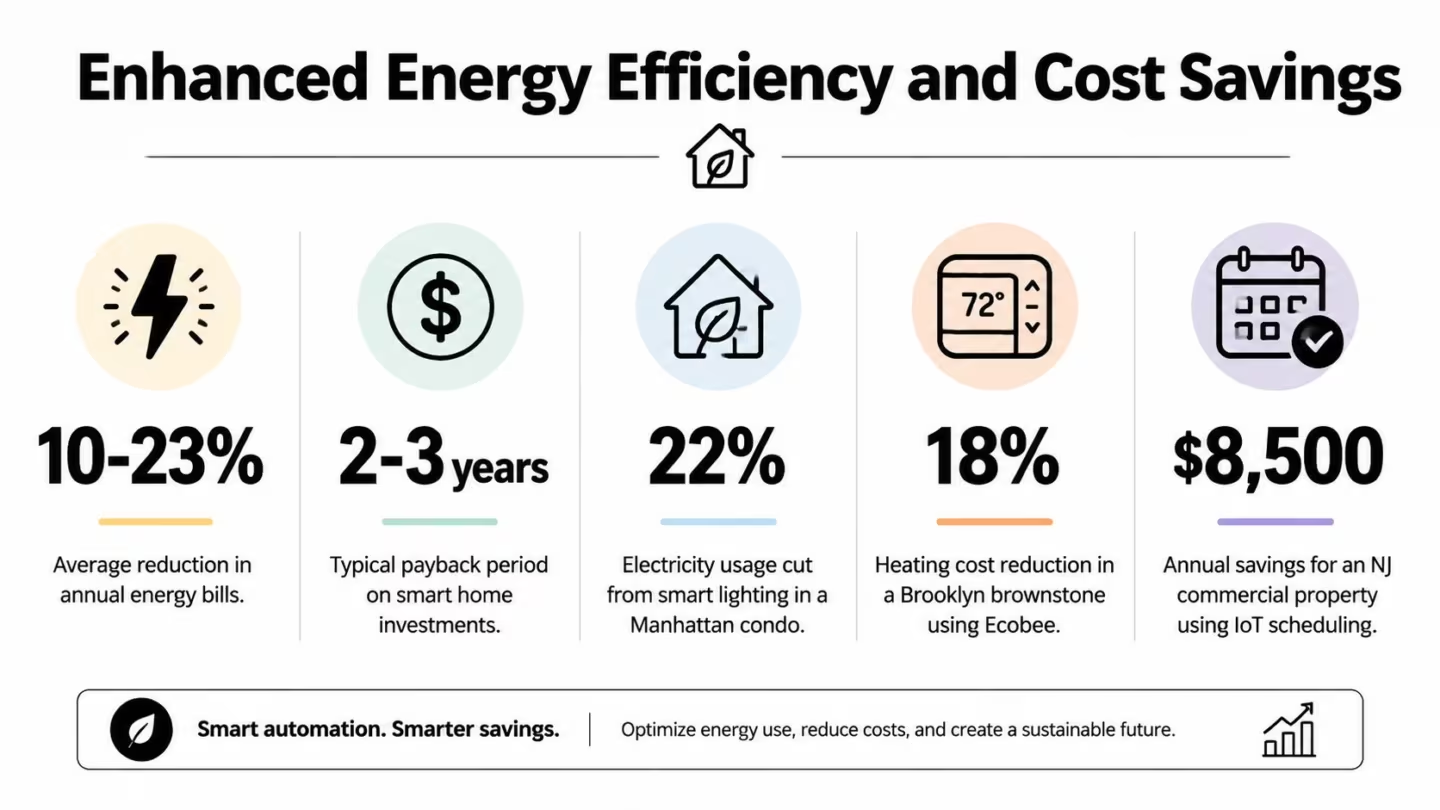
Energy control is one of the most measurable home automation benefits, but it works best when automation manages major loads rather than only decorative features. Smart thermostats, HVAC zoning, occupancy sensors, lighting controls, and water-heating schedules can reduce waste by responding to time, occupancy, and operating conditions. The ACEEE analysis of smart-home energy savings reports savings ranging from 5% to 22% per home, with national potential estimated at 0.3 to 1.1 quads, or roughly 1% to 5% of primary energy consumed by U.S. homes. The same report says sector savings could reach 17% if every U.S. household adopted smart technology across major uses such as HVAC and water heating.
That doesn't mean every Manhattan apartment will achieve the same result. A small condo with central building-controlled HVAC has fewer opportunities than a Brooklyn brownstone with independent heating zones. Start with the systems that consume the most energy, then measure before expanding.
What to coordinate during renovation
- HVAC controls: Confirm thermostat compatibility, zoning requirements, low-voltage wiring, and equipment access before closing walls. A Manhattan and Brooklyn HVAC contractor resource can be part of that coordination.
- Lighting circuits: Group kitchen, bathroom, hallway, and exterior lighting into useful zones. Dimming and occupancy controls are more practical when electricians plan neutral conductors, switch locations, and load compatibility.
- Baseline monitoring: Review utility consumption before installation, then compare performance after routines have operated through normal seasons.
- Maintenance: Keep filters, sensors, dampers, and HVAC equipment serviced. Automation can't compensate for blocked airflow or poorly maintained equipment.
The practical approach is gradual. Install the thermostat, major lighting zones, and energy monitoring first. Add appliance controls or broader routines only after you know which changes affect comfort and consumption. For more detail on thermostat operation, see this guide to how smart thermostats save energy.
2. Increased Home Security and Peace of Mind
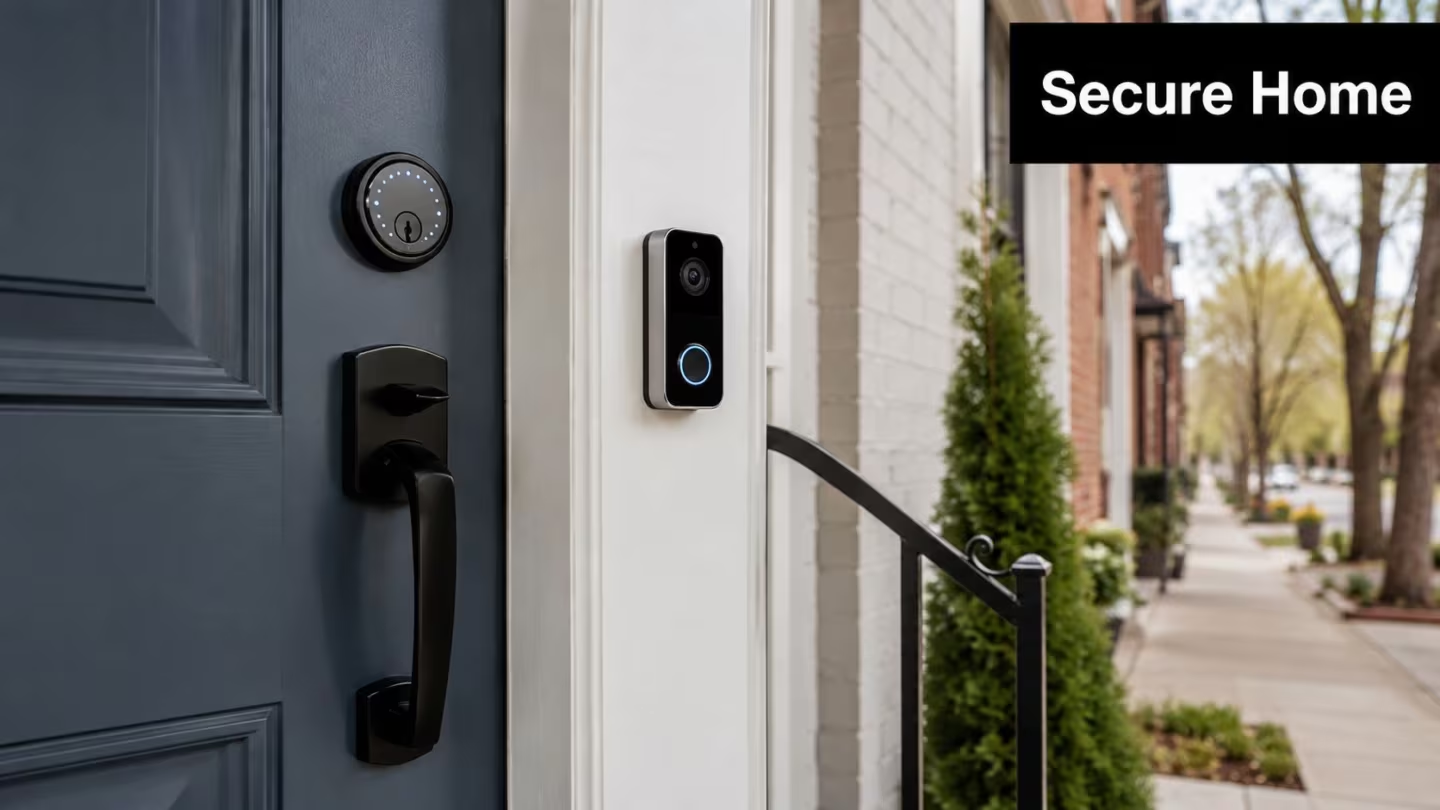
A renovation creates temporary security problems. Doors may be removed, contractors need access, materials sit on site, and multiple people may hold keys. Smart locks, door and window sensors, cameras, video doorbells, and mobile alerts can give the owner better control while the work is underway and after the final walkthrough.
A Manhattan townhouse owner, for example, can issue temporary access codes to a renovation crew instead of passing around physical keys. The codes can be revoked when the project ends. A Brooklyn condo may use entry sensors and cameras at exterior access points, while a New Jersey office manager can receive after-hours motion alerts without giving every employee unrestricted access.
The system should support real security practices rather than create a false sense of protection. Cameras belong at entrances, delivery areas, garages, and other justified locations. Excessive interior monitoring can damage household trust and create privacy concerns, especially in rental housing or shared buildings.
Security planning for active projects
- Install early: A smart lock and video doorbell can help manage contractor access before demolition begins.
- Use layered protection: Pair access control with door sensors, lighting, alarm notifications, and professional monitoring when the property requires it.
- Plan failure response: Select equipment with battery support and cellular backup when internet loss would create unacceptable risk.
- Test every user flow: Family members, staff, and contractors should know how to lock, open, disarm, and report an alert.
- Coordinate door work: Smart hardware must fit the door, frame, strike, power source, and existing building requirements.
Electrical planning matters because cameras, hubs, locks, and exterior equipment need dependable power and suitable pathways. Coordinate electrical contractor services for Manhattan and Brooklyn projects before finished surfaces conceal wiring.
3. Convenience and Lifestyle Quality Through Voice Control and Automation
Convenience becomes valuable when it removes repeated actions people perform. A well-designed “Leaving Home” routine can lock doors, arm security, turn off selected lights, and place HVAC in an away mode. A kitchen routine might let someone dim lights, operate compatible appliances, or adjust ventilation without touching a switch while handling food.
The best systems don't automate everything. They automate predictable sequences and leave manual controls available. An Upper East Side apartment may need simple lighting, thermostat, and lock commands. A New Jersey household may benefit from a morning routine that gradually raises lights and activates the coffee maker. In a Brooklyn family room, a movie scene could lower shades, dim lights, and adjust climate settings together.
Build routines people will use
Choose one main ecosystem, such as Apple Home, Google Home, or Amazon Alexa, before buying devices. Mixing platforms can limit compatibility and force residents to manage multiple apps. Begin with three to five routines connected to real household patterns, such as morning, arrival, leaving, evening, and sleep.
Kitchen renovations deserve special attention. Put controls where people can reach them, preserve conventional switches, and confirm that connected appliances work with the chosen platform. Voice assistants shouldn't replace safety procedures, appliance manufacturer requirements, or direct supervision.
Privacy needs equal planning. Disable microphones in bedrooms and bathrooms when they aren't necessary, and consider speaker-only devices in private spaces. Test every trigger before relying on it. Presence detection can misfire, voice recognition can misunderstand commands, and a routine that works for one resident may frustrate another. Involve the whole household during setup so the final system feels usable rather than imposed.
4. Remote Monitoring and Property Management for Absentee Owners and Investors
Remote monitoring is especially useful when the owner can't reach the property quickly. A water sensor under a kitchen sink, temperature sensor near a vulnerable pipe, humidity sensor in a basement, and smart lock at a service entrance can provide early information between inspections. These tools don't eliminate the need for local maintenance, but they can shorten the time between a problem and a response.
A New Jersey landlord overseeing several rentals might prioritize leak and freeze alerts before adding entertainment or voice controls. A Brooklyn brownstone owner who travels during winter can monitor temperature remotely. A Manhattan investor can provide a contractor with time-limited access for repairs while preserving an activity record.
Rental privacy requires careful boundaries. Occupancy or interior monitoring can affect tenants' rights, expectations, and willingness to accept the system. Owners should explain what sensors collect, where they're installed, who receives alerts, and how long records remain available. A door sensor at an entry point is not the same as continuous monitoring inside a private living area.
Build a response process, not just an app
- Set priorities: Water, temperature, humidity, smoke, and power conditions usually deserve attention before convenience devices.
- Create escalation rules: Critical alerts should reach a responsible person, backup contact, and service provider when necessary.
- Document access: Record who receives codes and revoke them after maintenance or turnover.
- Coordinate installation: Sensor placement should account for plumbing routes, finished cabinetry, HVAC equipment, and network coverage.
- Keep records: Alert histories, service notes, and photographs can help organize maintenance and support insurance documentation.
During renovation, the electrical, plumbing, and networking teams should agree on sensor locations before cabinets, ceilings, and mechanical enclosures are finished. Remote visibility is only useful when the system has reliable communication and someone is prepared to act on the alert.
5. Improved Health, Safety, and Accessibility for Aging Populations
For aging residents, the most important automation may be the feature that makes a daily task safer and less physically demanding. Motion-activated lighting can illuminate a bathroom route at night. Voice controls can reduce the need to reach for switches. Emergency pendants, door sensors, and inactivity alerts can help caregivers respond when a resident may need assistance.
Technology works best alongside physical renovation. An accessible bathroom may combine grab bars, a properly configured shower, easy-to-operate controls, slip-resistant surfaces, reachable storage, bright layered lighting, and leak detection. A bathroom renovation resource for Manhattan and Brooklyn can support coordination between fixtures, electrical work, sensors, and wall reinforcement.
Preserve independence and human judgment
A resident with arthritis may prefer voice-activated lighting and large physical buttons. Someone using a wheelchair may need switches, locks, thermostats, and intercom controls installed within comfortable reach. A family supporting a parent with cognitive decline may use door alerts, but should explain the system and establish a response plan rather than rely on notifications alone.
- Assess the home first: Identify trip hazards, poor lighting, difficult hardware, and unsafe transitions before choosing devices.
- Use direct controls: Keep physical switches and manual overrides available if an app or voice command fails.
- Protect critical functions: Emergency devices need battery support, reliable connectivity, and regular testing.
- Train caregivers and residents: Everyone should understand the alert, the expected response, and how to silence or reset equipment.
- Respect privacy: Monitoring should be limited to a clearly stated safety purpose and agreed locations.
An Upper West Side resident may gain confidence from automated hallway lighting, while a New Jersey family may value door alerts during overnight hours. The right system supports dignity. It shouldn't turn the home into a surveillance environment or make the resident dependent on a confusing interface.
6. Seamless Integration and Whole-Home System Orchestration
Individual smart devices are easy to purchase, but a renovation often exposes the limits of disconnected products. A thermostat may use one app, shades another, cameras a third, and lighting controls a fourth. Whole-home platforms such as Control4, Savant, and Crestron can bring lighting, climate, security, entertainment, window treatments, and selected appliances into a coordinated control structure.
The value lies in orchestration. A “Movie Mode” scene can dim lighting, lower shades, adjust the room temperature, and activate entertainment equipment. A morning scene can open shades and establish lighting while preserving separate settings for bedrooms, guest rooms, and service areas. These systems can be appropriate for a luxury penthouse, a gut-renovated brownstone, or a complex commercial property with multiple zones.
Infrastructure determines the result
Professional integration requires decisions before demolition and drywall. Plan conduit, structured cabling, equipment locations, network cabinets, dedicated circuits, access panels, Wi-Fi coverage, and service pathways. Coordinate lighting design with dimmers and keypads. Coordinate HVAC zoning with occupancy sensors and control logic. Coordinate motorized shades with window conditions, trim, power, and furniture placement.
Practical rule: A centralized system should simplify the property's operation. If residents need several apps and a technical manual for ordinary tasks, the design needs revision.
Future expansion deserves attention. Even if the owner starts with lighting and HVAC, spare conduit and accessible equipment locations can make later additions less invasive. The integrator should test scenes under normal conditions, confirm manual overrides, train residents or staff, and document the system for future service. A useful security system integration guide can help frame the broader coordination issues, but the final design must match the building and renovation scope.
7. Preventive Maintenance and Predictive Asset Management
A smart home can report conditions that are difficult to notice during ordinary visits. Water sensors can identify moisture under a dishwasher or vanity. Temperature sensors can warn about a vulnerable area before pipes freeze. Electrical monitoring can flag unusual loads. HVAC data can help a service professional investigate declining performance before a failure interrupts the property.
This benefit is more compelling for owners responsible for valuable finishes, multiple units, or commercial operations. A brownstone owner may want sensors around boilers, laundry equipment, and bathroom supply lines. A facility manager may monitor mechanical rooms, server spaces, electrical panels, and climate-sensitive storage. The system doesn't diagnose every failure by itself, but it can create a better record for maintenance decisions.
Turn alerts into scheduled work
Begin with critical systems, then define what each alert means. A leak notification might require an immediate shutoff and emergency call. A humidity trend may prompt ventilation review. An electrical warning may require a licensed professional rather than a device reset. Without thresholds, escalation contacts, and documented procedures, alerts become noise.
- Establish a baseline: Record normal temperature, humidity, electrical load, and equipment behavior after commissioning.
- Review trends: Ask the HVAC technician, electrician, or plumber to interpret changes instead of reacting to every isolated signal.
- Preserve history: Maintenance records and sensor data can support capital planning and recurring service decisions.
- Schedule low-impact work: Use alerts to plan service before an emergency, where the equipment and issue allow it.
- Verify placement: A sensor hidden behind finished cabinetry may be difficult to inspect or replace.
During a renovation, leave access to sensors, shutoff devices, controllers, and network equipment. Coordinate plumbing protection with cabinetry and flooring work, and keep electrical monitoring accessible to qualified service personnel. Predictive tools are most useful when the building team trusts the data and has a clear path from notification to repair.
8. Customized User Experiences and Personalization for Multiple Residents
A home rarely has one schedule or one preferred temperature. Personal profiles can tailor lighting, climate, audio, shades, locks, and accessibility controls to different residents. That's useful in a Manhattan family apartment, a Brooklyn brownstone with an in-law suite, or a New Jersey shared home where roommates need separate routines.
Geofencing can trigger an arrival scene for a specific resident, but it shouldn't remove manual control. A parent may want warm, subdued lighting, while a teenager prefers a different scene. An older resident may need large-button controls and voice access rather than an app. A guest should receive limited permissions, such as lighting access in selected rooms, rather than control over locks, cameras, or the entire HVAC system.
Make personalization predictable
Set up profiles during commissioning and test them at the property boundary. False triggers can activate routines when someone is nearby but not arriving. Location sharing also creates a privacy issue, so residents should understand what information the platform uses and how permissions can be changed.
The physical renovation still matters. Put controls at accessible heights, provide manual overrides, use consistent labeling, and avoid placing all functionality behind a phone. In an in-law suite, separate temperature and lighting zones may be more useful than a complex whole-home scene. In a shared house, clear permissions can prevent one resident from changing another person's settings.
Personalization should reduce conflict and effort, not create another household management task. Give every resident a simple operating guide, include a guest mode, and review permissions when residents move in or out. A system that respects individual preferences while preserving straightforward manual controls will serve the property longer than one built around novelty.
8-Point Home Automation Benefits Comparison
| Item | Implementation Complexity 🔄 | Resource Requirements ⚡ | Expected Outcomes 📊 | Ideal Use Cases 💡 | Key Advantages ⭐ |
|---|---|---|---|---|---|
| Enhanced Energy Efficiency and Cost Savings | Medium, HVAC zoning, sensors, device integration and configuration | Moderate–High, $3,000–$15,000+, compatible devices, possible electrical/HVAC work | 10–23% annual energy reduction; typical payback 2–3 years; lower carbon footprint | NYC/NJ homeowners with high utilities, renovation projects, multi-zone homes, commercial sites | Measurable bill savings, rebates/tax incentives, longer HVAC lifespan, consumption insights |
| Increased Home Security and Peace of Mind | Medium, cameras, locks, sensors plus monitoring integration | Moderate, $2,000–$8,000 install; $20–$60+/mo monitoring; reliable internet & backup power | Real‑time alerts, deterrence of break‑ins, evidence for claims, potential 5–15% insurance discounts | Renovation sites, urban homes, vacant properties, clients needing contractor access control | Remote access and temporary codes, 24/7 monitoring options, reduced theft risk |
| Convenience & Lifestyle via Voice Control and Automation | Low–Medium, voice assistants, routine programming, ecosystem selection | Low–Moderate, $1,500–$5,000+ for devices; ongoing software updates | Time savings, hands‑free control, reduced daily cognitive load, improved accessibility | Busy professionals, families, kitchens/bath renovations, accessibility upgrades | Automates routines, voice control for tasks, improved daily living experience |
| Remote Monitoring & Property Management for Absentee Owners | Medium–High, multi‑site sensor deployment and PMS integration | High, $5,000–$20,000+ multi‑property, per‑site connectivity, integrations | Rapid detection of leaks/HVAC failures, reduced vacancy damage, coordinated maintenance | Landlords, multi‑property investors, vacation rentals, commercial managers | Scalable oversight, rapid alerts, remote contractor coordination, audit trails |
| Improved Health, Safety & Accessibility for Aging Populations | Medium, fall sensors, alerts, integration with medical services and home mods | Moderate, $3,000–$12,000 incl. modifications; $20–$80+/mo monitoring; training/support | Faster emergency response, fewer hospitalizations, enables aging‑in‑place | Families caring for elderly, mobility‑impaired residents, multi‑generational homes | Fall detection, medication reminders, automated safety features, caregiver peace of mind |
| Seamless Integration & Whole‑Home Orchestration | High, professional design, cabling, complex programming and redundancy | Very High, $15,000–$100,000+; certified integrators, infrastructure and ongoing support | Unified control across systems, luxury UX, higher property value, scalable system | High‑end condos, large renovations, commercial spaces requiring centralized control | Cohesive cross‑system automation, resale differentiation, enterprise reliability |
| Preventive Maintenance & Predictive Asset Management | Medium–High, sensors, analytics, and maintenance workflow integration | Moderate–High, $3,000–$15,000+, analytics tools, staff or third‑party services | Early fault detection, extended equipment life (≈20–30%), reduced emergency repairs | Commercial buildings, facility managers, asset‑heavy portfolios, landlords | Data‑driven scheduling, cost avoidance, improved capital planning |
| Customized User Experiences & Personalization for Residents | Medium, multi‑profile setup, geofencing, conflict resolution and testing | Moderate, ecosystem devices, smartphone apps, training; modest hardware costs | Personalized comfort, fewer setting conflicts, higher occupant satisfaction | Families, roommates, multi‑generational homes, accessibility‑focused projects | Individual preferences, guest/temporary profiles, accessibility customization |
Build the System Into the Renovation Plan
The eight home automation benefits are not equally important for every property. Start by identifying the problem with the greatest financial, operational, or personal consequence. For a brownstone with vulnerable plumbing, leak detection and temperature monitoring may come first. For a busy household, HVAC control, lighting routines, and smart locks may deliver more daily value. For an aging resident, accessible controls, emergency alerts, and bathroom safety should take priority over entertainment integration.
Establish a baseline wherever measurement matters. Review energy consumption before changing HVAC routines. Record recurring maintenance issues before installing predictive sensors. Document existing access procedures before replacing locks. The supplied ACEEE findings show that smart technologies can produce measurable energy benefits, but those figures describe broad potential rather than a promise for a specific NYC apartment, New Jersey house, rental, or office.
Choose compatible device categories before selecting individual products. Decide whether the property needs a thermostat, lighting controls, leak sensors, access control, cameras, motorized shades, appliance integration, or a centralized platform. Confirm subscriptions, monitoring requirements, software support, privacy settings, data sharing, replacement plans, and manual operation. A low-cost device can become an expensive nuisance if it fails to communicate with the rest of the system or requires a service that the owner doesn't want to maintain.
Coordinate infrastructure before finishes
During demolition and rough-in, align the automation plan with:
- Electrical: Circuits, neutral conductors, dimmers, outlets, dedicated equipment power, low-voltage pathways, and backup power.
- Networking: Router location, structured cabling, access points, equipment ventilation, and connectivity in dense layouts.
- HVAC: Thermostat compatibility, zoning, dampers, sensors, control wiring, and service access.
- Plumbing: Leak sensors, shutoff access, boiler areas, appliance connections, and vulnerable pipe locations.
- Lighting and cabinetry: Fixture zones, switch placement, under-cabinet lighting, control stations, and access panels.
- Doors, windows, and shades: Lock hardware, camera views, motorized shade power, trim clearances, and manual overrides.
A focused kitchen or bathroom package can remain practical. It might include smart lighting, leak detection, ventilation control, accessible fixtures, and selected appliance integration. A full-home system requires centralized design, stronger network planning, coordinated controls, documentation, and infrastructure for future expansion. Neither approach is automatically better. The right scope is the one residents can operate and the property team can maintain.
Discuss paid estimates and consultations with a qualified renovation partner such as AGNY Services LLC, and ask for a clear division between device selection, installation labor, electrical or HVAC work, programming, subscriptions, warranty support, and future service. AGNY's renovation capabilities include kitchen and bathroom work, electrical and plumbing coordination, HVAC installation and service, lighting-related improvements, and broader interior renovations across New York and New Jersey. Those trades need to work together when automation is built into walls, ceilings, doors, cabinetry, and mechanical systems.
Before committing, test the system under realistic conditions. Simulate an internet outage, check battery status, verify manual controls, review privacy permissions, and confirm that every resident or staff member can perform essential tasks. The most useful automation is rarely the system with the most devices. Start with the benefit that solves the most expensive or disruptive problem, then expand only when the infrastructure, budget, privacy model, and user experience support it.
AGNY Services LLC provides renovation coordination, electrical and plumbing work, HVAC installation and service, kitchen and bathroom renovations, and full interior projects that can accommodate practical home automation planning. Visit AGNY Services LLC to discuss a paid estimate or consultation for integrating smart-home infrastructure into your NYC or New Jersey renovation.