On a January morning in Park Slope, the room can feel cold before the thermostat catches up. The owner sits in the parlor wearing a sweater, notices a draft around the lower sash, and starts comparing window quotes that all use the same words, energy efficient, sound insulating, full replacement. The difficult question isn't whether triple-pane glass performs better. It does. The question is whether the opening, frame, building rules, and budget can support the upgrade.
Triple pane window replacement is a system decision, not a glass-only purchase. In NYC and New Jersey, an installer has to account for old wood frames, masonry openings, rot, permits, landmark restrictions, board approvals, and the additional weight of a modern insulated unit. This guide explains where the upgrade works, where it becomes overkill, and how to evaluate the project before ordering anything.
What Triple Pane Window Replacement Actually Means
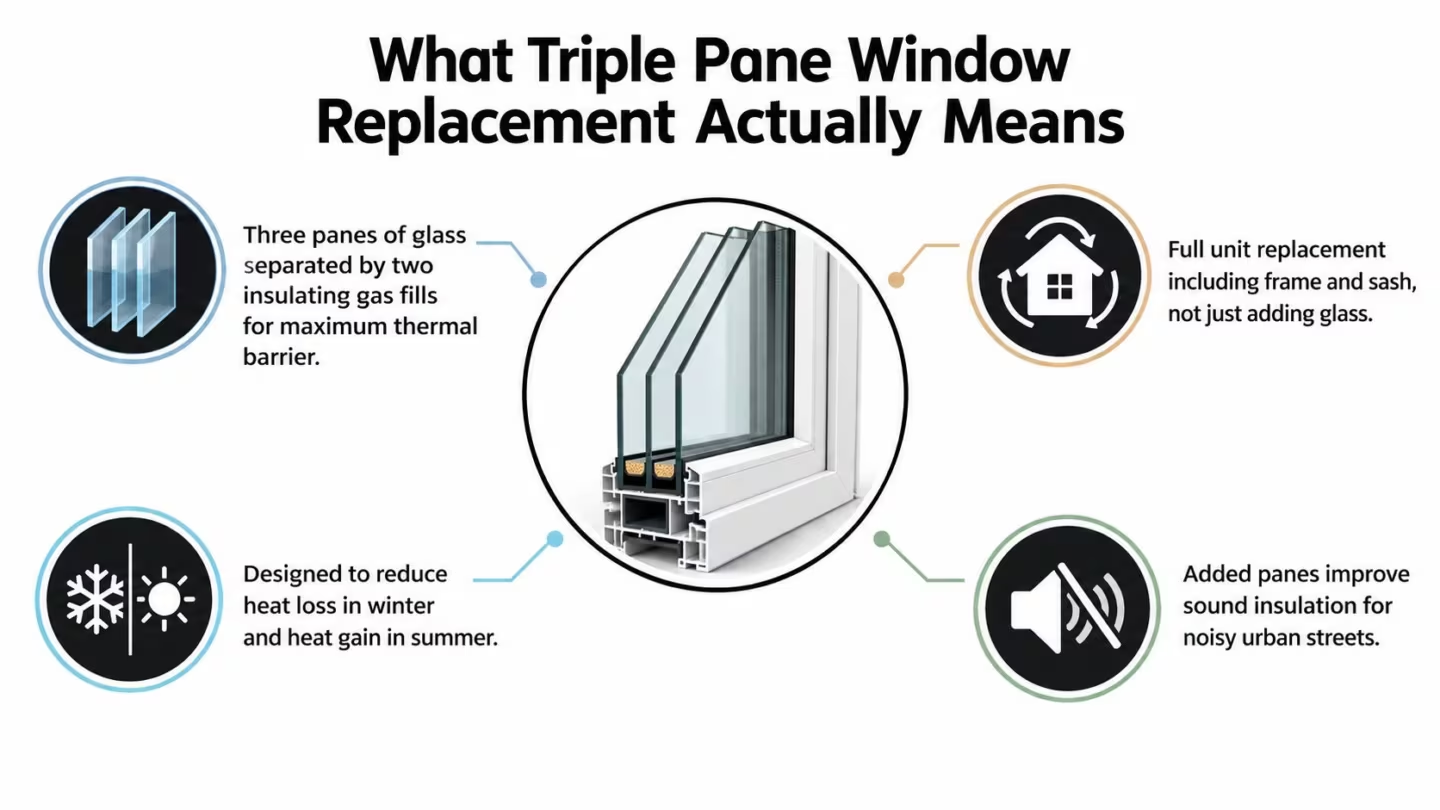
The Park Slope owner in our opening example has three possible paths. A contractor could replace only the glass in an existing sash, install a retrofit insert inside the old frame, or remove the existing window assembly and rebuild the opening with a new full-frame unit. Those options may all appear under “window replacement” on an estimate, but they aren't equivalent projects.
A triple-pane window contains three lites of glass separated by two sealed insulating cavities. Those cavities are commonly filled with an insulating gas, while low-emissivity coatings manage radiant heat and warm-edge spacers reduce heat transfer around the perimeter. The U.S. Department of Energy describes triple-pane windows as a next-generation building-envelope technology and reported that upgrading a new home from double-pane to triple-pane windows can improve energy-efficiency performance by 40% or more, while perceived noise can fall by roughly half. The DOE overview of triple-pane adoption provides the technical context.
Glass swaps versus full-frame work
A retrofit glass swap can preserve the historic appearance and avoid disturbing interior trim, but it leaves the old sash, frame, joints, and perimeter seals in place. If the frame leaks air or the sill has absorbed years of water, better glass can't correct every weakness around it.
Full-frame replacement means removing the sash, frame, and brick mold back to the rough opening. In a pre-war brownstone, that may reveal a rotted wood sill, loose masonry, deteriorated brick mold, or an opening that isn't square. The crew then repairs the substrate, installs flashing and air-sealing materials, sets the new frame, and rebuilds the interior and exterior trim.
Practical rule: If the existing frame is sound and the landmark appearance must remain unchanged, investigate a compatible retrofit. If the frame is rotten, distorted, or too shallow for the new assembly, price a full-frame solution.
Why the frame determines the project
Triple-pane glass is heavier and often requires a deeper, stronger frame than the replacement unit currently in the opening. That matters in narrow brownstone bays, old double-hung assemblies, and masonry openings where every fraction of available depth affects trim and sill detailing.
For the Park Slope owner, the right specification might be triple pane in the street-facing parlor, where winter comfort and traffic noise matter, while a different unit makes more sense in a protected rear room. The phrase triple pane window replacement should prompt a site inspection, not a glass upgrade picked from a catalog.
Triple Pane vs Double Pane and Low-E Compared
A useful NYC comparison starts with the whole-window rating rather than the pane count alone. The U.S. Department of Energy's window guide places typical triple-pane residential windows around R-4 to R-6, with U-factors of about 0.22 to 0.17. A lower U-factor means less heat transfer through the window assembly. The DOE window efficiency guide explains how these ratings relate to insulation.
Double-pane low-E remains a sensible baseline for many condos, co-ops, and renovated apartments. Triple pane earns its premium when the exposure is cold, windy, noisy, or unusually demanding, and when the surrounding frame can carry the assembly.
| Attribute | Double Pane | Double Pane Low-E | Triple Pane |
|---|---|---|---|
| Thermal performance | Basic insulated barrier | Better radiant heat control | Highest insulation of the three |
| Whole-window U-factor | Varies by product | Varies by product and coating | About 0.22 to 0.17, according to the DOE window efficiency guide |
| Sound control | Limited to moderate | Can improve with glass and seals | Additional glass and cavity can materially reduce urban noise |
| Weight | Lightest option | Similar to standard double pane | Heavier, requiring frame and hardware review |
| Installed cost | Lowest | Moderate | Highest, especially with full-frame work |
| Best NYC use | Sound interior exposures and budget replacements | General apartment upgrades | Busy avenues, cold exposures, and high-performance projects |
Five practical decision axes
U-factor matters most on north-facing windows and in rooms that stay cold near the glass. SHGC, the solar heat gain coefficient, matters on sunny elevations. A low SHGC can help control summer heat, but the correct value depends on orientation, shading, and the building's cooling load.
Sound transmission depends on more than pane count. Asymmetric glass thicknesses, laminated glass, frame seals, and installation quality can matter as much as the third lite. A basic triple-pane unit installed with gaps around the masonry opening won't deliver the quiet room the owner expects.
Weight changes hardware, balance systems, hinges, and frame selection. A contractor who quotes triple pane without inspecting the sill and operable sash is skipping the most important compatibility question.
The final axis is cost. On a quiet, south-facing upper-floor condo, quality double-pane low-E may deliver a better use of money. On a parlor facing a bus route, triple pane can buy comfort and acoustic relief that a modest thermal calculation doesn't fully capture.
Energy Savings and Comfort Gains in Cold Urban Climates
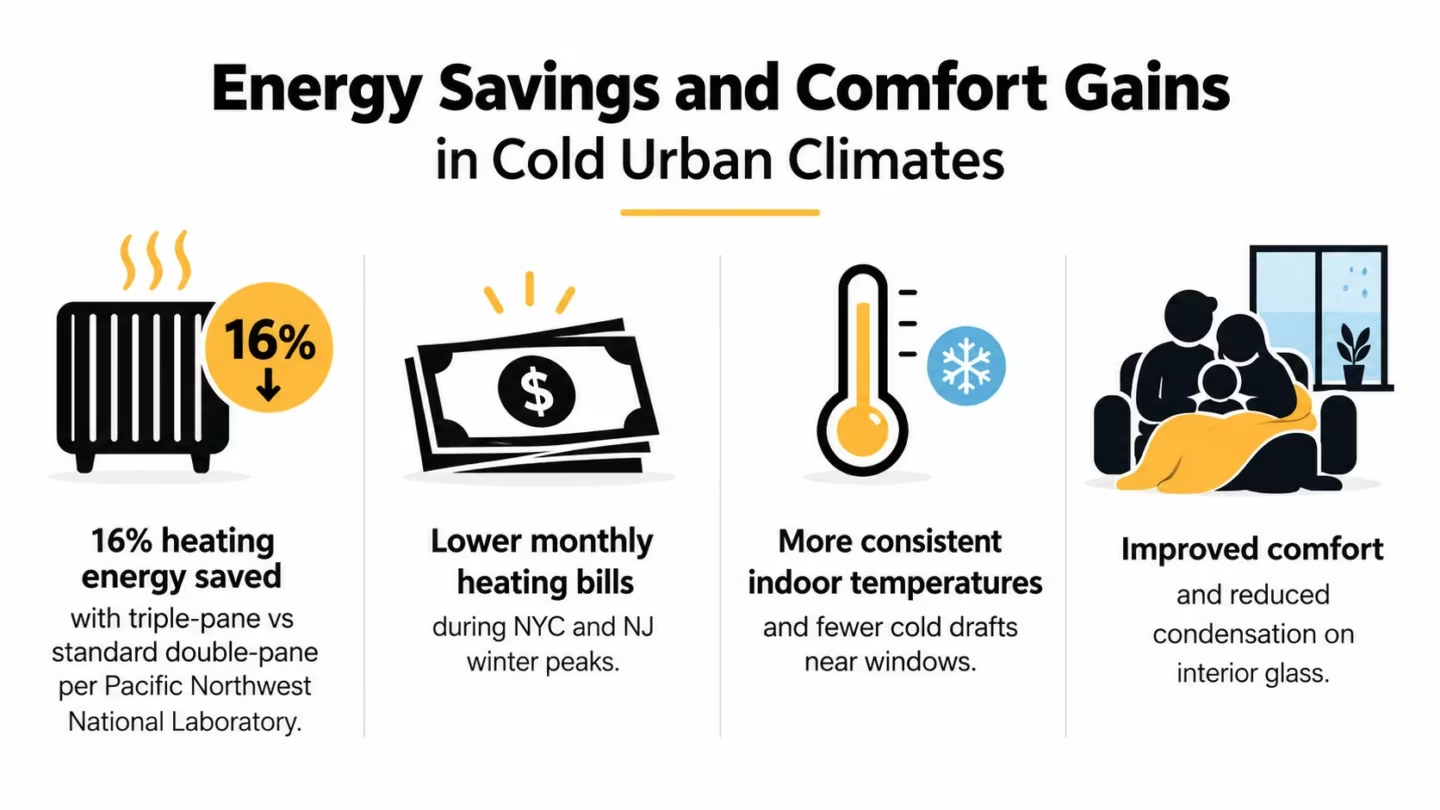
The strongest energy case for triple pane in the NYC and NJ area comes from heating performance. Pacific Northwest National Laboratory residential testing found that thin triple-pane windows reduced annual residential energy use by 16% in heating-dominated climates, 12% in mixed climates, and 7% in cooling-dominated climates, compared with typical double-pane low-E windows. PNNL's residential window testing report also found year-round savings and lower peak demand in heating and cooling seasons.
That 16% figure is useful for a cold-climate comparison, but it isn't a promise about one Brooklyn apartment's utility bill. Savings depend on the existing window, frame leakage, wall insulation, thermostat settings, fuel, utility pricing, and how much glass faces the coldest exposure. A leaky pre-war sash can offer more room for improvement than a recently installed, well-sealed double-pane low-E unit.
Where the comfort shows up first
In practice, occupants usually notice comfort before they can isolate a utility result. A better-insulated interior lite feels less cold beside a chair or bed, and a properly sealed frame reduces the moving air that residents describe as a draft. Warmer interior glass can also reduce winter condensation, provided indoor humidity and ventilation remain appropriate.
The effect isn't evenly distributed across a home. North-facing windows, street-facing rooms, and old openings with failed seals deserve priority. A project that replaces every window with the same specification may spend the premium where the occupants won't feel it.
For a broader maintenance perspective, this guide to energy-efficient window cleaning is useful because clean glass, tracks, seals, and frames make it easier to identify whether a performance problem comes from the window itself or from dirt and maintenance neglect.
A window can have an excellent laboratory rating and still create a cold room if the installer leaves a leaky perimeter joint.
The heating system deserves a parallel review. A replacement window won't compensate for an unbalanced radiator, blocked register, or poorly controlled HVAC zone, so coordinate the window scope with the building's mechanical contractor when the room remains uncomfortable after envelope work. This HVAC contractor resource for Manhattan and Brooklyn can help owners organize that part of the investigation.
NYC and NJ Installation Considerations for Triple Pane
A successful triple-pane project begins with approvals and field conditions, not product selection. NYC window work may require Department of Buildings filings, applicable energy-code documentation, and coordination with the owner, managing agent, or board. The exact filing path depends on the scope, building, and whether the work changes the opening, exterior appearance, or life-safety conditions.
Start with the building category
A brownstone in a historic district may need review by the Landmarks Preservation Commission before a visible window change proceeds. Historic wood profiles, muntin patterns, exterior color, and operation can affect approval. Replacing a street-facing assembly with a thicker modern profile may require a design solution that preserves the facade while improving performance.
A row house with brick-to-brick openings presents another challenge. The contractor must protect the masonry, verify the rough opening, and detail flashing and air sealing so water doesn't find a path behind the new frame. Interior trim often has to be removed carefully and either restored or replaced to match.
Condo and co-op owners should expect board requirements, alteration agreements, insurance documents, work-hour limits, and rules for facade appearance. Small commercial storefronts may involve different review and permit procedures, including coordination with New Jersey's Department of Community Affairs when the property is in New Jersey and the work falls within its jurisdiction.
Inspect the load path and the opening
The glass package in a triple-pane unit can weigh roughly 50% more than a double-pane assembly, so the existing frame can't be treated as a passive container. The installer should inspect:
- Wood condition: Probe sills, jambs, and meeting rails for rot before measuring.
- Geometry: Check whether the opening is square, plumb, and deep enough for the proposed frame.
- Hardware capacity: Confirm that hinges, balances, locks, and operators can carry the selected sash.
- Masonry support: Look for cracked brick, loose mortar, and sagging conditions around the opening.
- Drainage: Specify sill pans, flashing, and a clear path for incidental water.
Code review also needs to cover egress, tempered glass where required near floors or hazardous locations, and air sealing at masonry interfaces. An experienced carpenter may be needed before the window crew can set the unit. This carpentry resource for Manhattan and Brooklyn is relevant when the scope includes sill reconstruction, trim repair, or frame alterations.
Winter and energy obligations
HPD heat requirements still apply during cold-weather work. Plan the installation sequence so occupied rooms don't remain open unnecessarily, and confirm how the contractor will maintain safe heat while openings are exposed. Local Law 87 and Local Law 97 may influence broader building energy planning, but a window replacement shouldn't be sold as automatic compliance. A qualified design professional must evaluate the building's complete energy and emissions profile.
Cost Ranges and ROI for Triple Pane Replacement
A credible 2026 estimate in NYC or NJ needs more than a price per pane. Labor access, masonry repair, interior trim, disposal, permits, board requirements, landmark detailing, window size, and frame material can change the number substantially. A small, accessible replacement in a sound opening is a different job from a brownstone floor where the crew must rebuild rotten sills and restore painted wood trim.
I don't publish a universal dollar range without a site measure because that creates false precision. Retrofit triple-pane inserts generally cost less than full-frame replacement, while wood-clad or historically detailed units cost more because the frame, finish, and installation carry the premium. NYC labor can also run above national pricing because crews work around occupied apartments, limited staging, elevators, street access, and building rules.
Use payback as a filter, not a promise
The PNNL heating-dominated result gives an energy comparison, not a local dollar saving. To estimate payback, an owner needs the existing window's condition, heating fuel, actual utility bills, conditioned floor area, exposure, and the incremental cost of triple pane over the double-pane alternative. Con Edison, PSE&G, and JCP&L bills can support the analysis, but a contractor shouldn't turn a generic percentage into a guaranteed annual return.
| Scenario | Cost per window | Annual energy savings | Simple payback | 10-year ROI |
|---|---|---|---|---|
| Sound retrofit opening | Lower than full-frame work | Depends on existing leakage and exposure | Calculate from measured bills | Calculate from installed premium and savings |
| Full-frame brownstone replacement | Higher because of frame and masonry work | Strongest where old units leak and rooms face cold exposure | Often longer than a simple glass swap | Depends on maintenance, comfort value, and energy savings |
| Premium wood-clad or landmark-sensitive work | Highest due to materials and approval constraints | Energy result still depends on the complete assembly | Must include preservation and finish costs | Compare against the cost of an approved alternative |
Where the economics are strongest
Triple pane usually makes the most financial sense when it replaces a genuine liability, such as a drafty old sash, and when the owner expects to hold the property long enough to use the comfort and operating benefits. Street noise can strengthen the case because a quieter room has value that doesn't appear on a heating calculation.
Double-pane low-E may be the more disciplined choice when the existing frame is sound, the exposure is protected, and the project budget is tight. It can provide a substantial improvement without forcing masonry repairs or a deeper frame. Owners reviewing other envelope incentives should separately check the spray foam energy efficiency credit rules because eligibility depends on the specific work and current tax requirements, not on buying an efficient product.
Don't promise a ten-year return until the installer documents the baseline, incremental cost, and assumptions. The responsible estimate shows what is known, what is measured, and what remains uncertain.
Timeline, Permits, and Choosing the Right Contractor
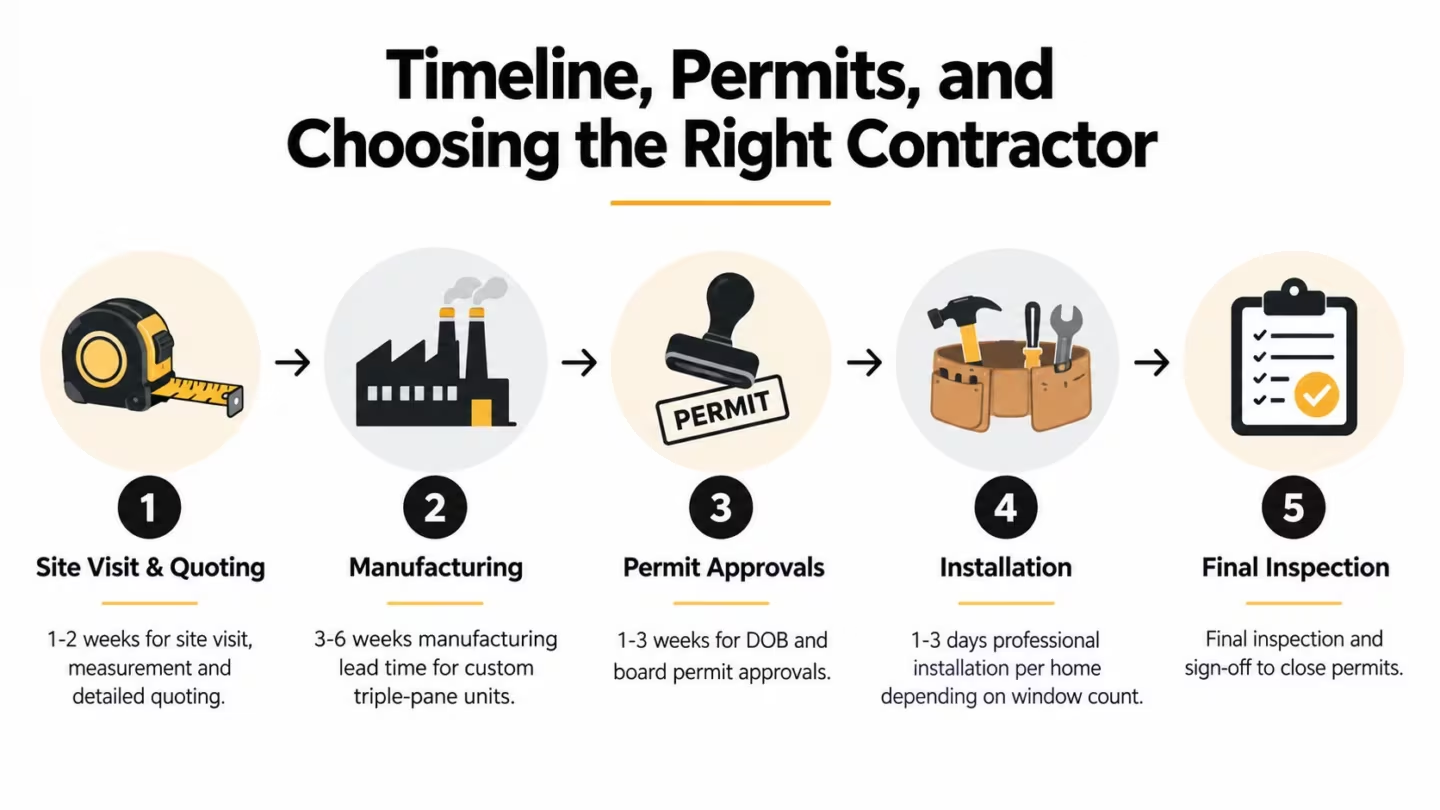
Window replacement slows down when the team discovers approval or measurement problems after ordering. A practical sequence starts with an in-person site visit, not a price pulled from architectural drawings. The contractor should inspect every opening, photograph existing conditions, identify rot and masonry repairs, and confirm whether the proposed triple-pane unit fits the available depth.
A workable project sequence
The common planning stages are:
- Measure and quote: Allow 1 to 2 weeks for site review, product selection, and a detailed proposal when the scope includes multiple openings.
- Manufacturing: Custom triple-pane units may need 3 to 6 weeks for production, depending on the manufacturer, finish, glass package, and hardware.
- Approvals: NYC DOB filings, board review, and LPC coordination can add substantial time. The exact duration depends on the filing and property, so the schedule should include a permit allowance rather than assume immediate approval.
- Installation: A typical apartment or brownstone floor may take 1 to 3 days, depending on window count, access, trim, and masonry conditions.
- Closeout: The contractor should complete punch-list work, provide product information, and coordinate final inspection or sign-off when required.
Prepare the apartment before the crew arrives
Clear furniture from each opening and remove fragile objects from nearby shelves. Ask the contractor how they'll protect floors, plaster, millwork, and finished trim, especially in a brownstone with painted details that need to remain intact.
Condo and co-op owners should notify the managing agent early and submit insurance certificates, alteration paperwork, product information, and work schedules before delivery. Landmark projects may need approved drawings and a documented match to the permitted facade design.
Vet the installer, not only the window brand
Ask for a written scope that identifies the product, glass configuration, frame material, installation method, flashing, air sealing, trim work, disposal, permits, and warranty responsibilities. Verify the contractor's registration, insurance, and applicable New York or New Jersey licensing requirements. Request three local references involving comparable triple-pane work, such as a brownstone, occupied condo, or small commercial building.
A serious contractor measures the opening in person and explains the frame strategy before discussing a deposit.
Be cautious with door-to-door solicitation, large upfront deposits, blueprints-only pricing, and estimates that use “premium window” without naming the assembly. A contractor should pull the permits included in the contract, coordinate inspections, and explain who handles LPC or board submissions. This Manhattan and Brooklyn construction resource is relevant for owners coordinating a larger renovation around the window work.
When Triple Pane Is Worth It and When to Choose Otherwise
Triple pane is the clear front-runner when the window has several jobs to do at once. A street-facing brownstone parlor may need better winter insulation, fewer drafts, and relief from traffic noise. A condo beside a rail line or highway may value acoustic performance as much as heating savings. A Passive House project or a building pursuing a demanding envelope strategy may also justify the higher-performance specification.
The DOE reports that a double-pane to triple-pane upgrade can improve energy-efficiency performance by 40% or more in a new-home comparison, while PNNL found heating-dominated residential savings of 16% versus typical double-pane low-E windows. Those figures support serious consideration in cold exposures, but they don't override the field conditions. The window still needs a compatible frame, careful installation, and a sound air-sealing detail.
Choose triple pane when the conditions justify the premium
Use triple pane as the leading option when:
- The exposure is cold: North-facing rooms and windy elevations lose the benefit of solar warmth and expose occupants to a colder interior surface.
- The street is loud: Busy avenues, highways, and elevated rail lines make sound control a daily quality-of-life issue.
- The existing assembly is poor: Old, leaky, or deteriorated windows leave more performance to recover.
- The holding period is long: Owners who plan to remain in the property can use the comfort benefit even when energy payback alone is modest.
- The project has a high-performance target: Passive House and similar envelope goals may require a whole-window specification beyond standard double-pane low-E.
Choose double-pane low-E when restraint is smarter
A well-made double-pane low-E unit can be the better decision for an interior-facing apartment with limited noise, a sound existing frame, or a property where the owner expects a short hold. It also deserves priority in a landmark district when the required historic profile cannot accommodate the selected triple-pane frame without an unacceptable facade change.
For the Park Slope owner, I might specify triple pane for the exposed parlor and rear addition if the openings and budget support it. I might select double-pane low-E for a protected garden-level in-law unit where the exposure is mild, the frame is serviceable, and the extra weight and cost don't solve a meaningful problem.
The defensible rule is simple: choose the window based on exposure, existing condition, code and landmark constraints, frame capacity, and holding period. Don't pay for three panes where two well-installed low-E panes already solve the room's problem, and don't under-specify a street-facing opening merely because the cheaper quote looks attractive.
AGNY Services LLC coordinates window replacement and broader renovation work across NYC and New Jersey, including site assessment, permitting coordination, carpentry repairs, installation, and final walkthroughs. For a measured recommendation on triple-pane replacement in a brownstone, condo, or small commercial building, visit AGNY Services LLC and request a project consultation.