TL;DR:
- Permit requirements in 2026 establish strict procedures, thresholds, and inspection standards for construction projects in the U.S. that all developers must follow. Florida’s HB 803 exempts small single-family residential work under $7,500, but electrical, plumbing, and structural work always require permits, and splitting projects to bypass this is prohibited. Active permit management, timely submissions, and understanding local regulations are essential to avoid delays, fees, and penalties during the permit process.
Permit requirements 2026 establish mandatory procedures, thresholds, and inspection standards that every business owner and property developer in the U.S. must follow to execute lawful construction and renovation projects. The regulatory environment this year reflects a clear shift: states and municipalities are codifying faster review timelines, raising fee thresholds, and digitizing workflows to reduce backlogs. Key bodies driving these changes include the EPA, local building departments, and state legislatures such as Florida’s, which passed HB 803 effective july 1, 2026. Understanding the updated 2026 permit guidelines before you break ground is the difference between a project that closes on schedule and one that stalls in a compliance queue.
What are the updated permit requirements 2026 application process and fee structures?
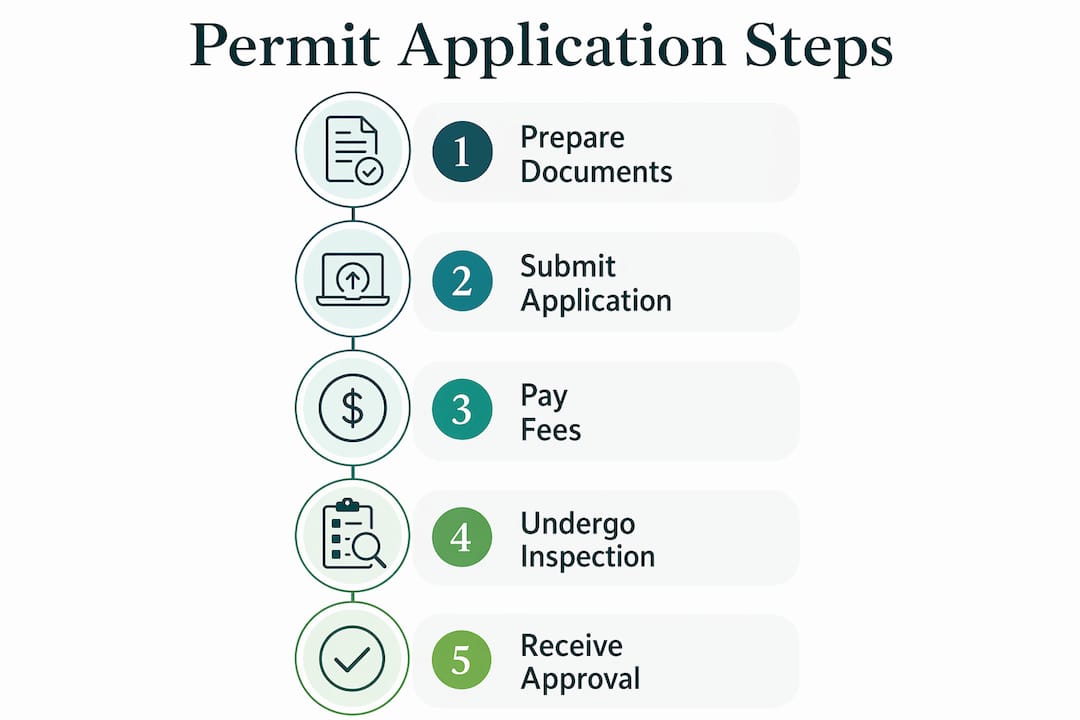
The permit application process in 2026 follows a defined sequence, and missing any step creates costly delays. Most jurisdictions require you to submit construction documents, pay an intake fee, pass a completeness review, and then wait for a plan check before receiving approval. Approval timelines for standard residential electrical permits run 1–3 weeks, with fees ranging from $50 to $400 depending on scope and jurisdiction. That range reflects the wide variation between rural counties and dense metro markets like New York City or Los Angeles.
Deadlines now carry real financial consequences. Portland requires complete permit applications submitted by june 30, 2026, and intake fees paid by august 11, 2026, to avoid fee increases. Missing that window means paying under the new, higher fee schedule. This pattern is appearing in other jurisdictions too, as municipalities use fee restructuring to manage application volume.
The application process 2026 typically involves these steps:
- Determine permit type. Identify whether your project requires a building, electrical, plumbing, mechanical, or combined permit.
- Prepare construction documents. Include site plans, structural drawings, and specifications that meet the applicable code year.
- Submit a complete application. Incomplete submissions are rejected at intake and restart the clock. Jurisdictions are strict about this in 2026.
- Pay intake fees. Fees are due at submission or within a defined window after acceptance.
- Respond to plan check comments. Reviewers issue correction notices; slow responses extend approval timelines significantly.
- Schedule inspections. Permits require inspections at defined project milestones, not just at completion.
Pro Tip: Submit your application before any announced fee increase deadline, even if your project start date is later. The permit remains valid for its full duration once issued, so early submission locks in lower fees.
How does Florida HB 803 affect permit exemptions and requirements in 2026?
Florida HB 803 is the most discussed state-level change to 2026 licensing requirements this year. The law exempts single-family residential work valued under $7,500 from building permits, effective july 1, 2026. That sounds like a broad carve-out, but the exclusions are significant.
The following categories of work remain fully subject to permit requirements regardless of project cost:
- Electrical work. Any new circuits, panel work, or service upgrades require a permit even if the total project cost falls below $7,500.
- Plumbing work. Pipe replacements, fixture additions, and drain modifications are not covered by the exemption.
- Structural work. Load-bearing modifications, foundation work, and framing changes require permits at every dollar amount.
- Projects in flood zones or historic districts. Local overlay regulations apply independently of the HB 803 threshold.
The law also contains a prohibition that many developers overlook. Splitting a larger project into smaller sub-threshold jobs to avoid permits is explicitly prohibited and increasingly detectable. Regulators now use data tracking to flag patterns where multiple small permits are pulled on the same property within a short window. The penalty is not just a fine. It can result in stop-work orders and forced demolition of unpermitted work.
Pro Tip: Always estimate the full scope of a project before deciding whether it qualifies for an exemption. If the combined value of related work on a single property exceeds $7,500, treat it as one project and permit it accordingly.
The broader trend behind HB 803 is worth noting. Legislative trends in 2026 focus on digitizing workflows and enforcing short review windows, reducing local discretion. Florida’s law accelerates permit reviews while tightening the rules against evasion. That combination signals where most states are heading.
What are the specific permit requirements for electrical, plumbing, and structural work?
Electrical permits are the most frequently misunderstood category in the 2026 permit regulations landscape. The rule is straightforward: new circuits, panel upgrades, EV chargers, generators, and solar interconnects all require permits. Like-for-like replacements of fixtures or switches do not. The distinction matters because falsely assuming exempt status risks project delays and insurance invalidation.

Electrical code adoption in 2026
The National Electrical Code follows a three-year adoption cycle, but state adoption lags significantly. Many states are still enforcing the 2020 NEC, while others have moved to the 2023 edition. No state has formally adopted a 2026 NEC because the cycle has not yet produced one. Check your state’s current adopted edition before specifying any electrical work, since code compliance is verified at inspection.
Plumbing and structural requirements
Plumbing permits are required for any new supply or drain line, water heater replacement in most jurisdictions, and any work that opens a wall to access existing pipes. Structural permits apply to any work that affects load-bearing elements, including beam replacements, wall removals, and foundation modifications. California jurisdictions now enforce 2025 building codes effective january 1, 2026, replacing the 2022 codes that governed projects through last year. That shift affects seismic requirements, energy compliance, and accessibility standards simultaneously.
The table below summarizes permit triggers and typical approval timelines by work type:
| Work type | Permit required? | Typical approval time |
|---|---|---|
| New electrical circuit | Yes | 1–3 weeks |
| Like-for-like fixture swap | No | N/A |
| Plumbing new supply line | Yes | 2–4 weeks |
| Load-bearing wall removal | Yes | 3–6 weeks |
| EV charger installation | Yes | 1–2 weeks |
| Cosmetic flooring replacement | No | N/A |
For projects that involve legalizing prior structural alterations, the process requires as-built drawings and a structural engineer’s sign-off before the building department will issue a certificate of completion. This step is often skipped on older properties and creates significant liability during resale or refinancing.
Pro Tip: When scoping a renovation, classify every line item as either maintenance or new work before pricing. Misclassifying new work as maintenance is the single most common reason projects fail inspection on the first attempt.
How can developers navigate permit renewals and avoid delays in 2026?
Permit expiration is a larger financial risk than most developers budget for. Around 12–18% of building permits in major U.S. metro areas expire or remain on hold, leading to direct capital loss. A permit that expires mid-project forces a full resubmission, which restarts the fee clock and the review timeline.
The EPA’s updated Title V guidance offers a useful model for managing renewals efficiently. The agency allows resubmission of prior applications with updated dates when operations are unchanged, reducing the documentation burden for businesses renewing permits for facilities with no material changes. That approach cuts bureaucratic overhead and gives operators more certainty about timelines.
For construction and renovation permits, the practical strategies that prevent expiration include:
- Track expiration dates actively. Most permits expire 12–24 months after issuance if no inspection is called. Calendar reminders at the 6-month and 10-month marks prevent surprises.
- Request extensions before expiration. Most jurisdictions grant one extension if requested in writing before the permit lapses. Requesting after expiration is rarely successful.
- Maintain complete documentation. Incomplete files are the leading cause of permit holds. Keep all approved drawings, correspondence, and inspection records in one place.
- Use digital permitting portals. Most major cities now offer online status tracking. Checking permit status monthly catches holds before they become expirations.
- Time submissions strategically. Seasonal permit peaks run june through august, with troughs in december and january. Submitting in late fall or winter shortens wait times measurably.
“Permit expiration is not a paperwork problem. It is a project management problem. The developers who avoid it treat permit milestones the same way they treat construction milestones: with hard deadlines, assigned owners, and regular status reviews.”
For NYC-specific projects, understanding how to manage renovation permits in a high-volume market like New York requires additional attention to DOB filing requirements and TR1 inspection protocols that go beyond standard municipal processes.
Key Takeaways
Permit compliance in 2026 requires matching the right permit type to the right work category, meeting jurisdiction-specific deadlines, and actively managing renewals before expiration.
| Point | Details |
|---|---|
| Fee deadlines are hard cutoffs | Portland’s june 30 application deadline locks in lower fees; missing it means paying under the new schedule. |
| Florida HB 803 has narrow exemptions | The $7,500 threshold excludes all electrical, plumbing, and structural work regardless of cost. |
| Electrical permits follow clear triggers | New circuits, EV chargers, and panel upgrades require permits; like-for-like swaps do not. |
| Permit expiration is a capital risk | 12–18% of metro permits expire or stall, forcing costly resubmissions and timeline resets. |
| Seasonal timing reduces wait times | Submitting permits in late fall or winter avoids the june-through-august application peak. |
What I’ve learned working through permit cycles year after year
The single biggest mistake I see business owners and developers make is treating permits as an administrative afterthought. They finalize a construction contract, set a start date, and then file for permits. That sequence is backwards. Permit timelines should drive the project schedule, not the other way around.
The 2026 regulatory environment actually rewards developers who plan ahead. Digitized portals, clearer statutory review windows, and streamlined renewal processes all reduce friction for applicants who submit complete, well-documented packages. The developers who struggle are the ones submitting incomplete applications, missing fee deadlines, or assuming exemptions apply when they do not.
I have also watched the project-splitting issue become a serious enforcement priority. Regulators have the data now. If you pull three small permits on the same address in 60 days, the system flags it. The penalty is not proportional to the savings. It never is.
My practical advice: build permit milestones into your project schedule the same way you build in framing or MEP rough-in milestones. Assign someone to own the permit file. Check status monthly. And if you are working in a state with new legislation like Florida HB 803, read the exclusions before you assume the exemption applies. The $7,500 threshold sounds generous until you realize it does not cover the three most common categories of renovation work.
— Grzegorz
How Agny supports permit planning for your 2026 renovation
Permit compliance is not a solo task for most renovation projects. Agny works with business owners and property developers across New York to manage the full permit process, from initial scope classification through final inspection sign-off.

Whether you are planning a kitchen renovation, a bathroom overhaul, or a larger commercial buildout, Agny’s team handles permit applications, coordinates with the DOB, and keeps your project on schedule. For projects that require renovation financing options, Agny can help you structure the budget around permit costs and approval timelines before construction begins. Explore Agny’s NYC permit approval guide to understand exactly what your project requires before you commit to a start date.
FAQ
What work requires a building permit in 2026?
New electrical circuits, plumbing additions, structural modifications, EV charger installations, and any work that changes a building’s footprint or load-bearing elements require permits. Like-for-like replacements of fixtures, switches, or flooring typically do not.
What is Florida HB 803 and when does it take effect?
Florida HB 803 exempts single-family residential projects under $7,500 from building permits, effective july 1, 2026. The exemption does not apply to electrical, plumbing, or structural work regardless of cost.
How much does a residential electrical permit cost in 2026?
Standard residential electrical permits cost between $50 and $400, with approval timelines of 1–3 weeks depending on jurisdiction and project complexity.
How do I avoid permit expiration on a long renovation project?
Track your permit’s expiration date from the day it is issued, request an extension in writing before it lapses, and call for required inspections at each project milestone. Submitting outside the june-through-august peak also shortens initial approval times.
Can I split a large project into smaller jobs to avoid permits?
No. Splitting a project into sub-threshold segments to avoid permit requirements is explicitly prohibited and detectable through regulatory data tracking. Violations can result in stop-work orders and mandatory removal of unpermitted work.