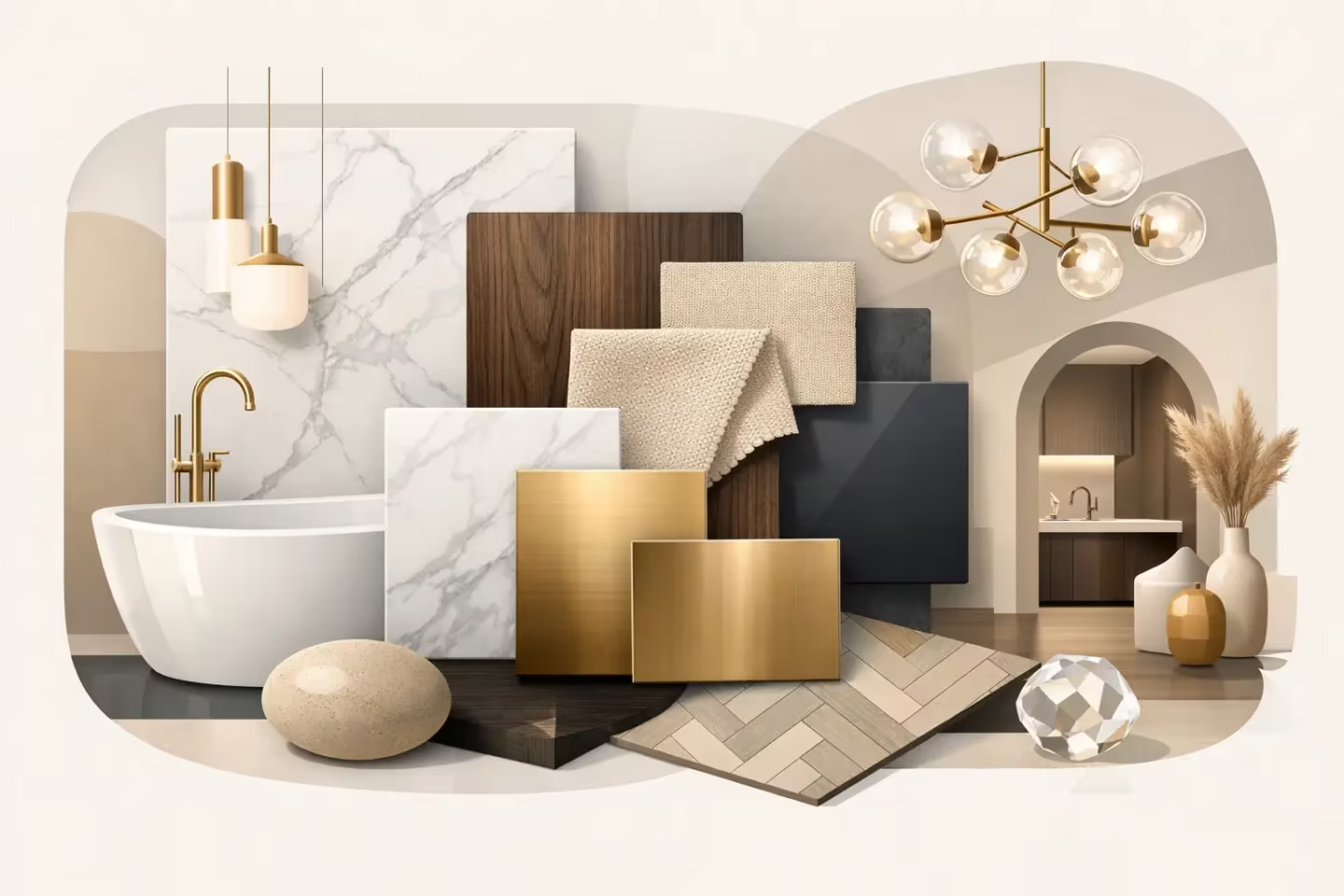
A luxury renovation is usually judged in the last ten percent of the work. Layout matters, infrastructure matters, and craftsmanship matters, but the finishes are what people see, touch, and remember. Choosing the best finishes for luxury renovations is not about selecting the most expensive material in every category. It is about making disciplined choices that look exceptional, perform well over time, and fit the realities of the property.
In New York City, that standard is even higher. Finishes need to do more than photograph well. They have to hold up to daily use, building conditions, tight installation tolerances, and the expectations that come with a premium home or commercial space. The right finish package creates visual calm, depth, and permanence. The wrong one can make an otherwise strong renovation feel trendy, overworked, or difficult to maintain.
What defines the best finishes for luxury renovations
The best luxury finishes share a few qualities. They have material integrity, which means they look and feel authentic rather than manufactured to imitate something better. They age with dignity, which is especially important in high-use kitchens, baths, entryways, and living spaces. And they reward close inspection. Luxury is often less about obvious ornament and more about subtle precision – a slab with clean movement, a metal finish with warmth instead of glare, or millwork with a flawless painted surface.
There is also a practical side to the decision. A penthouse primary bath and a family apartment kitchen do not need the same finish strategy. Neither does a brownstone renovation in Brooklyn and a prewar co-op in Manhattan. Light exposure, maintenance tolerance, household habits, and building restrictions all influence what qualifies as the right high-end finish.
Natural stone remains a benchmark
When clients ask which materials consistently elevate a space, natural stone remains at the top of the conversation. Marble, quartzite, limestone, and soapstone each bring a different kind of luxury. Marble has unmistakable depth and movement, making it a classic choice for bathrooms, fireplace surrounds, and statement kitchen surfaces. Quartzite offers a similar visual richness with greater durability, which often makes it the stronger option for heavily used kitchens.
Limestone creates a softer, quieter effect. It works especially well in calm, architectural interiors where texture matters more than dramatic veining. Soapstone has a more understated character and develops a lived-in patina that appeals to clients who prefer refinement without gloss.
The trade-off is maintenance and installation discipline. Some stones are more porous, some etch more easily, and some require better slab selection to avoid visual inconsistency. Bookmatching can be stunning, but only when the slab quality and layout justify it. In luxury work, the stone itself is only part of the result. Fabrication quality, edge profile, seam placement, and installer skill are what turn premium material into a premium finish.
Wood flooring should feel substantial, not generic
Flooring carries more visual weight than most clients expect. In a luxury renovation, wide-plank hardwood with a low-sheen finish tends to outperform glossier, busier options. European white oak remains a favorite because it is versatile, stable, and works across contemporary, transitional, and classic interiors. Walnut offers a richer, deeper tone, though it shows wear differently and may not suit every household.
The finish matters as much as the species. Hardwax oil finishes have a natural, tactile look that many luxury homeowners prefer, while high-quality matte polyurethane provides stronger surface protection with a similarly restrained appearance. Very glossy floors can feel dated and tend to emphasize dust, scratches, and uneven light.
Color selection should be handled carefully. Gray-heavy stains have already lost staying power in many premium interiors. More natural wood tones, lighter browns, and nuanced medium finishes generally age better. They also support better resale appeal because they do not lock the property into a narrow style moment.
Millwork and cabinetry separate high-end from merely new
Custom millwork is one of the clearest indicators of renovation quality. Cabinetry, built-ins, wall paneling, closet systems, and detailed trim all contribute to the sense that a space was designed and executed as a whole. The best finishes for luxury renovations often include a mix of painted and wood veneer millwork, used strategically rather than uniformly.
Painted cabinetry should have depth, consistency, and a furniture-grade surface. That requires proper substrate selection, precise prep, and controlled finishing conditions. A luxury painted finish is smooth without looking plastic. It feels tailored.
Wood veneer, when specified well, introduces warmth and sophistication that painted surfaces alone cannot provide. Rift-cut white oak, walnut, and eucalyptus veneers are popular for modern and transitional spaces, but success depends on grain matching, edge detailing, and sheen control. Poor veneer work is immediately visible.
Hardware deserves the same level of scrutiny. Solid brass, bronze, and high-quality stainless hardware tend to feel better in the hand and wear more gracefully than lightweight alternatives. Finish selection matters here too. Unlacquered brass offers character and patina, while satin brass, oil-rubbed bronze, and brushed nickel provide a more controlled appearance.
The best metal finishes are usually the quietest ones
Metal finishes can either refine a space or compete with it. In luxury interiors, the most successful choices are often the ones that support the overall palette rather than demanding attention. Brushed, satin, and living finishes generally feel more elevated than highly reflective polished chrome used everywhere.
That does not mean polished metal has no place. In some prewar-inspired bathrooms or formal powder rooms, polished nickel or chrome can still look crisp and appropriate. But repetition matters. Mixing too many metals usually weakens the design. A focused palette, used with intention, creates cohesion.
Consistency is also critical across fixtures, shower trim, cabinet hardware, and decorative metal details. Similar is not the same. Slight finish mismatches become obvious in luxury settings, especially under layered lighting.
Tile and wall finishes should create texture and restraint
Tile selection often reveals whether a renovation is chasing fashion or building long-term value. Large-format porcelain can be an excellent choice when the goal is a clean, architectural look with lower maintenance. Handmade ceramic and zellige add depth and variation, but they need to be used where that irregularity feels purposeful.
For walls, Venetian plaster, limewash, specialty paint, and finely executed wall paneling can deliver a more sophisticated effect than accent walls or overly decorative coverings. Texture matters, but so does restraint. In luxury spaces, material richness usually carries the room more effectively than pattern overload.
Bathrooms deserve special consideration. Slab walls create a highly tailored result with fewer grout lines, but they require precise planning, access coordination, and experienced installers. Tile can still look exceptional, especially when scale, layout, and trim details are carefully resolved. The difference between average and exceptional often comes down to where cuts land, how corners are handled, and whether the transitions feel intentional.
Paint is still one of the most important luxury finishes
Few finishes affect perception as immediately as paint. In premium renovations, the color is only half the equation. Surface preparation, skim coating, priming, and application quality are what produce that calm, even look people associate with a well-finished interior.
Flat and matte finishes can look beautiful in lower-traffic areas because they soften light and minimize surface glare. In kitchens, baths, and family spaces, more washable finishes may be the better choice. The right answer depends on use, light, and wall condition.
Color selection should also be anchored in the permanent materials in the room. Stone undertones, floor tone, metal finish, and natural light all influence whether a paint color feels warm, muddy, crisp, or sterile. This is one reason finish planning should happen holistically rather than room by room.
How to choose finishes without overdesigning the space
A common mistake in luxury renovations is trying to make every surface a feature. A stronger approach is to decide where the focal points belong and let the supporting materials do their job quietly. Maybe the kitchen island stone is the hero, while the backsplash remains understated. Maybe the vanity millwork carries the room, while the wall tile stays tonal and restrained.
This is where disciplined project management becomes part of the finish strategy. Samples need to be reviewed in the actual space. Shop drawings should reflect finish intent. Lead times, fabrication constraints, and building logistics all affect what can be executed well. A finish that looks perfect in a showroom but arrives damaged, delayed, or poorly coordinated is not a luxury choice in practice.
For clients renovating in Manhattan or Brooklyn, execution matters as much as selection. AGNY Services approaches finish decisions with that understanding – balancing design ambition with installation precision, trade coordination, and the standards required for high-value urban properties.
The best finish is rarely the loudest or the most expensive. It is the one that makes the room feel resolved, performs with grace, and still looks right years after the dust has settled.