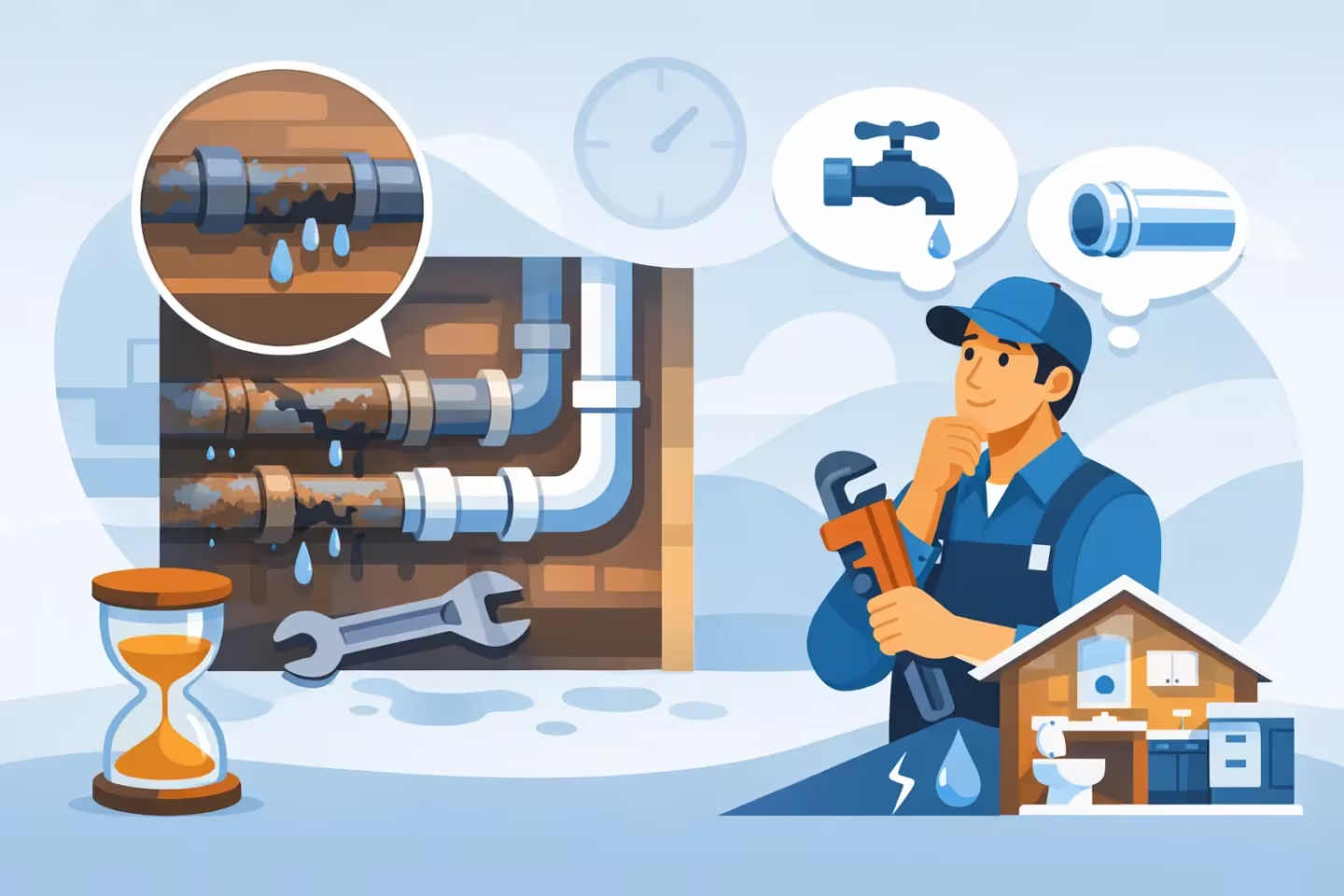
A pipe does not have to burst to tell you it is at the end of its useful life. In many New York apartments, brown water, recurring leaks behind finished walls, and weak water pressure are the real warning signs. If you are asking when should plumbing be replaced, the right answer usually comes down to a mix of pipe age, material, visible performance issues, and how much access you already have during a renovation.
For homeowners and property investors, this is rarely just a plumbing question. It is an investment, risk-management, and construction-planning decision. Replacing plumbing too early can feel unnecessary. Waiting too long can turn a controlled project into emergency damage, insurance complications, or a far more expensive wall-open repair.
When should plumbing be replaced in a home?
The most practical answer is this: plumbing should be replaced when the system shows age-related decline, repeated failures, code or material concerns, or when a renovation gives you efficient access to concealed lines. In a city like New York, where plumbing often runs through tight walls, stacked units, and older buildings, access matters almost as much as condition.
Some systems can remain serviceable for decades with proper installation and favorable water conditions. Others begin failing much earlier because of corrosion, poor past workmanship, hard use, or piecemeal repairs that created weak points over time. That is why a replacement decision should be based on inspection and context, not age alone.
Pipe age matters, but material matters more
Not all plumbing ages the same way. A 50-year-old system may still have sections that perform adequately, while a newer system with inferior installation can already be problematic.
Galvanized steel is one of the clearest examples. In older properties, these pipes often corrode from the inside out. As buildup narrows the interior diameter, water pressure drops and discoloration becomes more common. Once that process is underway, localized repairs rarely solve the underlying issue for long.
Copper generally has a longer service life, but it is not immune to pinhole leaks, joint failures, or water-quality-related wear. Cast iron drain lines can serve for many years, yet older sections may crack, rust through, or develop chronic drainage issues. More modern materials such as PEX or PVC can perform very well, but quality depends heavily on design, installation, and whether the material is appropriate for the application.
If your building or home still contains outdated piping materials associated with corrosion, contamination concerns, or repeated failures, replacement becomes less of an upgrade and more of a protective measure.
General lifespan ranges to keep in mind
These ranges are not guarantees, but they provide a reasonable planning framework. Galvanized supply piping often raises concern after 40 to 50 years. Copper may last 50 years or more, depending on conditions. Brass can perform well for decades. Cast iron drain lines often reach 75 years, but visible deterioration can appear earlier in high-use or poorly maintained systems.
The key point is not whether a pipe has reached a textbook age. It is whether the system is still reliable in real-world use.
Warning signs that replacement is the better choice
A single leak does not always justify repiping. Repeated leaks in different locations often do. The pattern tells you more than the isolated event.
If you are seeing recurring water stains, mold concerns, bubbling paint, unexplained musty odors, or patched sections in multiple rooms, your plumbing may be moving from repairable to unreliable. This is especially true when leaks occur in concealed lines rather than at accessible fixtures.
Discolored water is another major warning sign. Brown, yellow, or rusty water can indicate internal pipe corrosion. If the discoloration persists after a line has been flushed, it deserves closer evaluation. Likewise, if hot water pressure has steadily dropped while other fixtures also struggle, mineral buildup or internal corrosion may be restricting flow throughout the system.
Drainage problems also deserve attention. Frequent backups, gurgling drains, or sewage odors can point to aging waste lines, improper slope, deteriorated cast iron, or partial collapses. In a multifamily or mixed-use property, one neglected drain issue can affect far more than a single unit.
Repair makes sense until it does not
There is a practical threshold where ongoing repair stops being efficient. If you are repeatedly opening walls, paying for emergency service, and addressing one failure after another, a full or partial replacement may cost more upfront but less over time.
This is especially true when repairs are reactive instead of strategic. Emergency work tends to be expensive, disruptive, and limited by urgency. Planned replacement gives you better sequencing, material choices, finish protection, and inspection control.
Renovation is often the smartest time to replace plumbing
One of the best times to replace plumbing is when walls, floors, or ceilings are already being opened for a kitchen remodel, bathroom renovation, or gut interior project. This is where experienced renovation planning creates real value.
Access is a major cost driver in plumbing work. If demolition is already part of the scope, replacing aging supply and drain lines becomes far more efficient than returning later to disturb newly finished tile, millwork, plaster, or flooring.
This matters even more in Manhattan and Brooklyn properties, where renovation schedules often involve building rules, trade coordination, permits, inspections, and limited work windows. Combining plumbing replacement with broader renovation work reduces duplicated labor and helps protect the quality of the finished space.
For example, if you are renovating a bathroom in an older apartment and the existing risers, branch lines, or waste connections are decades old, it is usually worth evaluating replacement before the new finishes go in. Beautiful stone and custom cabinetry do not offset the risk of old piping hidden behind them.
When partial replacement is enough
Not every property needs a full repipe. In some homes, only certain branches or fixture groups are failing. In others, the main problem is isolated to horizontal waste lines, a bathroom stack connection, or older supply runs serving one side of the apartment.
Partial replacement can be a sound solution if the remaining plumbing is in verifiably good condition and the new work integrates correctly. That said, mixed-material systems need to be handled carefully. Poor transitions, mismatched sizing, and inconsistent water pressure across old and new lines can create fresh problems.
The goal is not to preserve old piping at all costs. The goal is to replace the parts that create risk while maintaining system performance and code compliance.
New York-specific considerations owners should not ignore
In New York City, plumbing replacement is rarely just about what is inside your walls. Building type, board approvals, permit requirements, inspection standards, and access to shared systems all affect timing and scope.
In co-ops and condos, work may require management approval, insurance documentation, licensed trade signoff, and coordination with building staff. In brownstones and multifamily properties, existing pipe routing may reflect decades of alterations that need to be corrected or updated during replacement.
This is where a full-service contractor has a distinct advantage. A plumbing upgrade tied to a larger renovation needs more than technical pipe installation. It needs disciplined planning across demolition, carpentry, finish restoration, scheduling, and compliance. AGNY Services approaches these projects with that broader construction management lens, which is often what keeps a plumbing upgrade from becoming a drawn-out disruption.
Should you replace plumbing before there is a failure?
In many cases, yes. Waiting for a catastrophic leak is rarely the most cost-effective strategy, particularly in higher-end homes or occupied buildings where water damage can spread quickly into floors, ceilings, custom finishes, and neighboring units.
Proactive replacement is most justified when the pipes are old, the material has known reliability issues, the property is being renovated, or there is a pattern of deterioration already underway. It is less urgent when the system is relatively modern, performing consistently, and inspection shows no signs of active decline.
This is where honest assessment matters. Not every older pipe needs immediate replacement. But if you are already investing significantly in your property, it makes sense to evaluate the hidden systems with the same seriousness you give visible finishes.
How to make the decision with confidence
Start with a professional evaluation of the existing system, including pipe material, age, leak history, pressure issues, drainage performance, and access conditions. Then weigh the repair history against your renovation plans, finish level, and tolerance for future disruption.
A well-timed plumbing replacement protects more than the pipes themselves. It protects walls that do not need to be reopened, bathrooms that do not need to be dismantled twice, and investments that deserve to perform as well as they look.
If your plumbing is showing its age, the best time to address it is usually before it forces the issue. Planned work gives you options. Emergency work takes them away.